
The factory floor at BSN Sports in Grand Prairie.
Ryan Michalesko/Staff Photographer
North Texas is establishing itself as the nation’s manufacturing epicenter, and local industry leaders are working to keep it that way.

A new accelerator for Dallas-Fort Worth manufacturers is launching in the spirit of that goal, born out of a long-running partnership between Fort Worth-based startup incubator TechFW and the University of Texas at Arlington’s Texas Manufacturing Assistance Center.
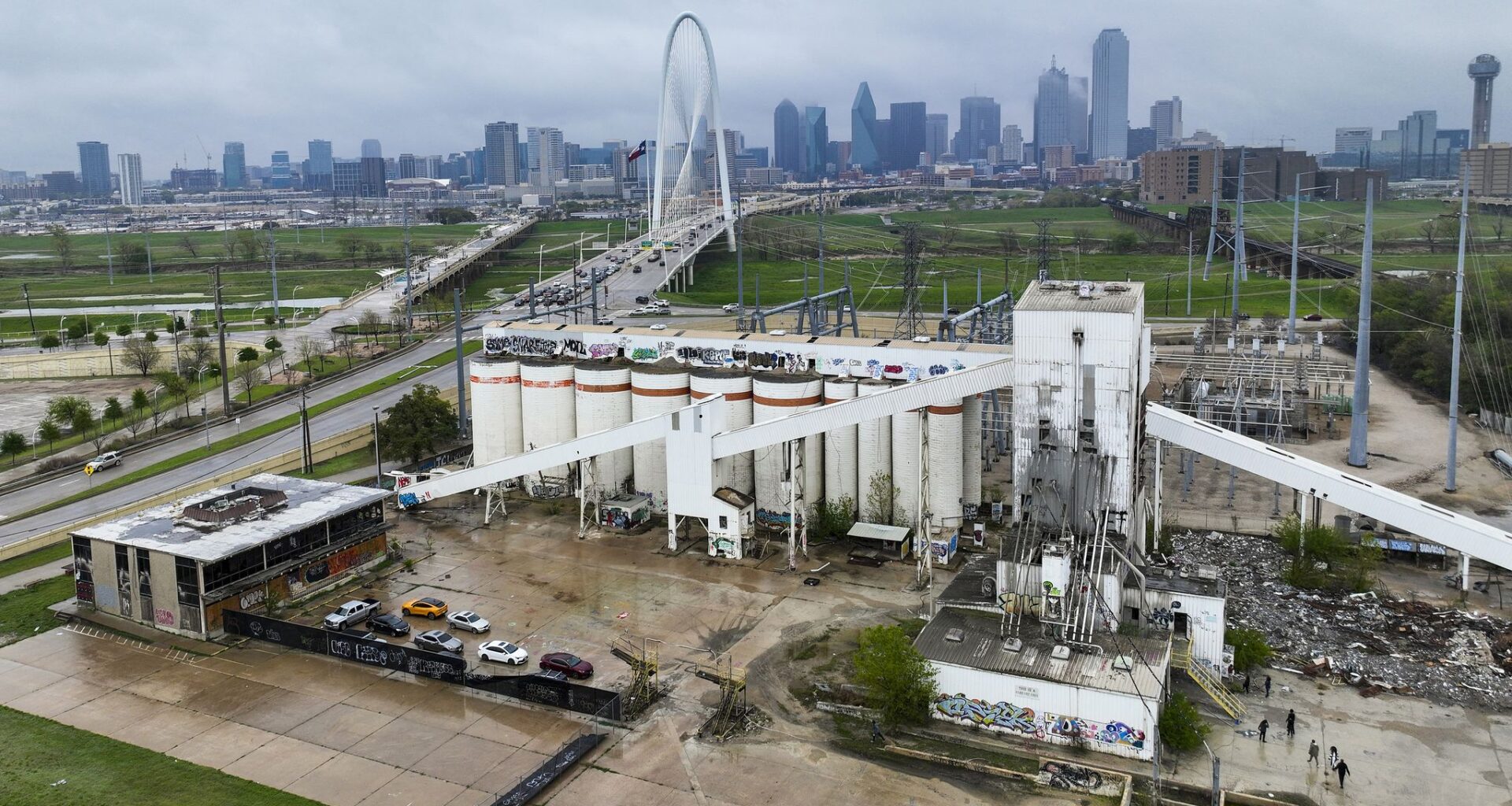
The Margaret Hunt Hill Bridge and downtown skyline rise over a former office and plant at 240 Singleton in West Dallas in an aerial view on Tuesday, March 21, 2023.
Smiley N. Pool/Staff Photographer
TechFW is an agile nonprofit that works with founders across the tech space to develop their business. TMAC is a university center that helps small and mid-sized manufacturers juice their operations. They’ve been working together for over 25 years, combining their respective strengths in entrepreneurial and operational knowledge and leveraging their distinct positions to support Texas businesses.
Article continues below this ad
“We became two halves of a whole,” TechFW executive director Caitlin McMinn said.
Now with the new Manufacturing Accelerator and Development Engine (MADE), the organizations are formalizing their partnership to help manufacturers meet the moment of an industry grappling with change — and hopefully draw new players onto the field in the process.
“I think the marriage of both of those is really fantastic and is primed to meet the moment, help North Texas become much more attractive to new investment and help our manufacturers that are here really scale and grow in a way that they haven’t been able to over the last couple of decades,” said Brittany Rosenberg, a business development officer at TMAC.
The project is years in the making. It grew in response to direct requests from manufacturers for a place where the kind of resources that an incubator provides to companies just getting off the ground can be applied to those already well established but facing new challenges to their business models.
Article continues below this ad
Related: A manufacturing renaissance is happening in North Texas. Some say clean energy is to thank
One of the most common is reshoring, a movement to bring back domestic manufacturing that has become more attractive amid the uncertainty of shifting tariff policy and supply chain disruptions from geopolitical conflicts. But the benefits can be outweighed by the logistical headache reshoring often presents for manufacturers.
Rosenberg explained that the process often requires finding new suppliers or completely changing how a product is made, since methods used overseas are often unavailable, unpermitted or not cost-effective in the United States. Businesses that have been operating for years can find themselves back at square one.
“A lot of manufacturers are having to pivot and become entrepreneurs again,” McMinn said.
MADE will help lighten that load by connecting manufacturers to a wider network, helping them navigate deals in a region where the industry resources are simultaneously robust and siloed, Rosenberg said.
Article continues below this ad
Training is also a big part of the accelerator’s mission. Rosenberg identified workforce development challenges as the number-one issue manufacturers consistently report.
“Future workforce is sort of a black box for midsize-to-small manufacturers,” she said. “They’re aware that there’s this mythical source of awesome, just-need-to-be-right-skilled personnel, but they don’t really have a way to access it. They don’t have the infrastructure or bandwidth to train or recruit like that.”
Whether it’s a refresh in soft skills like communication, teamwork and leadership or an infusion of labor that brings specific technical knowledge to the table, McMinn said MADE will supplement “critical skills that are getting lost in translation” for manufacturers.
The accelerator is targeting clients primarily in the aerospace and defense, infrastructure and agro-tech industries, which are already well established in the North Texas business ecosystem, but Rosenberg emphasized that the model has sector-wide potential.
Article continues below this ad
“Every manufacturer needs these resources,” Rosenberg said.