
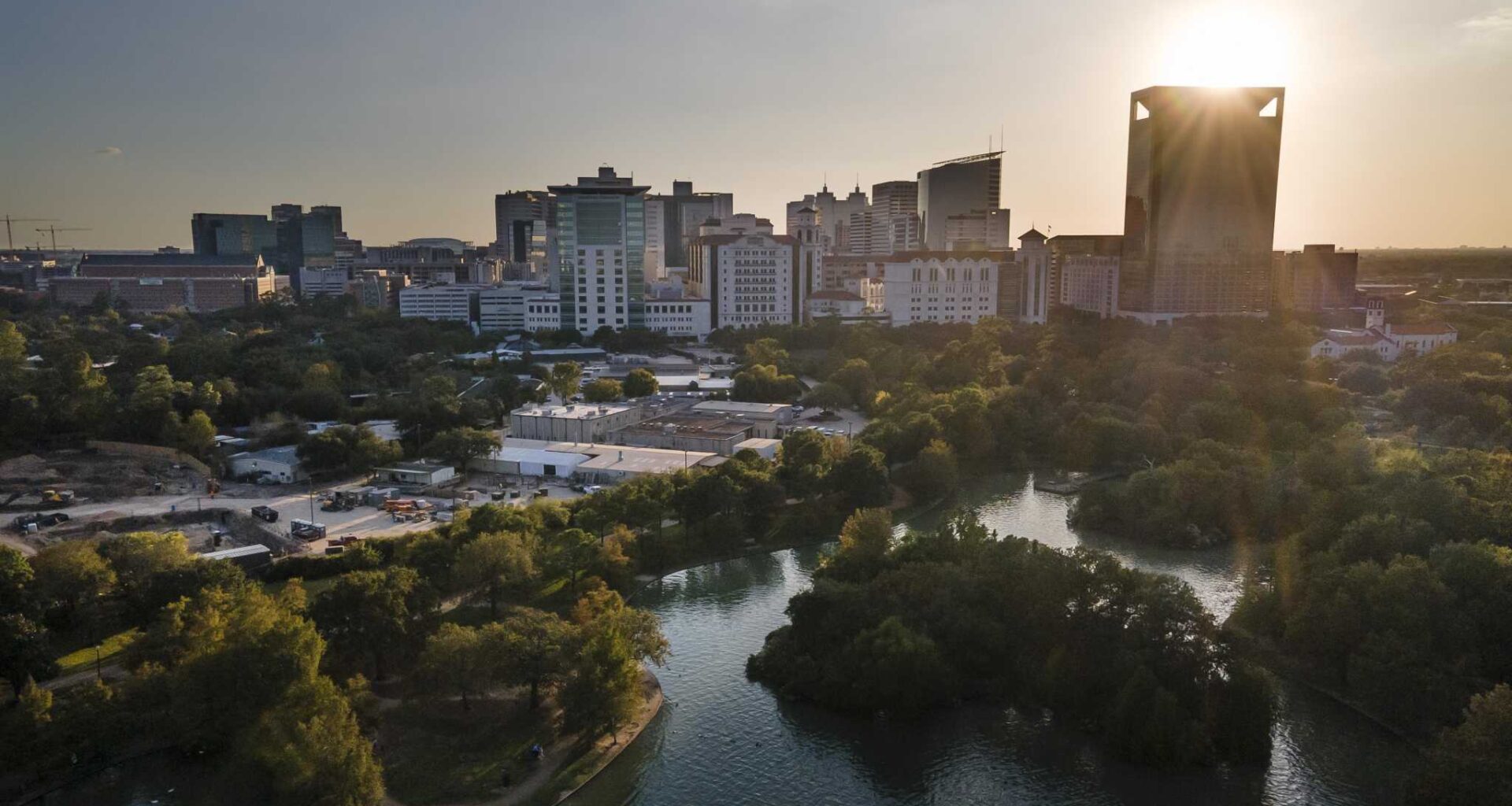
The Texas Medical Center seen from McGovern Lake in Hermann Park on Friday, Nov. 6, 2020, in Houston.
Mark Mulligan, Houston Chronicle / Staff photographer
Houston hospitals know how to prepare for the city’s largest events, but the upcoming 2026 FIFA World Cup presents unique challenges.
Seven World Cup matches are scheduled in Houston between June 14 and July 4, with national teams from at least nine countries set to play at NRG Stadium. The influx of international visitors over a three-week period sets the event apart from others the city has hosted in the past, said Dr. Luis Ostrosky, chief of infectious diseases for UTHealth Houston and chief epidemiology officer for Memorial Hermann Health System.
“Our mantra is this is like having seven Super Bowls within a month,” Ostrosky said. “We expect a lot of people.”
Article continues below this ad
READ MORE: Houston health officials are confident Ebola is ‘not a public health threat’ ahead of World Cup
Houston hospitals and public health agencies told the Houston Chronicle they have been preparing for the World Cup for the past year, with emergency management teams meeting at least once a month to discuss everything from staffing to monitoring for infectious diseases. The plans that hospitals already had in place for large events, natural disasters and emergencies were a framework for the preparations.
The ongoing Ebola outbreak in the Democratic Republic of Congo presented a last-minute challenge because the nation’s soccer team is setting up its base camp in Houston and faces Portugal at NRG Stadium on June 17. But health officials have said the risk of Ebola spreading in the U.S. remains low, and hospitals said they are confident in the protocols they have in place to monitor for infectious diseases.
Texas Children’s Hospital, for example, has a special isolation unit at its West Campus hospital. Employees undergo regular training to treat patients with highly contagious infectious diseases, said Dr. Brent Kaziny, medical director of emergency management for the children’s hospital.
Article continues below this ad
“That unit routinely does training to be ready for things,” Kaziny said. “It’s heightened their sense of readiness in case there’s any concerns for Ebola.”
An unprecedented planning challenge
Houston has hosted large events like the Super Bowl and NCAA Final Four, and thousands flock to the city each year for the Houston Livestock Show and Rodeo. But the World Cup is expected to draw more than 500,000 visitors from across the globe.
Hospitals’ emergency management teams have been meeting since last summer to prepare for the event. They’ve also worked with partners like the Houston and Harris County public health departments, the Texas Department of State Health Services and the SouthEast Texas Regional Advisory Council to develop broader regional strategies.
READ MORE: What does the Ebola outbreak mean for Houston and the World Cup? We asked Peter Hotez. | Opinion
Article continues below this ad
“Preparedness isn’t something you build up overnight or in six months. These are plans and systems we’ve developed over many years, and it’s just a continual refinement of those plans to ensure we’re at the ready,” Kaziny said.
Houston hospitals said they plan to operate as normal but could adjust staffing levels if patient volumes are significantly higher once the World Cup begins. Hospitals also have protocols to call in extra help in case of a mass casualty incident or a natural disaster, said Ashley Thurman, an emergency manager at Harris Health Ben Taub Hospital.
“(The World Cup) is during our time of prepping for hurricane season, so our staff is already on standby and know they could be called in at a moment’s notice,” she said. “We have a plan to call in staff very quickly if we need to.”
A FIFA banner is shown along Downtown Houston’s new permanent car-free Main Street Promenade ahead of the World Cup in Houston Friday, May 29, 2026.
Melissa Phillip/Houston Chronicle
Monitoring for infectious diseases
Infectious disease surveillance is a critical part of public health planning for any large event. During the World Cup, hospitals need to watch for common respiratory illnesses like the flu and COVID-19 as well as diseases that are more prevalent in countries with national teams playing in Houston.
Article continues below this ad
Texas DSHS officials sent hospitals a list of health conditions to monitor during the event. The list includes conditions that could present a significant health concern, like Ebola or measles, as well as conditions that are less likely to have a significant impact, such as malaria and mumps.
Hospital emergency departments use travel screenings to identify patients who have been outside the U.S. Those screenings help healthcare workers identify the possible cause of a patient’s symptoms and find the best treatment, Ostrosky said.
READ MORE: Check out the Houston Chronicle’s full coverage of the 2026 FIFA World Cup
Memorial Hermann has also been ensuring its hospitals have adequate stocks of medications needed to treat infectious diseases like malaria, Ostrosky said.
“We’ve been drilling our ERs to dust off our procedures on how to deal with (international) patients,” he said.
Article continues below this ad
Texas hospitals are required to report cases of highly contagious infectious diseases to their local public health agency. The Texas DSHS and UTHealth also set up a hotline for clinicians to call for guidance on concerning symptoms, said Chris Medina, the director of Texas DSHS’s state medical operations center.
“We’re going to be at a heightened monitoring level during the entire World Cup, so we will be prepared to help any jurisdictions that need support,” Medina said.
Preparing for language barriers
Houston hospitals have interpreters for some languages commonly spoken by residents, such as Spanish and Vietnamese. But they also contract with outside agencies to offer virtual interpreter services in hundreds of languages, including American Sign Language.
Patients will be able to use a tablet computer to videoconference with an interpreter. Harris Health has used the service to translate in more than 90 languages in the past, Thurman said.
READ MORE: A commuter’s survival guide to Houston traffic during the 2026 World Cup: Worst days, road closures
The health system is also working to add language translation to its medical records platform so the paperwork that patients take home after a visit will be in their preferred language, said Libby Thomas, the vice president of operational services and disaster preparedness at Harris Health.
A pull-tab resource sheet for anti–human trafficking awareness is taped inside a restroom at Texas Children’s Hospital in Houston on Wednesday, Nov. 12, 2025.
Raquel Natalicchio/Houston Chronicle
Human trafficking awareness
Houston hospitals are also preparing for the World Cup by spreading awareness about human trafficking, as perpetrators have historically looked to exploit major sporting events as a cover for illegal activity.
Most hospitals in the Houston area have protocols to respond to suspected human trafficking, which is defined as the use of force, fraud, or coercion to compel someone into commercial sex or labor. Memorial Hermann’s emergency management team has highlighted the issue in the run-up to the World Cup, said Jamie Ferrell, the director of forensic nursing for the health system.
Texas passed a law in 2019 that requires healthcare workers who provide direct patient care to complete human trafficking training to obtain or renew a license. The law also requires emergency departments to post human trafficking awareness signs in patient rooms and restrooms.
At Memorial Hermann, suspected cases of human trafficking are reported to the forensic nursing team, whose members are trained to manage a patient’s medical and legal needs, Ferrell said. The team can connect victims to support and services or give them information they can use when they’re ready to ask for help.
“Healthcare is open 24/7, so that’s one of the things we emphasize,” Ferrell said. “Come back. You cannot come back too much.”