
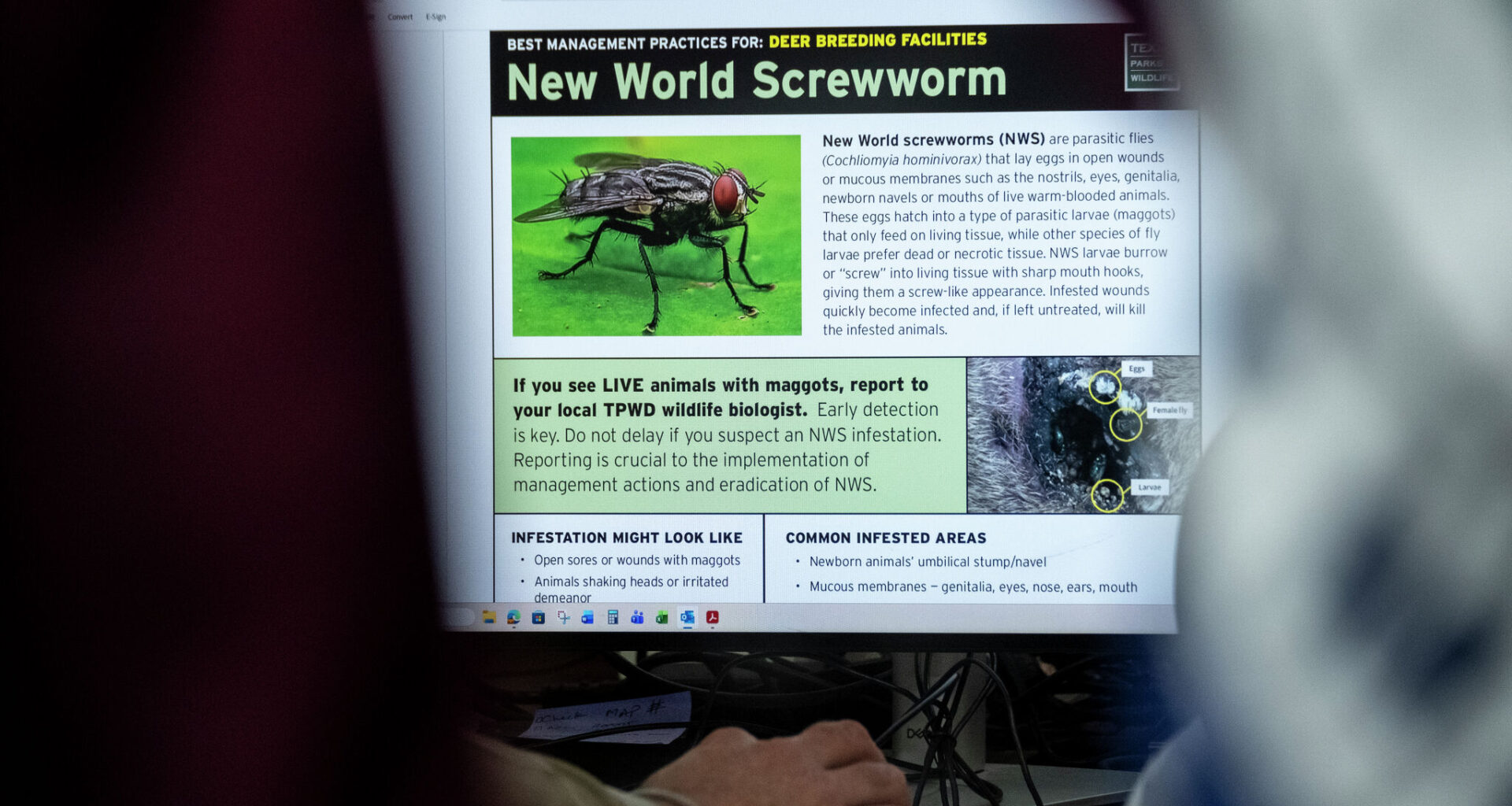
Beaumont Public Health is urging residents, especially people who own or care for pets or livestock, to watch for signs of New World screwworm infestations.
A city of Beaumont news release said there have been four reported cases of New World screwworm infestations in Texas, including one in Andrews County involving a dog.
New World screwworm is a parasitic fly. Its larvae infest wounds in warm-blooded animals, including pets, livestock and wildlife, and, rarely, people. Unlike some fly larvae that feed on dead tissue, screwworm larvae feed on living tissue, causing painful wounds that can worsen if left untreated.
“Public awareness is one of our strongest tools in preventing the spread of New World Screwworm,” said Kenneth Coleman, director of Beaumont Public Health. “The more people understand what to look for and how to respond, the better prepared we will be to protect our animals and our community.”
The release said federal and state agencies are conducting containment efforts, and officials said the pest could spread more rapidly without public awareness and early intervention. The Centers for Disease Control and Prevention says symptoms can include a foul-smelling odor from the site of the infestation and bleeding from open sores.
Residents who own or care for animals should:
Female flies are attracted to the smell of a wound or body opening, such as the nose, mouth, eyes, ears or genitals, according to the CDC. Even small wounds can attract flies; the CDC says they can lay eggs in wounds as small as a tick bite. One female can lay 200 to 300 eggs at a time and up to 3,000 during her 10- to 30-day life span. After the eggs hatch, the larvae feed on living flesh for about seven days before dropping to the ground, burrowing into the soil and emerging as adult screwworm flies.
The CDC says not to throw live larvae in the trash or outside because doing so could spread the infestation. If maggots or eggs fall out of a wound, place them in a leakproof container with rubbing alcohol to kill them.