
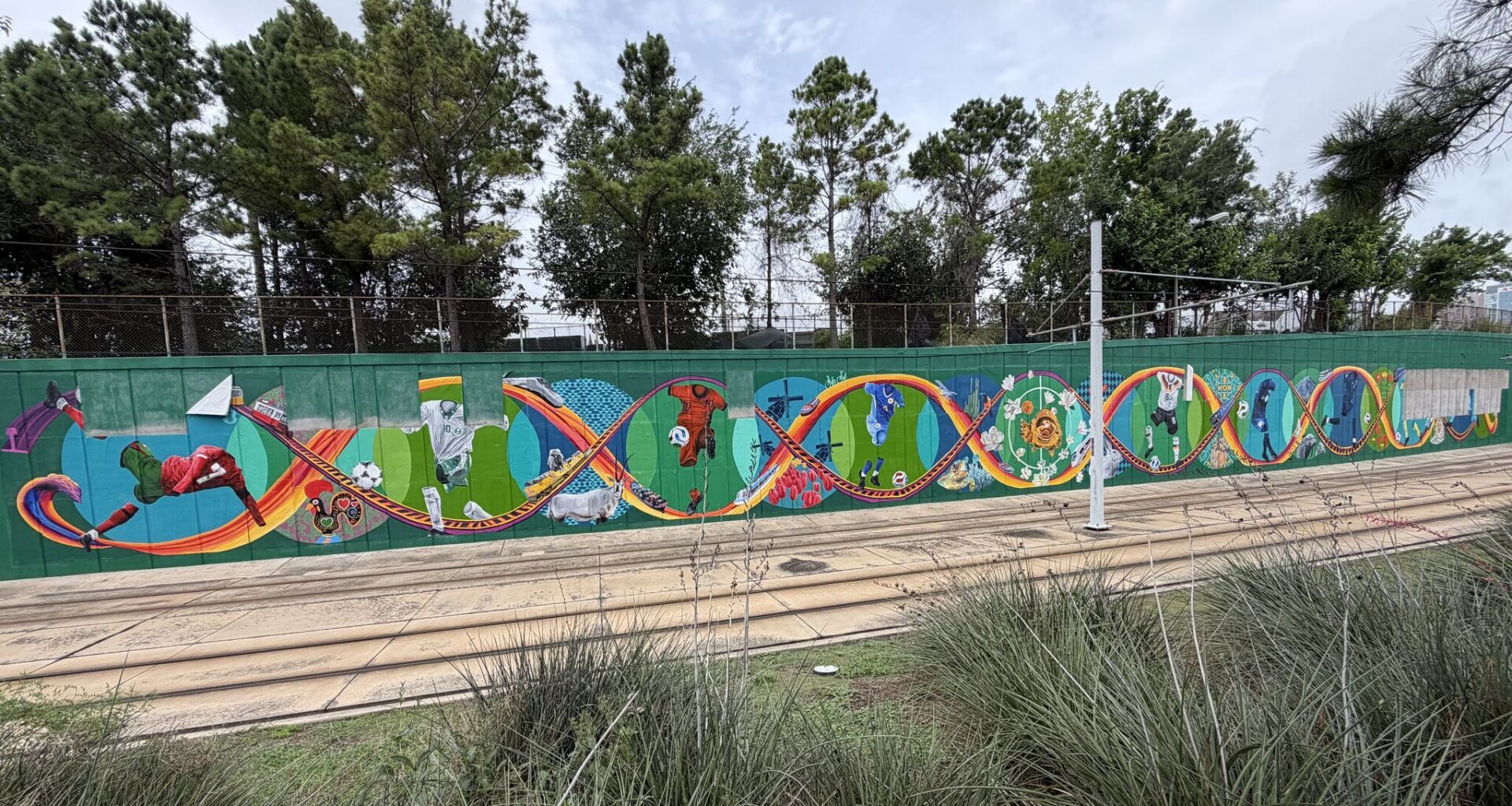
Betirri unveiled his East End Gateway Mural to honor the neighborhood’s ties to soccer ahead of the World Cup on Sunday, June 7, 2026.
Jarrod Wardwell / Houston Chronicle
Festivities tied to the FIFA World Cup kick off in Houston Thursday, beginning a 34-day stress test of the millions of dollars and years of security and logistics planning that have gone into the city’s preparations to host one of the world’s marquee cultural events.
The Houston Police Department is coordinating the response of numerous law enforcement agencies for the event, and helping to staff a unified command center that will operate around the clock throughout the tournament. HPD officers have been notified that days off have been canceled for the duration of the local matches, said Greg Fremin, a former HPD captain and criminology professor. And some units are working 12-hour shifts daily, said Domingo Garcia, executive director of HPD’s Organization of Spanish-Speaking Officers.
READ MORE: World Cup safety and security updates
Article continues below this ad
Houston is hosting seven matches at NRG Stadium, which will be known as Houston Stadium during the tournament. The local host committee launches a Fan Fest in EaDo Thursday that runs through July 19. The first local match takes place June 14 and the last one kicks off on the Fourth of July.
Officials in all the host cities began planning for the event years in advance, running through not just match-day security concerns, but all World Cup-related matters, including transportation and staffing for fan events.
Security experts say Houston seems prepared, but will ultimately be judged after the games are over.
“The World Cup is this highly visible event, but the biggest determination in how it’s gone from a security standpoint and how the city manages it is, did everyone get in and out smoothly?” said Diego Andreu, a principal overseeing operational security risks for the Americas for the risk consultancy company, Control Risks. “Done correctly, it’ll seem like nothing happened.”
Article continues below this ad
Houston has advantages some other cities don’t in that it’s hosted several major events in recent years, such as the Super Bowl and NCAA tournament, and its public safety leaders have experience, Andreu said. But the difference will be spreading the security planning for a single-day event over the weeks-long World Cup, which is expected to draw some 500,000 visitors to town.
Houston will also be challenged in handling the crowds descending on the city without a robust public transportation network like New York or New Jersey have, Andreu said.
Dedicating additional officers to handle traffic around the matches means local agencies need to find additional staffing to work normal patrol beats, ensuring there isn’t a drop off in normal service, Andreu added.
Fremin said he’s confident local officials’ planning will be effective.
“Houston is just very adept at handling large-scale venues for security purposes,” Fremin said. “I’d like to say some it’s one of the best in the nation among big city police departments.”
Article continues below this ad
Local, state and federal officials in charge of handling public safety planning for the matches in Houston have mostly spoken in generalities about their plans, though Tommy Calabro, chief safety and security officer for the host committee, said immigration agents won’t have a visible presence at the games.
Most of the U.S. host cities are following a script laid out in federal assessments of major events, Andreu said. The World Cup has been designated with the highest Special Event Assessment Rating, or SEAR, which means federal law enforcement will closely coordinate with HPD and other local agencies.
More than $64 million in federal grants will help cover overtime and other operational costs the city will incur while hosting.
The grant funds are arriving as the police and fire departments continue to struggle with high overtime costs. City finance officials told city council members this month that HFD is over budget by $51 million and HPD by $16 million, mostly due to spending on overtime.
Article continues below this ad