
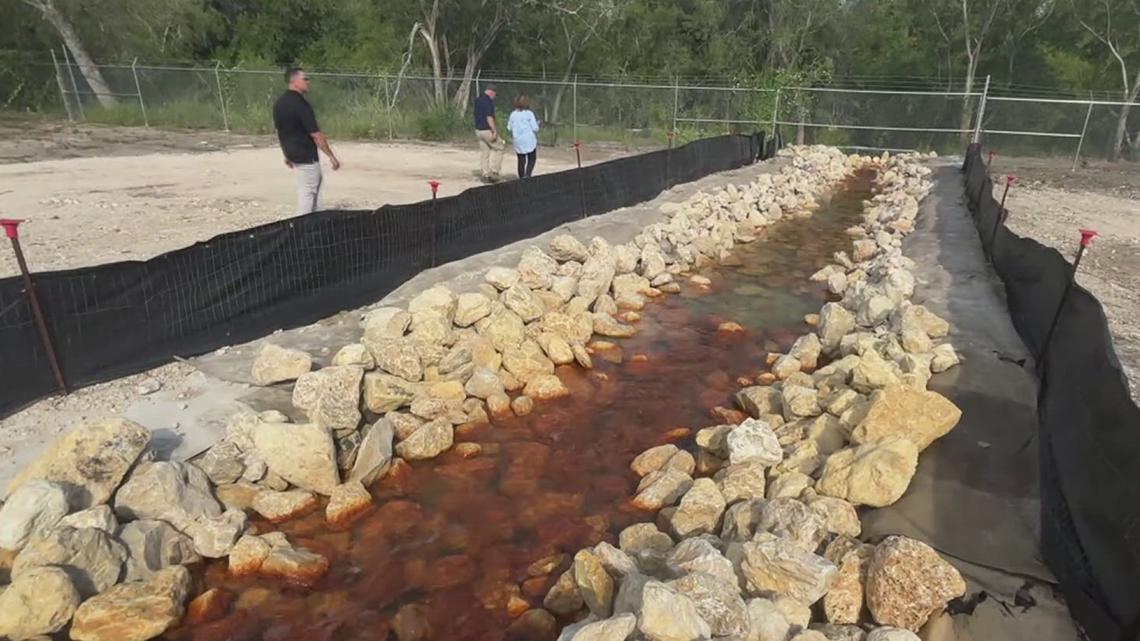
The project has sparked a legal fight between Corpus Christi and the communities of Sinton and St. Paul, which rely on the aquifer for daily life.
CORPUS CHRISTI, Texas — nts saying there’s no emergency, data showing that there’s no emergency, and a district being asked to use powers it does not possess to solve an emergency that doesn’t exist,” Hobson said.
The project has sparked a legal fight between Corpus Christi and the communities of Sinton and St. Paul, which rely on the aquifer for daily life.

This story continues below.
For Papalote resident Tiele Dockens, the issue extends beyond water.
“We have a cow-calf operation, and if I don’t have water to water my cattle, then we don’t have anything. Then our property values are worth nothing. So I’m just really concerned about the evidence that has been brought forward,” Dockens said.
Dockens also listened to testimony from a hydrogeologist during public comment and said the scientific concerns raised should not be overlooked.
“When he talked about the glass and putting the straw in, it is going to draw down from the top, not just from where they’re pulling from. So that’s where it gets scary for a lot of us to think about,” she said.
Following public comment, the San Patricio County Groundwater Conservation District board considered creating rules that would allow it to issue emergency permits. The motion failed in a 3-2 vote.
Corpus Christi City Manager Peter Zanoni said that while he understands residents’ frustrations, the city does not have the luxury of waiting.
“We have had a little reprieve with the rain, but given that we have a huge customer base crossing seven counties, we don’t want to mess around with time,” Zanoni said.
Sinton Mayor Mary Speidel, a leading opponent of the project, said she was surprised by the board’s decision.
With the emergency permits off the table, Speidel said the city will continue its contested case and move forward through the standard hearing process.