
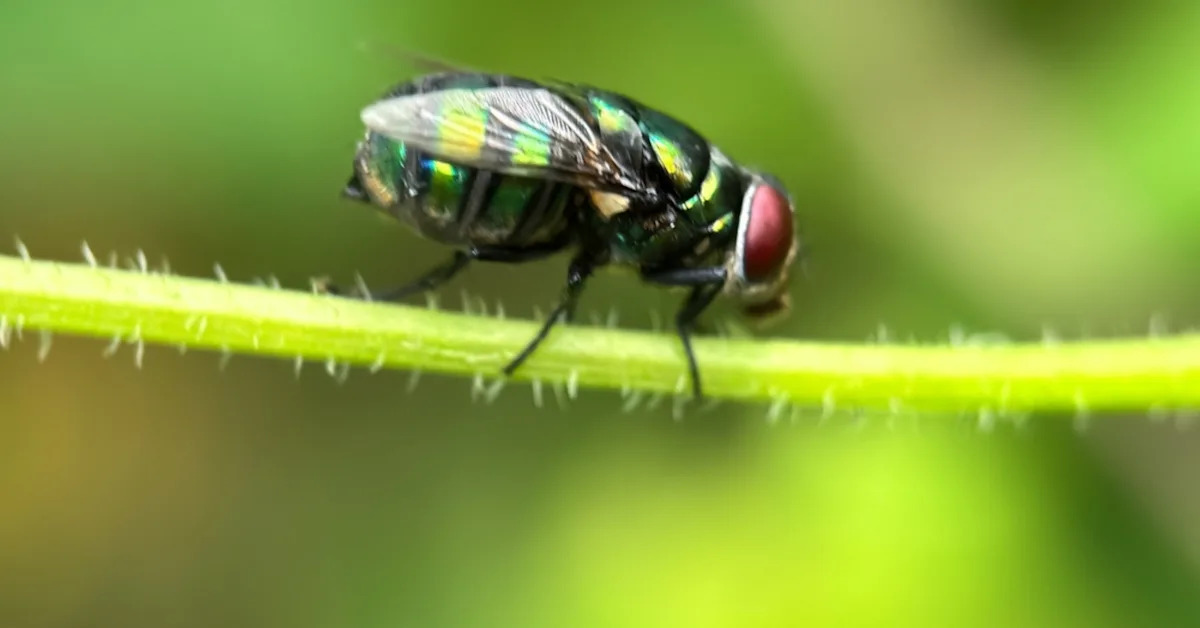
The Texas Animal Health Commission has confirmed a sixth case of New World screwworm in Texas, prompting the expansion of an infested zone in the state’s Hill Country and South Texas regions.
According to TAHC, the latest detection was identified June 9 in a bovine from Edwards County. As a result, the newly established infested zone now extends into portions of Sutton and Val Verde counties.
“On June 9, the sixth case of NWS was found in a bovine from Edwards County. The infested zone established around the case extends into portions of Sutton and Val Verde Counties,” TAHC said in a public notice. “Animal owners can check if they are located in an infested zone and need to follow additional movement requirements by viewing the TAHC interactive case map.”
The commission noted that the map will continue to be updated as the situation evolves and urged producers to review current movement requirements associated with all detections.
The Edwards County case follows a series of recent confirmations across Texas. Federal and state officials previously confirmed a case in a calf in La Salle County, marking the second infestation detected there. Other confirmed cases have been identified in Zavala County and Gillespie County, while an additional case involving a dog was traced to neighboring New Mexico.
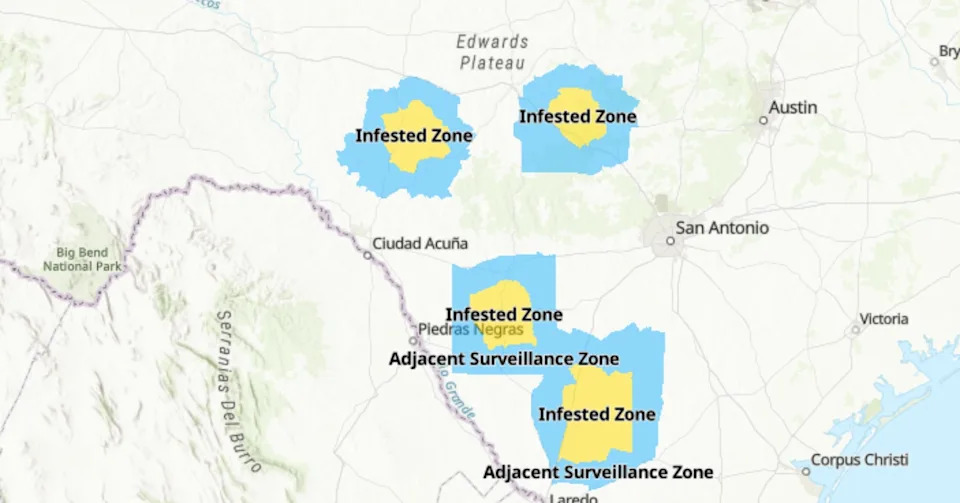
The Texas Animal Health Commission’s current New World screwworm response map shows four active infested zones across South and Central Texas, including the newest detection in Edwards County. (Image courtesy of TAHC)
The resurgence of New World screwworm has triggered a coordinated response from state and federal animal health officials. The parasite, which was largely dealt with in the United States in 1966, remained responsible for numerous detections through the 1980s and poses a serious threat to livestock, wildlife, pets and, in rare cases, humans. Unlike common fly larvae that feed on dead tissue, screwworm larvae burrow into living flesh, causing severe wounds and potentially death if left untreated.
To combat the outbreak, the U.S. Department of Agriculture is relying on a strategy that successfully eliminated the pest decades ago: sterile insect releases.
Agriculture Secretary Brooke Rollins announced that a large-scale deployment effort is underway.
“Four million flies a week by air and 4 million more on the ground within eight miles of known cases, plus another 90 million across the wider response area,” she has said.
The sterile insect technique works by releasing laboratory-raised sterile male flies into affected areas. Female screwworm flies typically mate only once during their lifetime, meaning matings with sterile males produce no offspring and gradually suppress the wild population.
The National Cattlemen’s Beef Association has also voiced support for the ongoing eradication efforts.
“We appreciate USDA and other agencies for working rapidly to bolster critical resources that protect producers, including building a domestic sterile fly facility, increasing fly surveillance, and expediting the availability of necessary drugs and treatments for cattle,” the organization said after Texas confirmed its first screwworm case this year.
“We defeated this harmful pest before in the 1960s by investing heavily in sterile fly dispersal and NCBA will continue using every tool in the toolbox to ensure Screwworm is eradicated in the U.S. once again,” it added.
Animal health officials are urging livestock owners to remain vigilant and inspect animals daily for signs of infestation, including draining or enlarging wounds, maggots or egg masses, unusual irritation, and lesions around body openings such as the ears, nose, genitals, and umbilical area.
Anyone who suspects a screwworm infestation should immediately contact a veterinarian, state animal health official, or USDA representative.
Producers can determine whether their operations fall within an active infested zone by consulting the TAHC interactive case map. Additional movement restrictions apply to livestock and other warm-blooded animals located within designated quarantine and infested zones.
As surveillance expands and additional sterile flies are released, officials say rapid detection and producer cooperation will remain critical to preventing further spread of the pest across Texas.
The post 6th screwworm case confirmed in Texas, expanding infested zone appeared first on AGDAILY.