
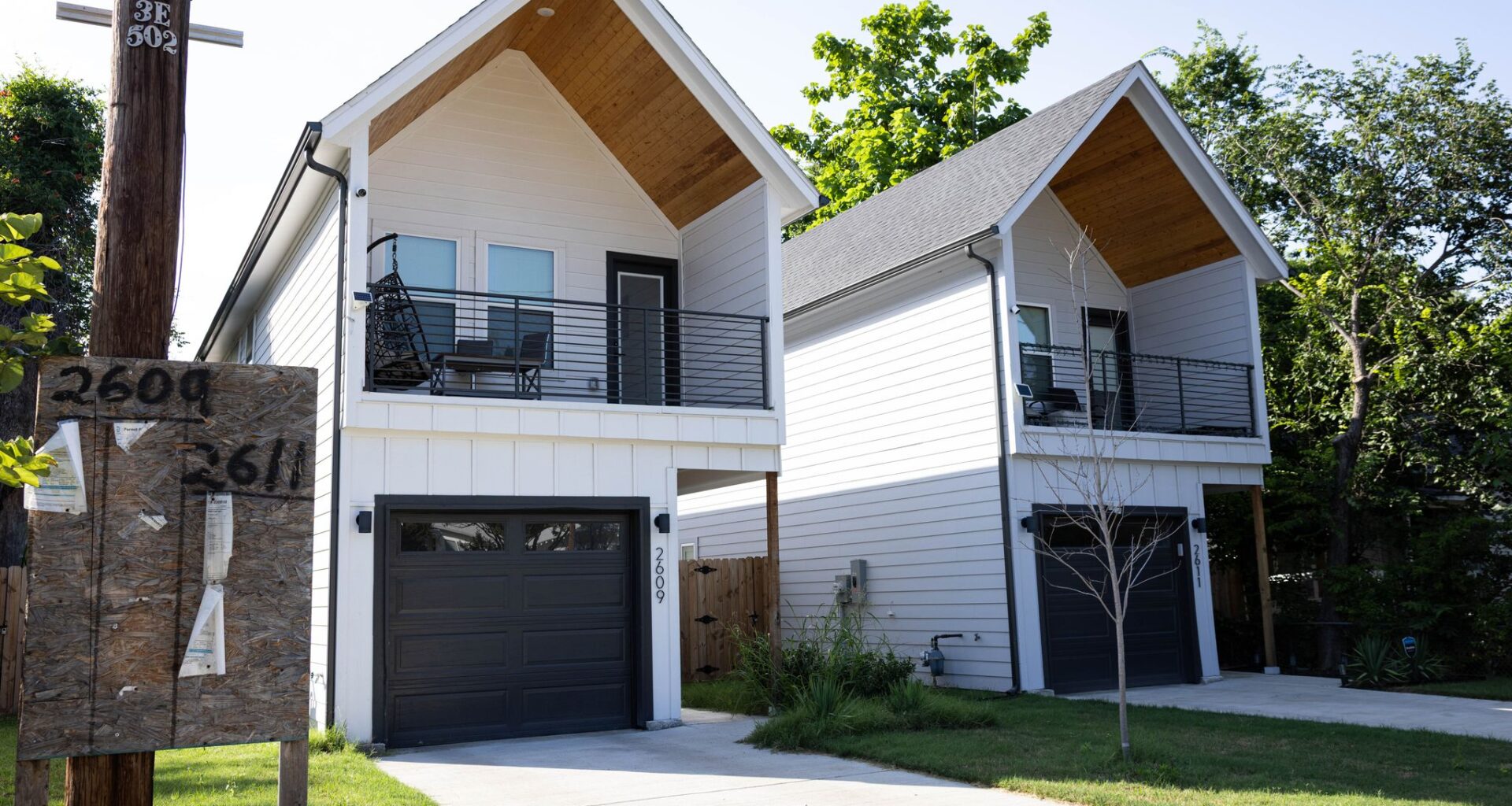
Contemporary homes on Warren Avenue in the Queen City neighborhood on July 7, 2025, in Dallas.
Angela Piazza/Staff Photographer
South Dallas advocates waited into the night for the City Council to consider what they say is a monumental change in how their neighborhood handles new development.
New zoning for more than 3,300 acres crossed the finish line after 9 p.m. Wednesday, following a lengthy discussion around the City Hall building that took center stage for much of the day. The plan was proposed years ago as South Dallas neighbors called for more amenities and watched contemporary builds fill vacant lots beside decades-old homes.
“Too often, communities are told they must choose between preservation and investment,” said Adam Bazaldua, the area’s representative. “Today, we are demonstrating that we can do both.”
The new rules are expected to implement a community vision aimed at embracing needed growth while preserving the area’s character. Changes would direct growth to thoroughfares like Martin Luther King Jr. Boulevard or South Fitzhugh Avenue, and create design standards for new development to fit the area’s historic character while allowing for more housing options.
“We can welcome new investment while protecting the character and the history that makes South Dallas so special,” Bazaldua said. “We can create opportunities for future generations while honoring those who built these neighborhoods in the first place.”
The effort began in 2020, faced delays from the COVID-19 pandemic, and has culminated after a few hundred community meetings over the years, advocates say. City Council last year approved a long-term area plan for the zoning and other recommendations. Residents voiced concerns about displacement, business support, new home designs and losing cultural identity.
Related: This South Dallas neighborhood could be heading toward historical designation, protections

Scottie Smith II, now a city landmark commissioner, and Tabitha Wheeler-Reagan, now the area’s plan commissioner, led the group that formed the area plan. It’s been supported by Diane Ragsdale, a former City Council member. All three waited through the afternoon and into the night to speak.
“Initially, we thought about trying to push it another two weeks to hear this thing,” Smith said. “But I said, we’ve waited five, six years, so what’s another couple hours.”
Wheeler-Reagan explained how the zoning got to this point. More than 20 years ago, the community was concerned with neighborhood decline and formulated protective measures for a large swath of South Dallas. She has said the neighborhood saw an abundance of businesses selling alcohol or lodging associated with drug activity and prostitution.
Related: South Dallas, Fair Park area zoning to be considered by City Council after plan commission vote
Now, South Dallas is facing new opportunities and a different set of challenges, she said.
Article continues below this ad
“It is important to recognize that South Dallas proper is a destination within our city and a community with a distinct identity and vital role in Dallas overall fabric,” Wheeler-Reagan said.
The zoning changes are a significant step forward, Ragsdale said, but it’s important the new regulations continue to be reviewed and monitored as future development takes hold to ensure they work as intended. The land-use plan must be carried forward, she said.
“I strongly recommend establishing a dedicated implementation entity and identifying a reliable funding source to coordinate efforts, facilitate projects and to ensure the successful realization of the plan’s goals and vision,” she said.
The new zoning, while a major step, is just one component of the multifaceted vision for handling growth. The zoning re-maps which areas have what uses, and mainly impacts future development, not existing structures.
The city sent more than 8,800 notices to property owners within 500 feet of the zoning area, city staff said. There were about 11,000 properties included. In favor, there were 87 replies, with 72 in opposition. Asked why the process took so long, staff noted the magnitude of the change. The zoning is for the largest area in the city under one planned district. Community engagement also took time.
During the day, Smith said he had seen some community members come and go from the audience. Aside from the three community advocates, there were no other speakers that night.
Several council members congratulated residents and community leaders. Supporters of the zoning have said community participation has been paramount to the plan’s development.
“This was not a process that happened to the community,” Bazaldua said, pausing as his voice cracked. “This was a process built by the community through countless meetings, workshops, conversations and public hearings.”
This reporting is part of the Future of North Texas, a community-funded journalism initiative supported by the Commit Partnership, Communities Foundation of Texas, The Dallas Foundation, the Dallas Mavericks, the Dallas Regional Chamber, Deedie Rose, Lisa and Charles Siegel, the McCune-Losinger Family Fund, The Meadows Foundation, the Perot Foundation, the United Way of Metropolitan Dallas and the University of Texas at Dallas. The News retains full editorial control of this coverage.