
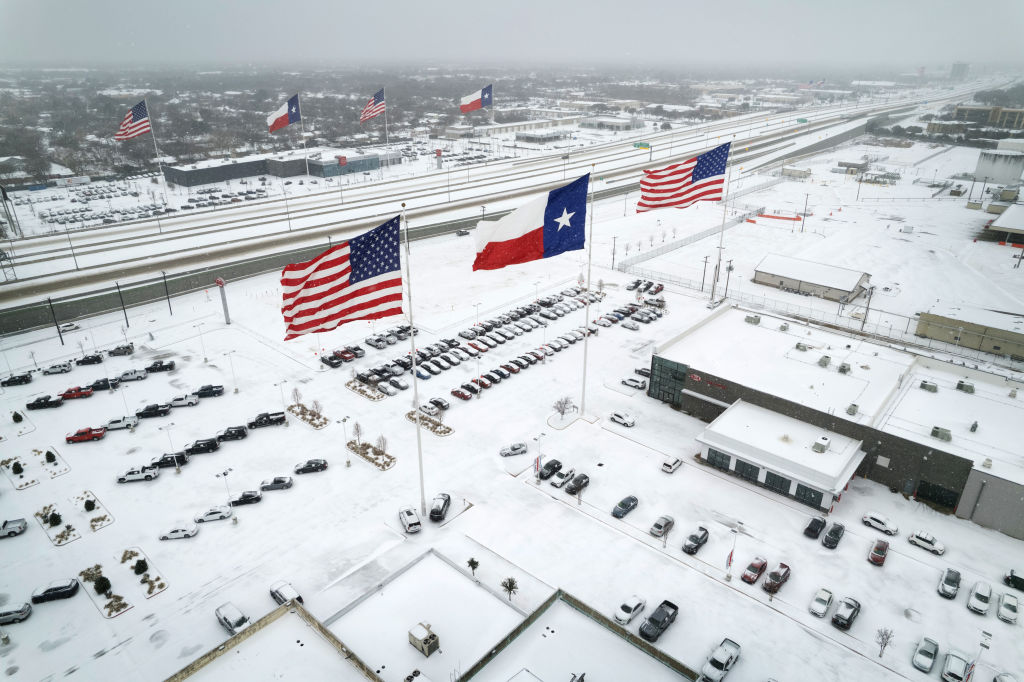
With predictions of a “Super El Niño” completely changing Texas weather expectations from summer to winter, does it mean Texas could see snow when calendars turn to the colder months? Forecasters say heavier snow events could blanket some towns, and others warn the Polar Vortex is worth keeping a close eye on this winter as well.
An El Niño often means snowier-than-normal winters for the Texas Panhandle, according to forecasters.
“In general, El Niño conditions lead to wetter, snowier conditions in Amarillo and cooler maximum temperatures during the winter,” an NWS explainer on the oceanic phenomenon states.
AccuWeather Meteorologist Peyton Simmers told MySA that significant snow odds with a strong El Niño really depend on whether cold air can make its way far enough south. With the low pressure system created by an El Niño, moisture will be drawn into Texas. And while it often means rainy days, a strong enough arctic blast capable of breaking the line over Texas could produce snowy days.
“In terms of the Panhandle, if you can get cold air to get down enough, that can create some larger snowstorms down there,” Simmers said. “But that’s again if the cold air is able to penetrate that far south.”
But the Old Farmer’s Almanac – which has been producing long-term weather forecasts since 1792 – says it’s worth keeping a close eye on the Polar Vortex. Apparently, when this large mass of frigid air circulating around the Arctic weakens or changes position, it can push colder air further south and into Texas.
Overall, El Niño is a meteorological term for when Pacific waters are warmer than average. This causes the Pacific Jet Stream, carrying moisture, strengthens while the polar jet stream shifts north. This means strong cold outbreaks are reduced in the Central U.S., but that stream curves back down. And it can be dragged back down toward Texas on certain occasions, creating snowy conditions.
“It seems clear from the data that an increase in snowfall across West Central Texas seems to be one of the numerous El Niño,” Patrick A. McCullough wrote for the National Weather Service office in San Angelo, noting average winter tend to bring about 3.8 inches of snow to Abilene. “The seasonal snowfall average during an El Niño nearly doubled to 7.4 inches.”
For San Angelo, those numbers climb form 2.7 inches of snowfall in a regular winter to 4 inches during an El Niño winter.
Back in 2023, San Antonio Express-News Meteorologist Anthony Franze said El Niño winters produce measurable snowfall in the Alamo City 32% of the time since 1950 (of out 25 El Niño winters).
While San Antonio didn’t see measurable snow in 2023, there was a significant ice storm that all but shut down the city and left many hunkering at home.
So, while an El Niño doesn’t guarantee snowfall, it does typically spell some severe bouts of winter across most Texas. The jury is still out on whether San Antonio or South Central Texas will be making snow angels, but the folks further north should brace for significantly more snowfall.