
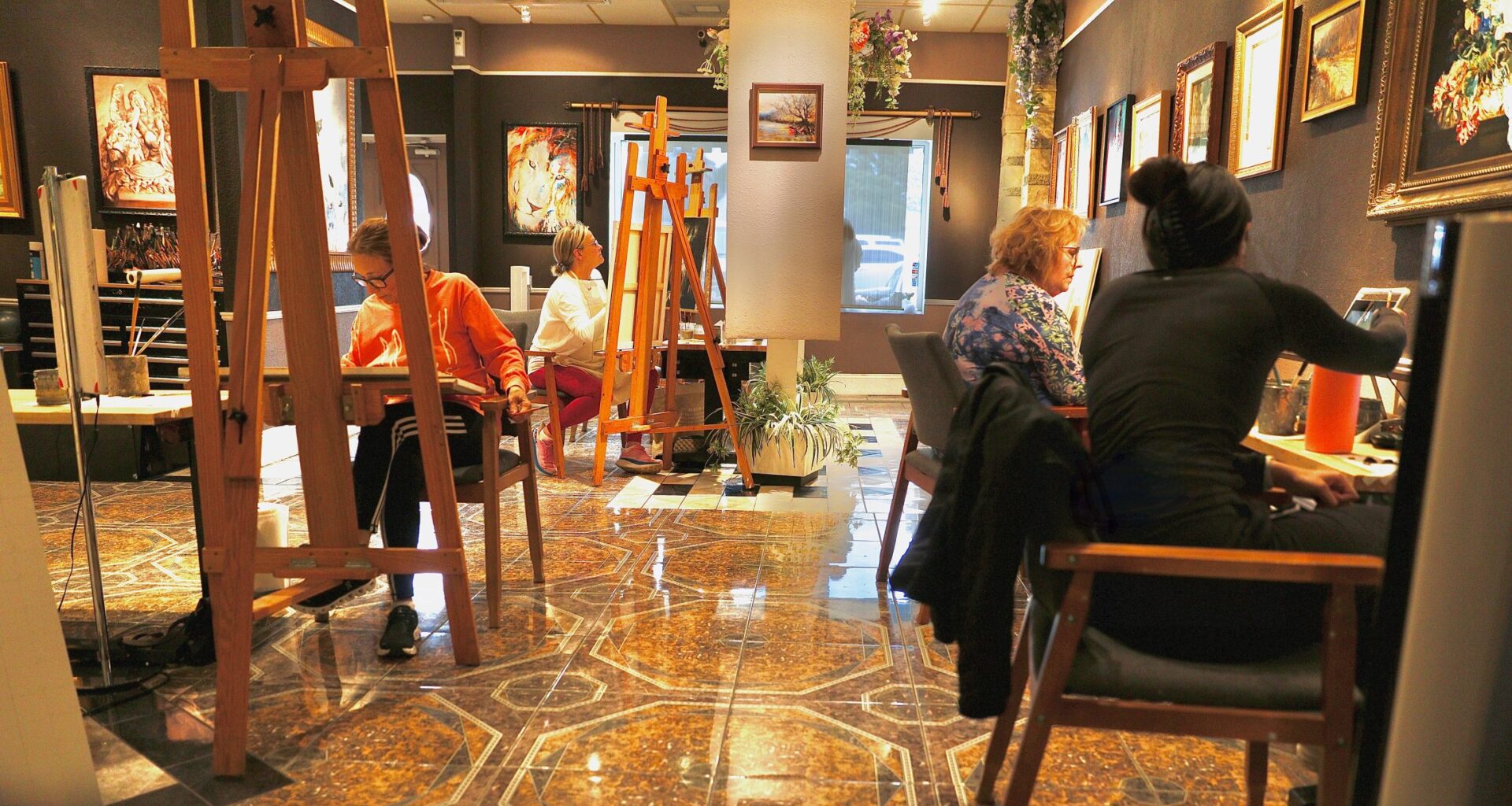
Studio Sabka is based in Fort Worth’s West 7th district, but its origins stem overseas.
The art studio was founded by late Albanian artist Sabaudin Grigor Aleksi Xhaferi, or “Sabka.” His skill in fine art painting, caricatures and scene paintings earned him 27 awards and recognition across various countries, from Greece to Japan.
Sabka brought his career in art and his family with him to Fort Worth in 1999, and later opened Studio Sabka in 2006.
Today, the studio is led by Sabka’s son, Laert Aleksi Xhaferi. The lessons are inspired by Sabka’s ability and skill to capture human experiences and emotion in his work.
Studio Sabka specializes in providing lessons on realism art and catering to the needs of its students.
The studio holds art shows to display students’ completed pieces and, occasionally, artwork from the Sabka family.
Contact information:
Website: studiosabka.com
Phone: 817-870-0003
Facebook: Studio Sabka | Fort Worth TX
Instagram: @studiosabka
This interview has been edited for length and clarity.
Nicole Lopez: The lessons offered at Studio Sabka are centered around traditional, classical art and learning how to work with various mediums. What can students expect during lessons?
Laert Aleksi Xhaferi: We teach academic classicism — realism is essentially what it is. The way we do our art is we photo reference images, meaning people will bring pictures that we can use to paint from. We will break it down into steps. As a teacher, I’ll instruct how the result of the painting should look.
We guide them step by step to a finished product. I’m a strong believer that my job’s to teach. I don’t expect my students to know what I’m teaching. I always tell people, “When you come to my studio, you don’t need to be a good artist. You need to be a good student.”
Lopez: How is Studio Sabka unique from other art studios?
Xhaferi: We cater a lot to people’s individual needs. Other studios may have a curriculum or a program or something very specific that they’re teaching. We’re more open to listening to what our clients want from us and try to deliver that. If someone came to us and said, “I want to learn how to be a good portrait artist,” we’re going to specifically focus on portraits with that person even though we might have other students in class doing their own thing.
We could have four students in a class and every one of them is doing a completely different program.
The other thing that sets us apart is we make everything extremely easy for people. When you come in, you don’t have to bring your own art supplies. You don’t have to set up, clean up, you don’t have to break anything down.
We prepare and have everything ready for our students when they come in. They spend a couple hours painting, they learn, and then they get to go home and enjoy the rest of their day without worrying about what supplies they need to purchase. We simplify that process, so they can focus on one thing and one thing only, and that is learning.
Lopez: What does your client base look like?
Xhaferi: It’s very much a repeat business kind of business. We rely on clients to come back and continue taking classes from us.
We have to keep them happy, provide services that they enjoy coming back to month after month, week after week. That doesn’t mean that we don’t have short-term people, because we do offer trial packages where people get to try out our classes, and some of them just do the trial package and move on. Our hope is that people stay with us and they want to grow as we’re growing.
Lopez: Do students get to showcase their work?
Xhaferi: We do art shows for our students’ paintings. The paintings that we typically hang up will be hard work from our students. We do two shows a year, where we get to showcase everything that they’ve done in the past six months and those will stay up for a certain period of time. Some of the students pick up their paintings sooner, some of them leave them there for months until the next show.
Lopez: Anything else you want readers to know?
Xhaferi: All ages are welcome. We teach people from 6 years old to 90 to 100 years old. It doesn’t matter. Anybody can do art. Art is not something that you need talent to be good at, but you do need a good education.
You need good teachers. You need someone who knows what they’re teaching and how to independently teach to certain students. Every student is different.
Everybody has their own speed. What we do a really good job of is paying attention to our students’ needs and working with them to teach them what they need to learn at the pace they want.
Nicole Lopez is the environment reporter for the Fort Worth Report. Contact her at nicole.lopez@fortworthreport.org.
The Report’s environment coverage is supported by the Marilyn Brachman Hoffman Foundation.
At the Fort Worth Report, news decisions are made independently of our board members and financial supporters. Read more about our editorial independence policy here.
This <a target=”_blank” href=”https://fortworthreport.org/2026/06/12/made-in-tarrant-european-artists-legacy-guides-lessons-at-west-7th-art-studio/”>article</a> first appeared on <a target=”_blank” href=”https://fortworthreport.org”>Fort Worth Report</a> and is republished here under a <a target=”_blank” href=”https://creativecommons.org/licenses/by-nd/4.0/”>Creative Commons Attribution-NoDerivatives 4.0 International License</a>.<img src=”https://i0.wp.com/fortworthreport.org/wp-content/uploads/2021/04/cropped-favicon.png?resize=150%2C150&ssl=1″ style=”width:1em;height:1em;margin-left:10px;”>
<img id=”republication-tracker-tool-source” src=”https://fortworthreport.org/?republication-pixel=true&post=603305&ga4=2820184429″ style=”width:1px;height:1px;”><script> PARSELY = { autotrack: false, onload: function() { PARSELY.beacon.trackPageView({ url: “https://fortworthreport.org/2026/06/12/made-in-tarrant-european-artists-legacy-guides-lessons-at-west-7th-art-studio/”, urlref: window.location.href }); } } </script> <script id=”parsely-cfg” src=”//cdn.parsely.com/keys/fortworthreport.org/p.js”></script>