
Officials say ranch owners, including Yeti’s co-founder Ryan Seiders, are cooperating with contractors working on the planned Big Bend border wall.
Kristin Finan/American-Statesman, Austin American-Statesman
A co-founder of Austin-based Yeti is among the owners of a West Texas ranch that is cooperating with construction efforts tied to the Trump administration’s planned border wall in the Big Bend region, according to public records obtained by Marfa Public Radio.

Ryan Seiders, who co-founded the outdoor products company known for its coolers, drinkware and conservation-focused branding, is one of several owners connected to the Moody Bennett Ranch. The property stretches across Presidio, Jeff Davis and Hudspeth counties and lies in the path of the proposed border wall.
Article continues below this ad
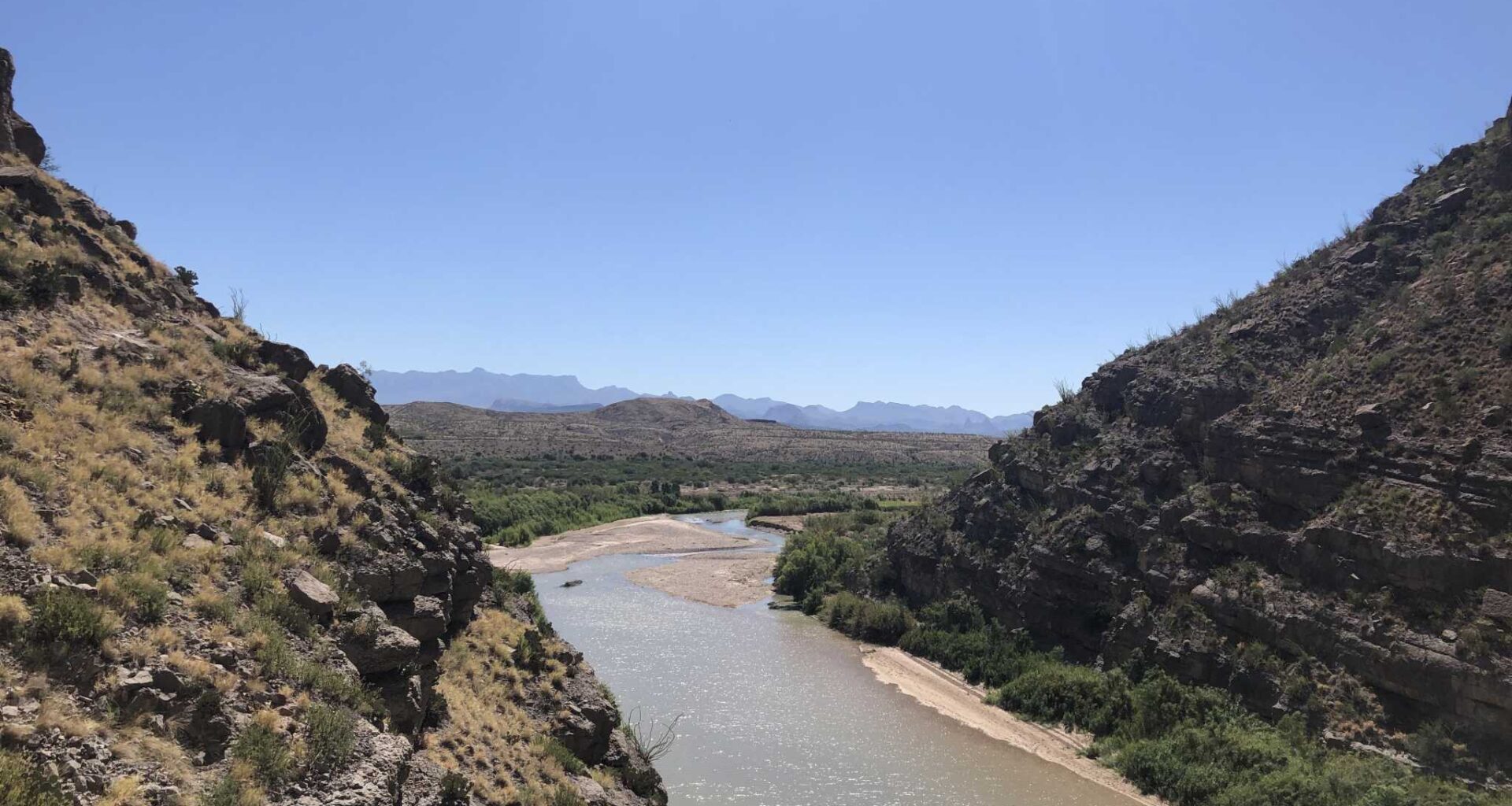
The plan to build a 30-foot-high steel wall along the river outside Big Bend National Park, with some infrastructure within the park’s boundaries, is drawing ire from locals and environmental advocates nationwide who argue the plan poses a risk to the region’s wildlife, dark skies and tourism economy.
The plan to install a 30-foot-high steel wall outside Big Bend National Park, with infrastructure within the park’s boundaries, is drawing ire from environmental advocates nationwide.
Sara Diggins/Austin American-Statesman
Despite the pushback, local property owners have already granted U.S. Customs and Border Protection and its contractors permission to build the wall, and some are even helping get the project off the ground, Marfa Public Radio reported.
Presidio County Commissioner Deirdre Hisler said this week that Moody Bennett Ranch’s owners are cooperating with contractor Barnard Construction on multiple aspects of the project, including worker housing and activities related to wall construction, according to Marfa Public Radio. Barnard Construction is one of the companies awarded billions of dollars in federal contracts this week to begin construction work.
Article continues below this ad
Hisler told Marfa Public Radio that heavy equipment and a “mud pit” are already present on the property and that surveying work for construction has begun.
A spokesperson for CBP did not name Moody Bennett Ranch or Seiders specifically, but told Marfa Public Radio the agency obtained “voluntary Rights of Entry for Construction (ROE-C) with some landowners which allows CBP immediate access to private property to complete surveys, land valuation/appraisals, and to begin construction activities.” Panel installation on the border wall is scheduled to begin in late summer or early fall, the spokesperson said.
“YETI Holdings does not have any involvement or ownership in Moody Bennett Ranch or Trans Pecos Ice, LLC,” a Yeti spokesperson said in a statement.
Article continues below this ad
Ryan Seiders did not immediately respond to a request for comment.
Yeti’s environmental image meets the Big Bend wall fight
Seiders and his brother, Roy, co-founded Yeti in 2006 with a focus on their Hill Country upbringing and love for the outdoors.
Although the brothers sold their two-thirds controlling interest in the company to private equity firm Cortec in 2012, they remain public faces of the brand. They are not involved in the company’s day-to-day operations.
Article continues below this ad
The billion-dollar company, headquartered in Austin, touts a commitment to environmental stewardship on its website.
“At YETI, we believe that what is good for the planet is synonymous with what is good for business,” the website states. “Our approach to keeping the wild, wild is science-based, data-driven, and encompasses the entire life cycle of our products.”
Yeti has used Big Bend imagery and references in its branding, the report noted, including marketing tied to the Rio Grande and a drinkware line honoring Big Bend National Park.
Seiders is also connected to Big Bend through his role as an advisory board member of the Borderlands Research Institute, a land conservation program at Sul Ross State University in Alpine. His board member biography notes he has “ranching interests” across Texas.
Article continues below this ad
The director of the Borderlands Research Institute, Louis Harveson, spoke about the border wall project’s potential to harm native wildlife populations at a recent panel discussion hosted by the advocacy group No Big Bend Wall, the station reported.
Records connect Seiders to Moody Bennett Ranch
Seiders’ ownership stake in the ranch is documented across several property and business records, according to the station.
Public records show Moody Bennett Ranch was purchased in 2023 by a company called Trans Pecos Ice LLC. State business filings identify Seiders and three others as members, or owners, of the company. Additional Texas Secretary of State records reviewed by the station show Seiders listed in management roles associated with the company, and linked through another entity, RRS ICE LP, which is identified as an owner of Trans Pecos Ice LLC.
Article continues below this ad
Officials say ranch owners, including Yeti’s co-founder Ryan Seiders, are cooperating with contractors working on the planned Big Bend border wall.
Provided by Linda Lange
The ranch’s involvement in the border wall construction project is significant due to its size and location. The property contains roughly 12 to 15 miles of frontage along the Rio Grande and sits directly along the route of the planned wall, Marfa Public Radio reported. The ranch’s land has substantial water resources, which CBP has said could be needed during construction to support dust suppression.
The Moody Bennett Ranch was listed for sale for $5.7 million in 2025 but is currently off the market.
Article continues below this ad
The ranch was once a major farm and cattle operation, supported by more than nine wells above an aquifer with a large supply of fresh water, according to the property listing cited by Marfa Public Radio.
Ironically, the ranch is known for a 1950s-era Supreme Court case in which owner Lynn Moody Bennett shot a horse from under a Border Patrol officer when the agency came to arrest undocumented immigrants working in the ranch’s cotton fields.