
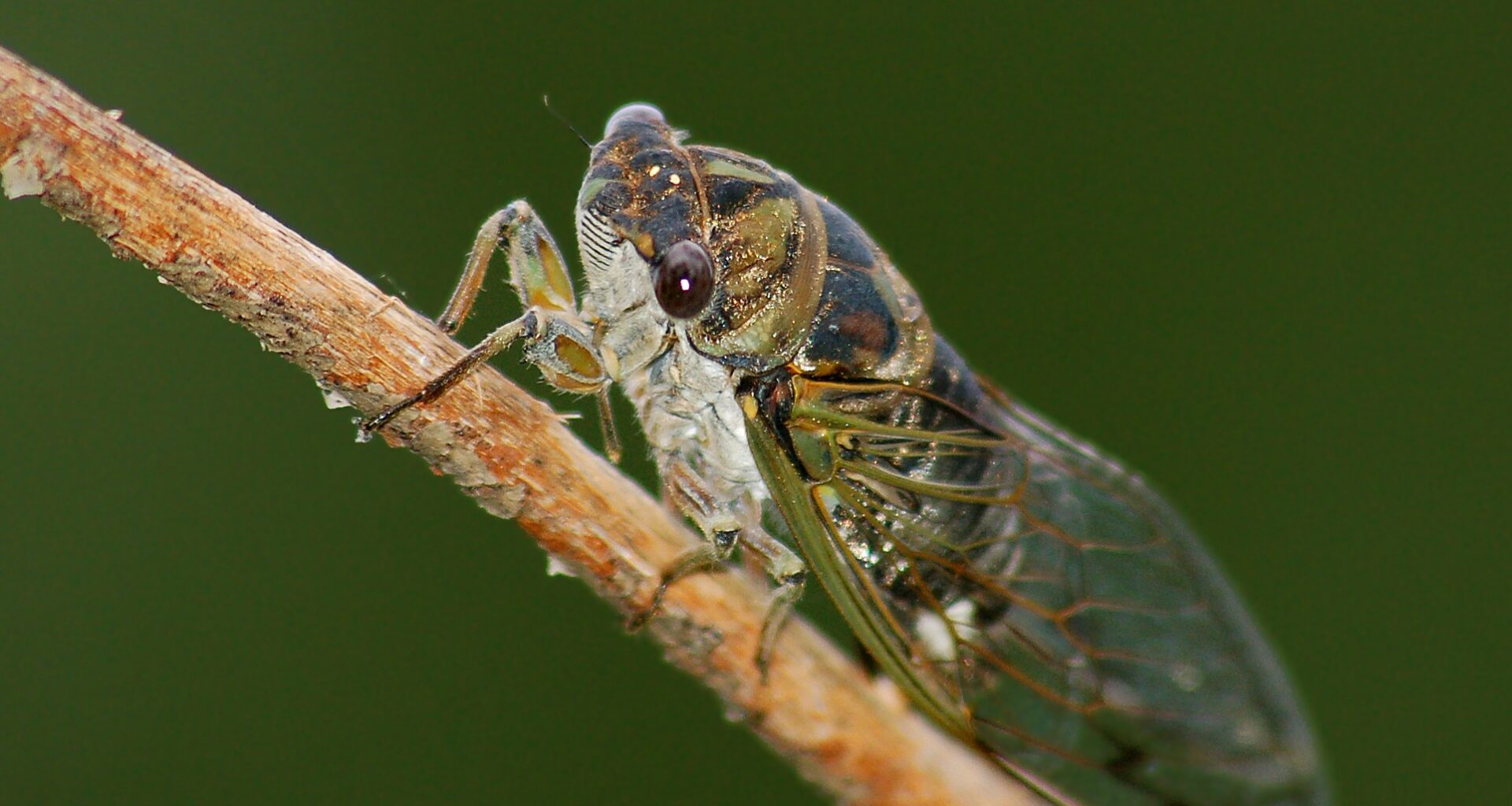
Cicadas emerge when soil temperatures warm sufficiently, filling Texas summers with their familiar buzzing calls.
Getty Images
The buzzing of cicadas is one of the most recognizable sounds of a Texas summer. Some Texans also believe it’s a clue about what’s coming next.

According to a popular theory, early cicada activity signals a hotter summer, while a later start could mean milder temperatures.
Article continues below this ad
The idea recently resurfaced in an online discussion among Austin-area residents, where one person claimed to have noticed the pattern over the past decade. Years when cicadas started singing earlier seemed to coincide with longer, hotter summers, while later appearances lined up with milder seasons.
The theory isn’t entirely without logic, according to Molly Keck, an entomologist with Texas A&M AgriLife Extension Service in San Antonio. But it’s probably telling us more about spring weather than what’s coming in July or August.
Keck said she wasn’t able to find any scientific literature supporting the claim, though she understands why people might see a connection.
Article continues below this ad
“But that is kind of the general idea,” Keck said.
Cicadas begin emerging when soil temperatures reach roughly 64 to 65 degrees. As more emerge, males gather in large choruses and produce the familiar buzzing calls used to attract females.
“The earlier they come out, the sooner we start to hear the singing,” Keck said.
Article continues below this ad
That timing is largely driven by conditions that have already happened. Warmer winters and springs can cause soil to heat up faster, prompting earlier emergence, while cooler conditions can delay it.
“If we had a really cold winter and it didn’t warm up for a while in the spring, then we’re going to hear them later,” Keck said. “The variation is going to be more dependent on previous weather patterns.”
A Texas A&M entomologist says cicada emergence is closely tied to soil temperatures and spring weather conditions.
Texas A&M AgriLife
Rain can also influence soil temperatures, though Keck said cicada emergence depends on multiple factors.
Article continues below this ad
“There is definitely a relationship between cicada activity and spring conditions,” she said. “But Texas weather is so random. We can have a mild spring and then a very hot summer, or a cold spring and then a hot summer.”
Researchers haven’t established a scientific link between cicada songs and summer forecasts. Texas is dominated by annual “dog-day” cicadas that emerge every year, unlike the famous periodical cicadas found in parts of the eastern United States.
“They’re predictable, and they always happen,” Keck said. “Most of the information about them is anecdotal.”
Texas is also home to numerous cicada species, each with its own call and potentially different temperature preferences.
Article continues below this ad
“It’s hard to figure out what’s going on because there are so many variables,” Keck said.
Still, she isn’t dismissing the theory outright.
“They might be right,” she said. “They could start tracking it and keeping a log. I’m not saying it’s not happening. I just don’t know that it’s been scientifically proven.”
Article continues below this ad
Ironically, Keck said this year feels late to her.
“I feel like I’m hearing cicadas later this summer than I ever have,” she said. “We’re already in the middle to end of June, and I just started noticing them last week.”