
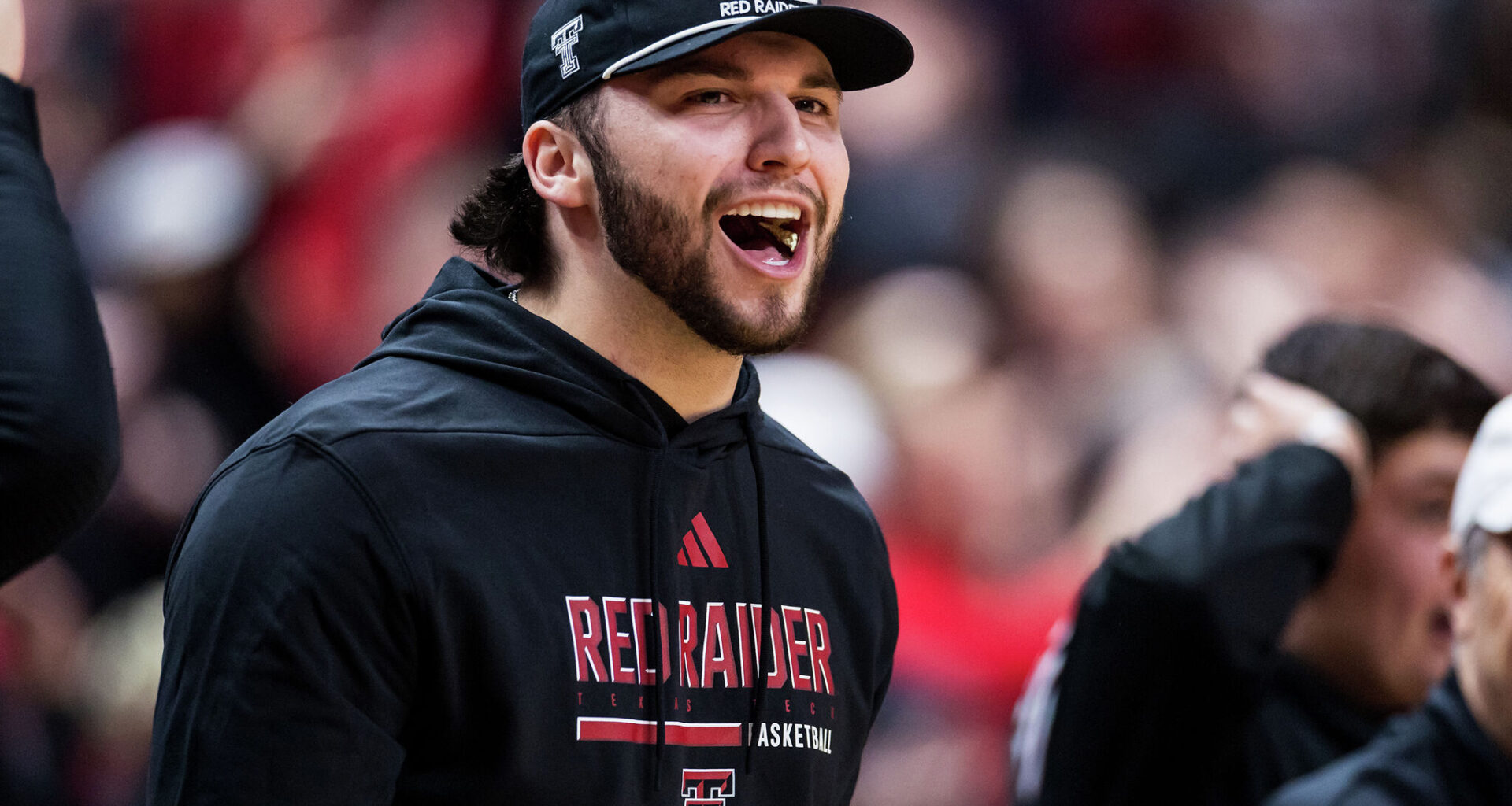
Quarterback Brendan Sorsby shouts during the first half of a game Jan. 24, 2026, between the Houston Cougars and the Texas Tech Red Raiders in Lubbock.
John E. Moore III/TNS
Forget touchdowns and turnovers on the football field.

The latest Red River rivalry is being fought on legal grounds, as Texas Attorney General Ken Paxton and Oklahoma Attorney General Gentner Drummond spar over whether the Big 12 can punish Texas Tech for letting quarterback Brendan Sorsby play this fall.
Sorsby was initially ruled out after admitting to sports gambling, including bets involving football. A Texas court restored his eligibility. The NCAA is appealing. And the case has spiraled into a public feud between the two Republicans, leaving the Big 12 caught in the middle.
Article continues below this ad
Neither attorney general has direct regulatory authority over the Big 12, but both are using their offices to press competing legal arguments as conference leaders weigh their options.
Drummond on Friday urged the Big 12 to suspend Sorsby and consider sanctions against Texas Tech, saying the school’s decision to move forward with him after the court ruling had damaged the integrity of college football.
“If Texas Tech will not do the right thing, the Big 12 should,” Drummond wrote in a letter to conference leaders.
His intervention came after Paxton’s office told the conference that disciplinary action against Texas Tech could expose the Big 12 to “substantial liability.”
Article continues below this ad
The dispute has produced a combustible mix of politics, football and interstate sniping over a quarterback whose case has reverberated across college sports.
Each fall, the Texas Longhorns and Oklahoma Sooners, both members of the SEC, renew the Red River Showdown at the Cotton Bowl in Dallas. Now the elected attorneys general are waging their own version in legal letters.
Paxton, who recently won the Republican nomination for the Senate and faces Democrat James Talarico in November, has publicly defended Texas Tech’s position.
In a letter to the Big 12, his office said the school was complying with a judge’s eligibility order. Any punishment for that, the letter said, would amount to an unlawful effort to “disadvantage Texas Tech by cutting off access to the resources it needs to compete.”
Oklahoma Attorney General Gentner Drummond says the Big 12 can sanction Texas Tech and enforce the conference’s rules.
Sue Ogrocki/AP
Drummond, elected Oklahoma attorney general in 2022, disagreed, calling on the conference to suspend Sorsby and enforce its rules. He said he got involved because Oklahoma State is a Big 12 member.
Article continues below this ad
“Texas Tech has acted in a manner adverse to the Big 12 and the integrity of college football as a whole,” he wrote.
Gambling fallout
The dispute centers on a temporary injunction a Texas judge granted at Sorsby’s request, restoring his playing status. The ruling came after Sorsby acknowledged making about $90,000 in sports wagers over four years, including about 40 bets involving Indiana football while a freshman with the Hoosiers.
Under NCAA rules, betting on one’s own team can result in a permanent loss of eligibility.
At the center of the fight is a Big 12 bylaw that allows member schools to sanction a university whose conduct is deemed harmful to the conference’s interests.
Article continues below this ad
Texas Attorney General Ken Paxton says Texas Tech should not be punished for complying with a court order restoring the quarterback’s eligibility.
Mark Schiefelbein/AP
Writing on behalf of Texas Tech, Paxton’s office warned that using the bylaw against the school could expose the Big 12 and its members to more than $200 million in potential liability.
Such sanctions “would be a per se violation of federal and state antitrust laws,” the letter stated.
Legal showdown
Drummond, however, called Paxton’s legal interpretation “meritless” and said the Texas court order restoring Sorsby’s status applies only to the NCAA.
Article continues below this ad
The Oklahoma attorney general said the Big 12 has authority to punish schools whose actions are deemed harmful to the conference’s interests.
Drummond said Texas Tech’s actions in allowing Sorsby to play had “constituted a shameful chapter in the story of college football.”
Texas Tech officials rejected Drummond’s accusations and said Sorsby completed a monthlong inpatient treatment program and will be subject to monitoring if he plays this season.
School officials also emphasized that Texas Tech was not a party to Sorsby’s lawsuit against the NCAA to restore his eligibility and has not paid his legal fees.
Athletics Director Kirby Hocutt defended Texas Tech’s actions in a video released last week.
Article continues below this ad
“There’s no reason whatsoever to question the integrity of our athletics department,” he said. “Integrity of the game is sacred.”
Bigger questions
As the Big 12 debates how to proceed, some conference school leaders have suggested they should consider refusing to play Texas Tech if Sorsby takes the field.
The case has become the latest example of courts, state officials and athletic conferences colliding over the rules governing college sports.
In recent years, lawmakers from multiple states have challenged NCAA authority on issues ranging from athlete compensation to transfer eligibility.
Sorsby, 22, transferred to Texas Tech earlier this year after two seasons at Cincinnati. He arrived in Lubbock on a reported multimillion-dollar NIL deal as the Red Raiders seek another Big 12 title and appearance in the College Football Playoff.
The Associated Press contributed to this report.