
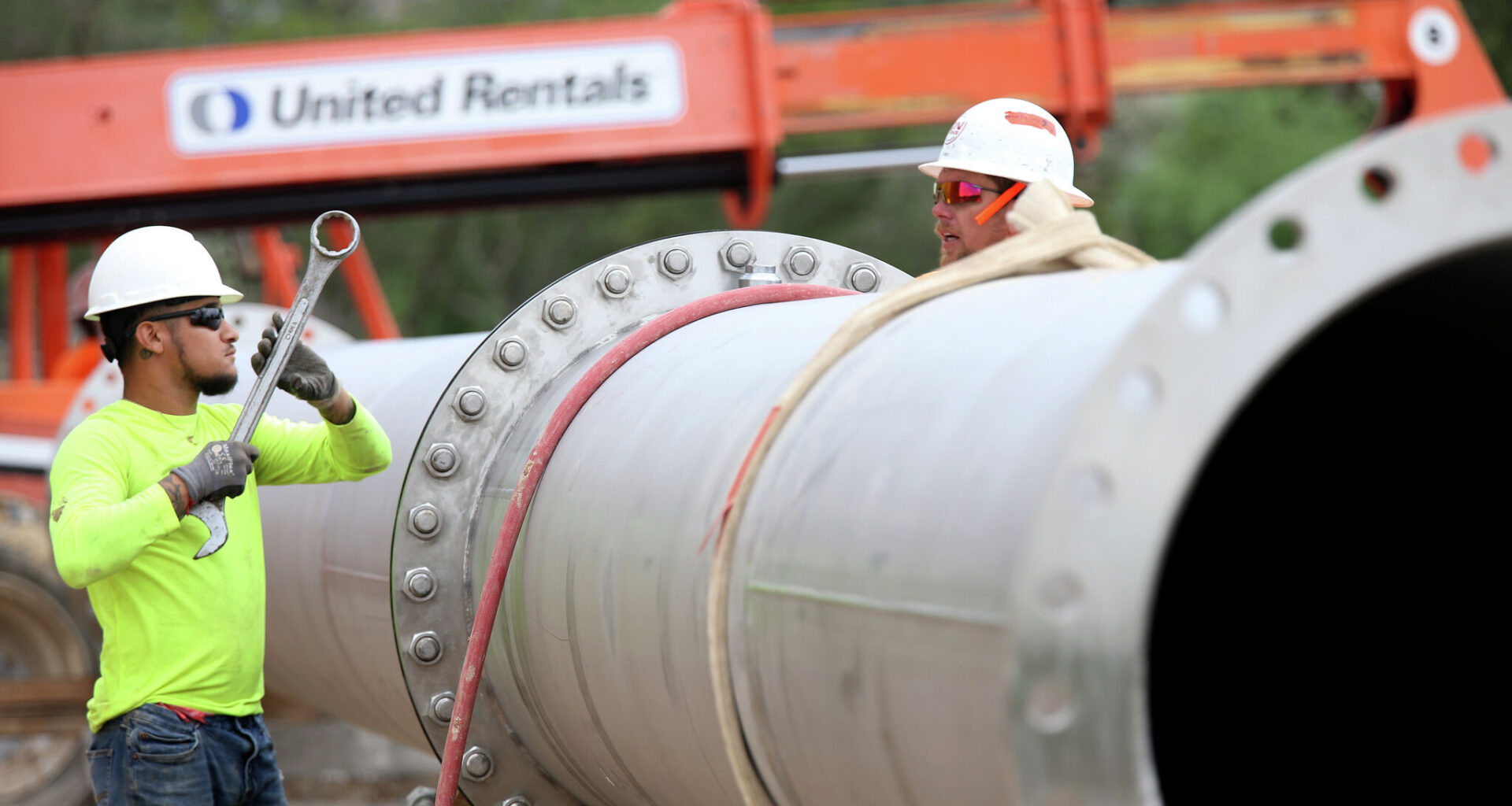
A San Antonio Water System crew works on an outlet pipe in October 2018 at the Agua Vista Station in the Stone Oak area. Our water system requires critical improvements to avoid sewer overflows, boil-water notices, water supply issues, service interruptions, pipeline failures and costly regulatory violations, City Council Member Teri Castillo writes.
JERRY LARA/San Antonio Express-News
San Antonio Water System workers in November 2025 repair a broken water pipe along Broadway in San Antonio. If we delay investment today, we will increase long-term costs and compound public health risks, City Council Member Teri Castillo writes.
Sam Owens/San Antonio Express-News
San Antonio Water System is requesting a modest rate adjustment to fund capital projects necessary for public health, water quality and system reliability, and it merits the City Council’s full support.

SAWS’ rate structure and assistance programs are a model for public utilities. Customers pay for what they use, encouraging water conservation and ensuring high-volume users pay their fair share rather than being subsidized by residential customers.
Article continues below this ad
RELATED: SAWS seeks rate hikes as City Council weighs cost to residents
At the same time, those in need can access programs that help keep their water flowing.
As the representative for District 5, one of the most economically challenged areas in the country, cost increases of any kind are always top of mind for me. That is why I appreciate that SAWS’ proposal includes expanding eligibility for the Uplift affordability program to households earning up to 150% of the federal poverty level, doubling the number of eligible customers.
Data shows that Uplift customers pay less than 1% of their monthly income toward their water bill and would see no increase under the proposed plan.
Article continues below this ad
The average non-Uplift customer would pay 1.18% of monthly income toward their water bill. For reference, the Environmental Protection Agency-recommended affordability threshold is 4.5%.
There are still homes in my district that rely on septic tanks, need water lateral connections or experience leaks. For these families, water infrastructure affects their quality of life every day.
Since the COVID-19 pandemic, SAWS has faced significant economic pressures. Supply chain disruptions, inflation and rising labor costs have driven up the price of routine operations and maintenance.
Also, SAWS has had to comply with state mandates stemming from the February 2021 winter storm, address a $2.6 billion EPA consent decree and respond to the worst drought since the 1950s.
Article continues below this ad
Despite these challenges, SAWS has lowered rates by 12% while continuing to maintain service.
EDITORIAL: City Council shouldn’t play politics with San Antonio’s water security
Now, our water system requires critical improvements to avoid sewer overflows, boil-water notices, water supply issues, service interruptions, pipeline failures and costly regulatory violations.
These improvements will cost more than $1 billion through 2029 and are necessary to ensure San Antonio residents have reliable access to safe water.
Article continues below this ad
SAWS has determined that it is now more expensive to continue patching aging infrastructure than to fully rehabilitate it. As costs continue to rise, it is more financially prudent to invest in repairs now rather than waiting until they fail.
Some of my colleagues have expressed concerns about supporting a rate increase before SAWS further addresses water-loss issues. In a city with extensive aging infrastructure, I agree that reducing water loss must remain a priority. That is why I am encouraged by plans to expand staffing for leak detection and repair, and cut leaks in half by 2035.
Achieving these goals requires proper investment. It is unrealistic to expect SAWS to continue doing more with less.
If we delay investment today, we will increase long-term costs and compound public health risks.
Article continues below this ad
Broken water lines can reduce pressure and enable contaminants to enter the system, putting water quality at risk. Without adequate investment, the likelihood of environmental and permit violations increases.
The decision before the City Council is not easy, particularly during a period of economic uncertainty. Yet when it comes to the health and reliability of our water system, it is not a decision we can afford to take lightly, nor should it become an opportunity to score political points.
City Council Member Teri Castillo represents San Antonio’s District 5.
Article continues below this ad
Have a response? Send us a letter to the editor.