
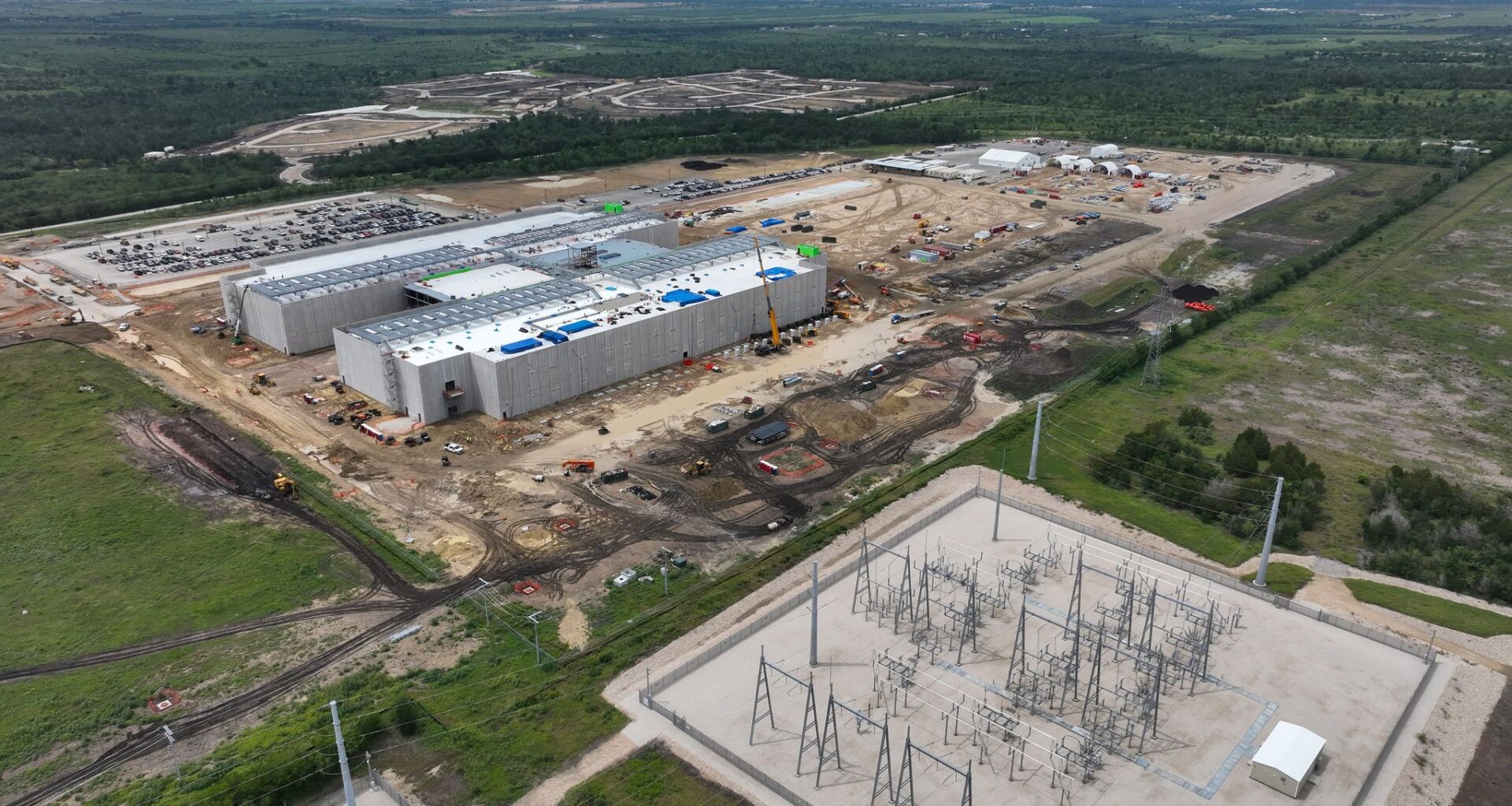
Construction of the EdgeConneX data center is shown last month in Cedar Creek. Instead of shutting the door to growth, the state should welcome projects that help carry their own load, strengthen grid reliability and keep Texas leading the nation in energy and innovation, Wayne Christian writes.
Jay Janner/Austin American-Statesman
When I heard Austin city leaders were facing pressure to pause data center development, I felt a familiar frustration. As an oil and gas regulator, I’ve watched fights like this for a half-century. Before, it was Sierra Club activists who chained themselves to pipelines. Today, Texas is seeing a coalition from across the political spectrum packing city council chambers and county meetings throughout the Lone Star State to oppose data centers.

With the city of Austin and Hays County considering strict limits on the development of new data centers, Texas finds itself at the center of a national debate. As the fastest-growing economy in the country, the state is being asked to slow the development of infrastructure that helps power the modern world.
Article continues below this ad
Our communities have every right to review these projects and put clear, common-sense rules in place. Taking time to get the rules right is the Texas way. However, a moratorium or ban would be a mistake. It would set a dangerous anti-growth precedent for Texas and the rest of America.
If Texas wants to remain the nation’s economic engine, and if America wants to stay ahead in the technologies shaping the future, we need more energy infrastructure and more data center capacity, not less.
The top question folks ask is simple: Can our power grid handle it?
ERCOT’s recent reliability testing underscores why Texas must stay ahead of rapidly growing demand as large new users continue to come online. Gov. Greg Abbott’s recent directive to the Public Utility Commission of Texas (PUC) and ERCOT reinforces a clear principle: new large load customers, including data centers, should bear the full cost of the generation and transmission infrastructure required to serve them. The answer is not telling businesses to leave; it is ensuring they bring sufficient resources with them to support reliability.
Article continues below this ad
TWO VIEWS: Are data centers good for Texas? Breaking down the pros and cons
Many of the largest data center projects are already planning to have their own dedicated power resources on site, including natural-gas-fired power, battery storage and next-generation nuclear technology. That is exactly the kind of private investment Texas should encourage.
Instead of shutting the door to growth, the state should welcome projects that help carry their own load, strengthen grid reliability and keep Texas leading the nation in energy and innovation. So yes, I believe our grid will be able to handle it.
The same concerns have been raised about water, and once again, innovation is delivering solutions.
Article continues below this ad
Data center operators are increasingly adopting closed-loop cooling systems that significantly reduce freshwater demand compared to legacy designs. At the same time, Texas has an opportunity to put produced water from oil and gas operations to work through treatment and reuse. What was once treated as a waste byproduct can become a usable resource for industrial cooling and other applications. That means less strain on municipal water systems and more room for continued economic growth.
SIGN UP FOR THE AUSTIN ANGLE and get Statesman commentaries in your inbox
It is also a plain fact that data centers have operated safely and quietly in Texas communities for decades. Every text message, online banking transaction, medical record, and emergency dispatch depends on them. Texas has built hundreds of data centers with little controversy because most people understood them for what they are: critical infrastructure.
Texans have always met growth challenges by building infrastructure, setting clear rules and solving problems — not by putting development on hold.
Article continues below this ad
A temporary moratorium may sound like a reasonable way to hit pause and sort things out. For major Texas cities, it comes with real costs. It creates uncertainty. It sends the wrong signal to investors. And it runs against the formula that made Texas the fastest-growing economy in America.
It’s time to reject blanket moratoriums and tackle these challenges the Texas way: practical solutions, responsible growth, proper safeguards, and the confidence to build what the future requires.
Wayne Christian is one of three elected members of the Texas Railroad Commission, the state agency that regulates the oil and gas industry.
Article continues below this ad