
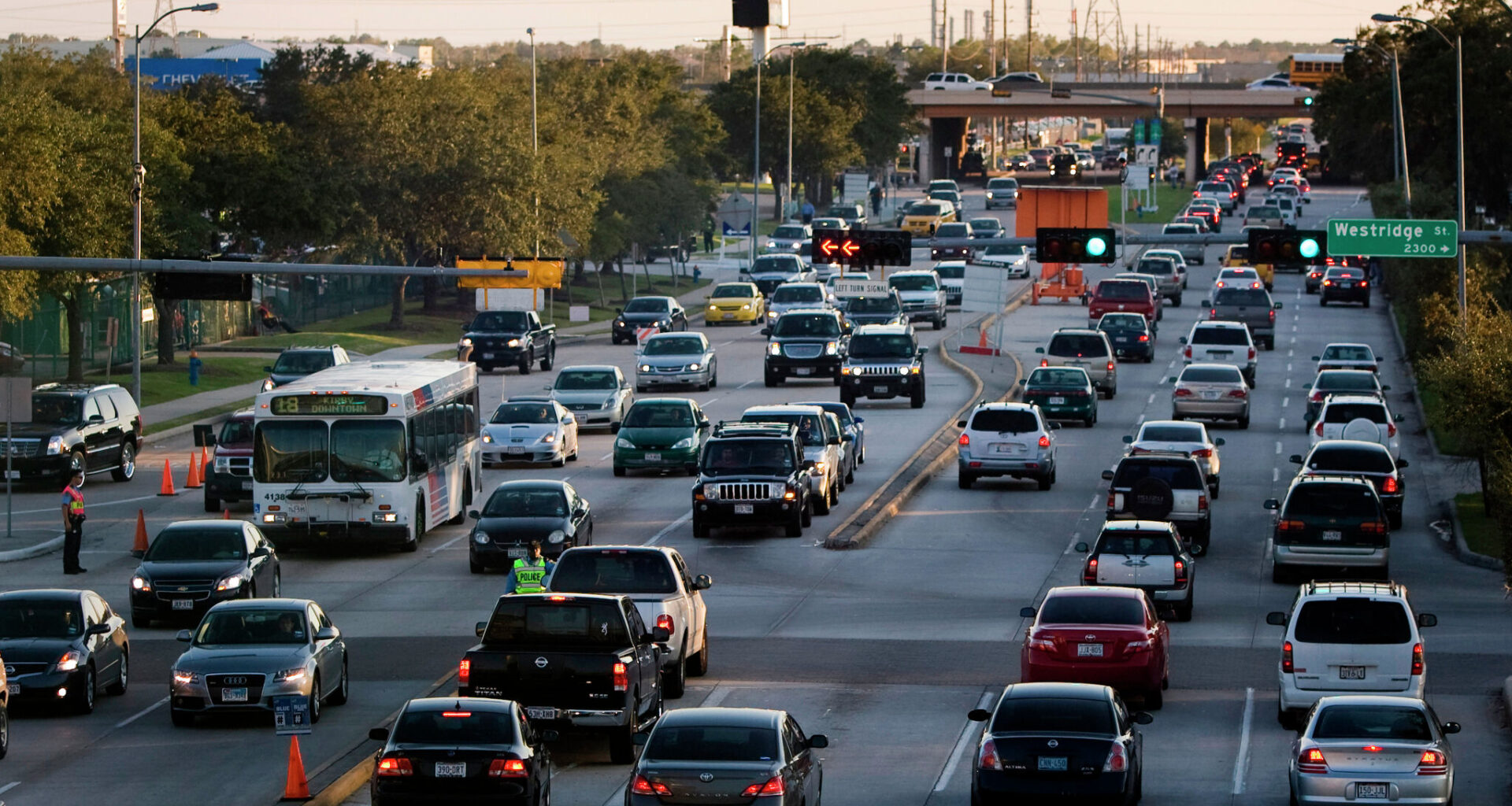
Traffic backs up on Kirby Dr. in this Houston Chronicle file photo.
Brett Coomer/Houston Chronicle
Traffic backs up on the south loop at Kirby Drive in this Houston Chronicle file photo.
SMILEY N. POOL/HOUSTON CHRONICLE
Houston traffic congestion surged around NRG Stadium on the first match day of the 2026 FIFA World Cup on Sunday, but the area still fared better than Dallas’ highest peak time, according to an analysis by GPS navigation company TomTom.
The company is measuring traffic speeds and congestion during the World Cup in cities across North America by analyzing anonymized GPS and vehicle data. The data shows the strain on Houston and other cities’ roads during major sporting events that will last for weeks.
READ MORE: A commuter’s survival guide to Houston traffic during the 2026 World Cup: Worst days, road closures
Article continues below this ad
Ralf-Peter Schäfer, vice president of product management for traffic and travel information at TomTom, said fans arrived more gradually Sunday for the noon soccer match at NRG Stadium in Houston and the 3 p.m. match at AT&T Stadium in Dallas.
Traffic congestion peaked in both cities when the games ended and waves of people left at the same time. “When the match is over, the demand is much higher, because at the same time many people want to go back home,” Schäfer said.
Normally, congestion delays around NRG Stadium are as high as 8% longer than typical free-flowing traffic in the area on Sunday afternoons, according to the TomTom data.
On Sunday, Houston’s traffic congestion near NRG Stadium surged by 70 percentage points at 3 p.m. after the Germany-Curaçao noon matchup ended. That means travel times for drivers were 78% longer compared to periods of free-flowing traffic.
Article continues below this ad
RELATED: How bad will traffic get during the World Cup in Houston?
Like Houston, congestion reached its highest levels in Dallas after the match ended between the Netherlands and Japan. The data shows traffic is typically 8% above normal on Sundays at 6 p.m. It peaked at 132% that evening.
Houston’s average speed of vehicles traveling on roads near NRG Stadium was 26 mph at 3 p.m., and vehicles on Dallas’ roads near AT&T Stadium were moving 21 mph at 6 p.m.
TomTom’s data focused on traffic conditions around World Cup host stadiums rather than citywide traffic conditions. The traffic spike around NRG Stadium was still lower than the peak congestion at host stadiums in other cities this weekend.
Article continues below this ad
Houston transportation officials anticipated higher traffic on major city corridors, including West and South Loop and Texas 288, during the World Cup, especially on match days. Along with the non-World Cup-related events happening at the same time, officials encouraged people to use alternative travel options, such as public transportation, and to work from home.
Traffic impacts on Sunday were manageable and didn’t surprise Houston officials, said Tricia Bentley, spokesperson for the Houston-Galveston Area Council, in an email.
“The next significant test of the system is expected during Wednesday’s match,” Bentley said. Heavy rainfall and flooding are predicted in the Houston region this week, which could worsen traffic at NRG Stadium.
MORE STORIES: Metro looks for fixes on Red Line after Houston World Cup wait times
Schäfer said the increase in congestion around the World Cup game means motorists should expect heavier, slower traffic after the major events, especially when other drivers are using the same highways for non-World Cup events.
Article continues below this ad
He said it makes sense to wait for the first wave of crowds to leave after the games have ended.
“If you go with the first crowd, usually you experience much more traffic and delay,” he said. “In the second wave, travel time is better.”