
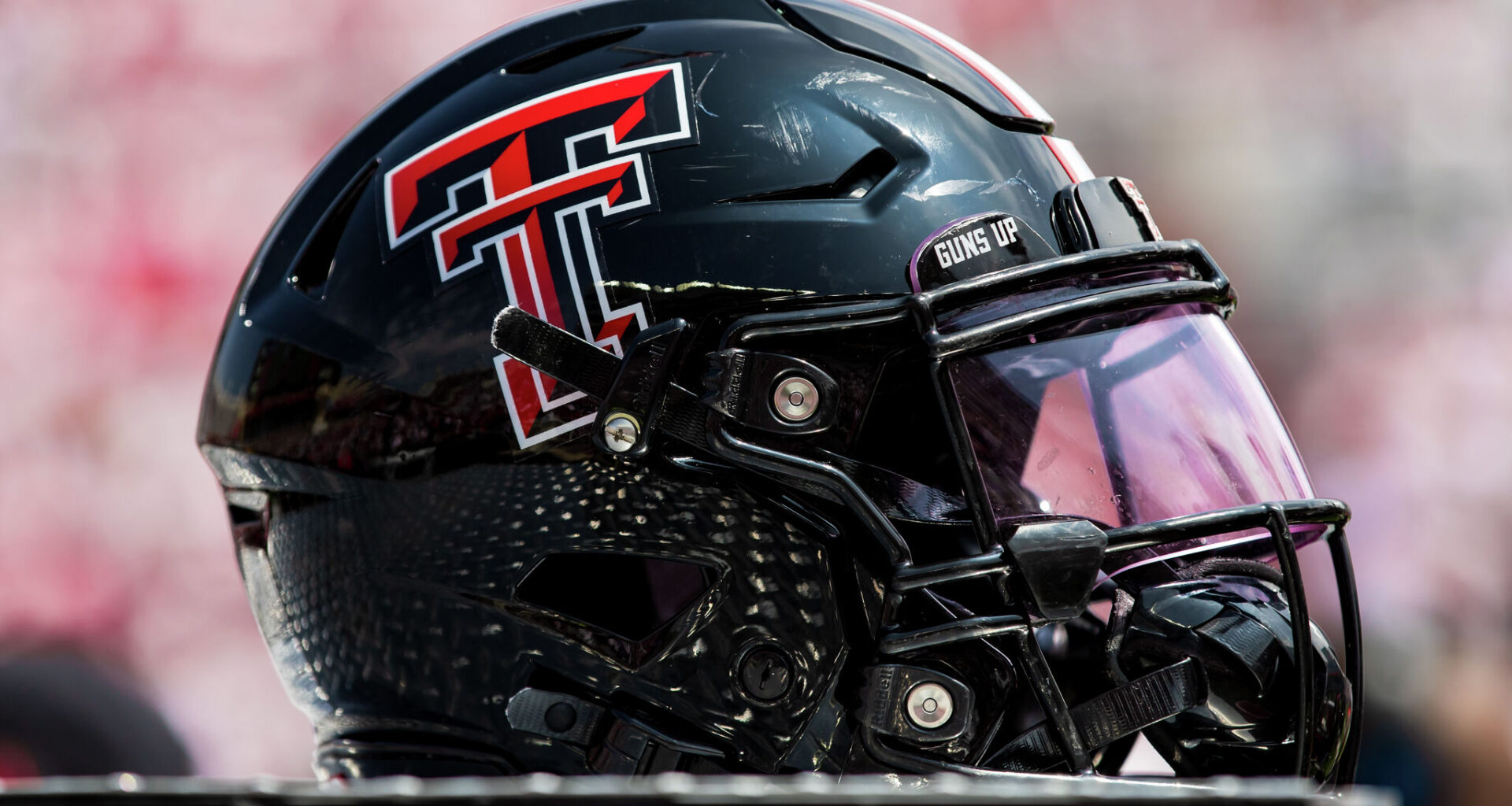
A black helmet counts as a black hat, right?
John E. Moore III/Getty Images
In the wee hours Monday morning, the Texas Tech Red Raiders received a death blow to their pursuit the preserve the eligibility of their star quarterback. The ending was delivered like a scene in a movie or a video game, where a series of thoughtful moves and strategy by the hero thwarted the attempts of the supposed evil-doer.

So yes, Texas Tech’s Brendan Sorsby will not play for the Red Raiders and will instead take his talents to the NFL supplemental draft, where he will likely make less money as a backup professional quarterback than he did starring collegiately in Lubbock. The abrupt end to a high-stakes legal battle with the NCAA and the Big 12 Conference follows massive, multi-front pushback from sports governing bodies after a local Texas judge initially granted Sorsby an injunction restoring his eligibility.
Article continues below this ad
All of this was over Sorsby’s sports-wagering addiction, in which he made thousands of bets on college games, including those involving his own team. Also at issue is Texas Tech’s willingness to overlook it so he could quarterback their football team.
For college football enthusiasts and the general public, the Red Raiders present a captivating case study. Texas Tech, situated in West Texas with a history that pales in comparison to other state schools like Texas and Texas A&M, is often regarded as an outsider in the college sports landscape. Being an outlaw from the wild west is a proud badge Texas Tech wears, and the way they’ve handled Sorsby’s issues, along with their desire to buy their way into college football supremacy (good for them), has made them black hat villains to many in the sport.
That’s not necessarily a bad thing for them and for college sports as a whole.
In Chuck Klosterman’s iconic read, “I Wear The Black Hat”, the author points out that we’re fascinated by those who are deemed—fairly or by choice—heels, antagonists, or villains. Klosterman’s argument is that villains are often the ones who know the most but care the least about societal expectations. Their deliberate choices, self-confidence and agency in a world filled with conformist intrigues enrage and confuse us.
Article continues below this ad
That sounds a lot like Texas Tech’s billionaire booster Cody Campbell, doesn’t it?
Campbell’s influence on the Red Raiders has been one of intentional transgression. Everything Campbell and the Red Raiders have done in recent years has been extremely deliberate. Those obscene amounts of oil money for players, coaches and facilities in Lubbock? Sure. Skirt, make and break the rules in your school’s favor? Why not.
Klosterman’s definition of a true villain highlights someone “who knows the most but cares the least.” Campbell—a former Red Raider offensive lineman under Mike Leach—serves as Texas Tech’s System Board of Regents Chairman, was appointed to President Donald Trump’s Council on Sports, Fitness and Nutrition in July 2025 and also serves on Trump’s Blue Ribbon Council on College Sports alongside legendary retired coach Nick Saban.
Given his responsibilities, its at times shocking to see Campbell operate with a lack of governance. However, that swashbuckling nature trickles down to his football team, making it hard to turn away whenever the Red Raiders are on TV.
Article continues below this ad
The Cody Campbell saga at Texas Tech is one we can’t keep our eyes off of.
John E. Moore III/Getty Images
The challenge with the Red Raiders isn’t in how they operate, but in how we, as sports fans, respond to their behavior. Are they actually bad? Maybe. But is it any worse than spending hundreds of millions of dollars on robust facilities, elaborate recruiting visits and other amenities that could instead be poured into a school’s academics and the surrounding community? Measuring integrity in a given moment all depends on reverse-engineering reasons to love or hate public figures and institutions, depending on whether they align with our own worldview.
Rooting for professional wrestlers like “Stone Cold” Steve Austin or Eddie Guerrero as heels, or for movie villains like The Joker or Thanos, can be a fun exercise. In real life, rooting for Texas Tech and Cody Campbell can make for a messy time. The bending of morality ruffles feathers, but such behavior—especially in today’s political climate—increases television ratings, social media engagement and a website’s pageviews, including this one.
When Deion Sanders took over the Colorado Buffaloes football program in 2023, “Coach Prime” did so in an electrifying way that also ruffled plenty of feathers across college football. While the Buffaloes received plenty of blowback for Sanders’s brash actions, which included encouraging players to leave, bringing in his son to play quarterback and providing sound bites calling out various hypocrisies across the sport, fans couldn’t wait to turn on Colorado on their televisions.
Article continues below this ad
According to Sport Media Watch, Colorado was involved in five of the 15 most-watched regular-season games in 2023. Given the amount of attention Texas Tech has generated during the offseason, it’s hard to envision the Red Raiders not drawing strong numbers early in the season, even if they are playing major underdogs in Abilene Christian and Oregon State.
A scarier thought is that the Red Raiders might still be really good, even without their star quarterback. Their defense is still slated to be one of the best in all of college football, and if Will Hammond can successfully recover from last season’s torn ACL, the Red Raiders could look to win the Big 12 conference and secure a spot in the College Football Playoff for the second year in a row.
Of course, that also means that the bullseye on the Red Raiders is as large as the Permian Basin, given the team’s behavior this offseason.
Article continues below this ad