
Dorothy Ann Willis Richards was elected the 45th governor of Texas, serving the Lone Star State from 1991 to ’95.
Richards was highly recognized for her outspoken feminism and sharp wit, and was considered a trailblazer who led the reformation of the Texas prison system by establishing a substance abuse program for inmates and reducing the number of violent offenders released.
Article continues below this ad
Barbara Jordan
Historical/Corbis via Getty Images
A Houston native, Barbara Jordan was an educator, civil rights leader and pioneering politician who broke barriers for Black women in American politics.
Article continues below this ad
Jordan became the first Black woman elected to the Texas Senate since Reconstruction and the first Southern Black woman elected to the U.S. House of Representatives. Jordan also helped expand civil rights protections and championed Texas’ first minimum wage law.
Known as “The Great Texas Orator,” she earned national acclaim for her powerful speeches, including her widely cited remarks during the Watergate hearings.
George H.W. Bush
ABC Photo Archives/Disney General Entertainment Con
Article continues below this ad
The story of George Herbert Walker Bush and by extension the Bush family is arguably the most quintessentially Texas in modern history.
Bush was a New Englander who moved to Texas stirred in part by a promise of business success and power. He soon became a major player in oil and gas, bringing his Zapata Petroleum Corporation from the Permian Basin to Houston around 1960.
Already a high-profile businessman, Bush parlayed his success into a second career of public service, first as the chair of the Harris County Republican Party and congressman representing part of Houston, then as a national figure bringing his morals, pragmatism and moderately conservative ideas to the highest stages. That turned out to only be the beginning for his family name, which is now forever synonymous with Texas.
Article continues below this ad
George W. Bush
David Howells/Corbis via Getty Images
The younger Bush was born in Connecticut, but he and his father got to Texas as fast as they could.
Article continues below this ad
After stints in oil and owning the Texas Rangers, Bush became governor of Texas in 1994 and ushered in what continues to be a Republican rule of the state.
After transforming Texas, Bush was elected president in one of the most contested elections in U.S. history. His presidency was mired by war, torture and highly critical responses to Hurricane Katrina and the burgeoning recession, but plenty would still love to have a beer with W.
Henry B. Gonzalez
CQ Archive/CQ-Roll Call, Inc via Getty Imag
Article continues below this ad
A Democratic congressman from San Antonio who represented Texas’ 20th congressional district, Gonzalez served 37 years in Congress, becoming the longest-serving Hispanic member in U.S. history. He was also the first Mexican American elected to the Texas Senate.
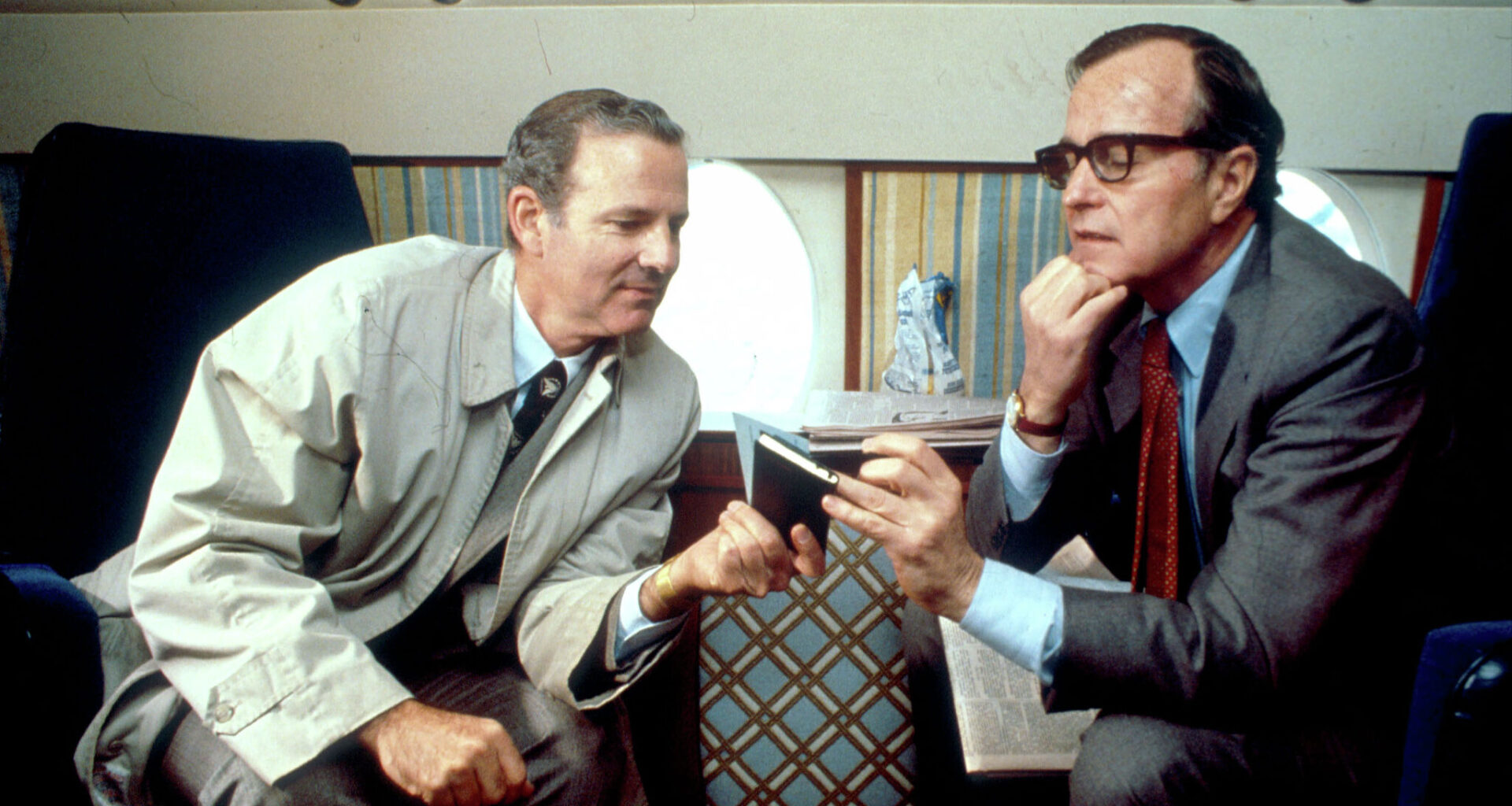
James Baker
Diana Walker/Getty Images
Article continues below this ad
Described once as “the most powerful unelected man in America,” the Houston-born Baker reshaped the Republican party during his decades in politics. He served Ronald Reagan and George H.W. Bush in the White House. As Secretary of State, Baker oversaw the fall of the Soviet Union and the Gulf War.
Lyndon B. Johnson
Historical/Corbis via Getty Images
Article continues below this ad
Staggeringly complex, arduously studied and, with that trademark cowboy hat and bolo, quintessentially Texan, the Hill Country native is the personification of the glorious and messy enchantment of the Lone Star State.
Johnson served Texas over his first 30 years in politics, establishing a resume full of impactful legislation. He helped bring Texas into the modern age by balancing agricultural interests with the surging oil-and-gas and technology industries. He transformed the state as a young public servant under Franklin D. Roosevelt’s New Deal and later established Houston as the home of American space exploration.
As president, Johnson arrived at the peak of U.S. liberalism, promoting a “Great Society” that prioritized equal rights and an end to poverty.
Article continues below this ad
Sam Houston
Apic/Getty Images
Known as the “Hero of Texas,” Sam Houston was a military leader and statesman who helped secure Texas after its war against Mexico.
Article continues below this ad
As commander of the Texian Army, Houston led forces to victory at the Battle of San Jacinto in 1836, defeating Mexican Gen. Antonio López de Santa Anna and ending the Texas Revolution. He later became the first and third president of the Republic of Texas, one of Texas’ first U.S. senators and governors.
Houston also opposed Texas secession before the Civil War, which caused him to be removed from office, but his legacy was cemented nonetheless as one of the most influential figures in Texas history.
Sam Rayburn
Bettmann/Bettmann Archive
Article continues below this ad
No U.S. politician served as Speaker of the House of Representatives longer than Sam Rayburn, and perhaps no Texan will ever again win 25 consecutive terms to office, as he did for the state’s fourth congressional district from 1913 until his death in 1961.
Rayburn helped orchestrate the passage of two Civil Rights bills, one in 1957 and another in 1960, and helped spearhead construction of Route 66. Preferring to get deals done without bombast and to navigate his political career with fairness and integrity, Rayburn, a mentor to Lyndon Baines Johnson, was known as a giant in both Texas and D.C., and as one of the more influential politicians of his era.
Stephen F. Austin
Heritage Images/Heritage Images via Getty Images
Article continues below this ad
It could easily be argued that the state’s first ever true politician was Stephen F. Austin. It’s also widely understood that he led the second colonization of the area by bringing to the Texas territory 300 families and their slaves in 1825, four years after the death of his father, Moses.
The “Father of Texas” had a hand in quelling the state’s first attempt at succession from Mexico in 1826 but joined rebelling forces nearly a decade later to help establish Texas as its own independent country.
Having the greatest influence among early Texas settlers, his desire to promote the welfare of newfound Texans never wavered, even after his death in 1836.
Article continues below this ad