
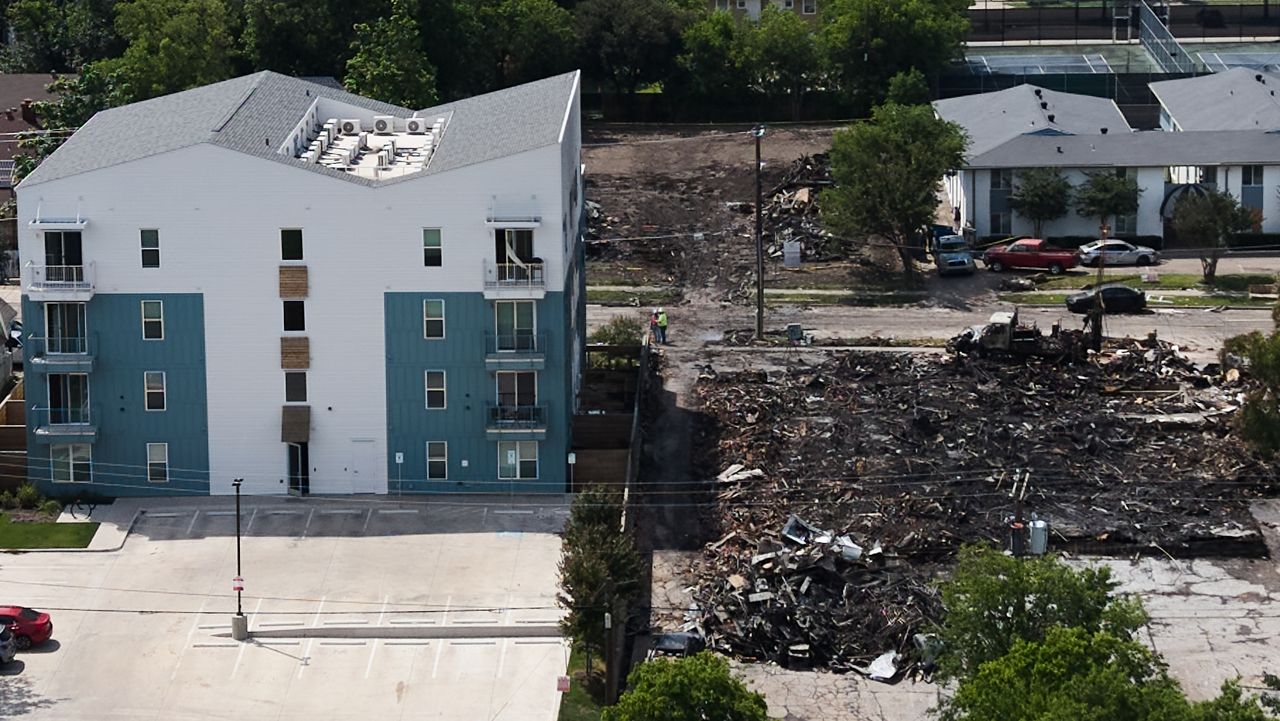
DALLAS — After a deadly apartment explosion in Dallas left many residents without a home, the challenge of starting over is just beginning.
A study published by the National Library of Medicine found that nearly half of U.S. households lack the resources or plans needed for an emergency. And when disaster strikes, it’s often everyday necessities that become the first priority.
In the days following the explosion at the Spanish Hills Apartments in Dallas’ Oak Cliff neighborhood, many displaced families faced the difficult task of replacing the items they rely on every day.
At St. Vincent de Paul of North Texas in Dallas, racks of clothing, household goods and furniture are helping fill an immediate need for people starting over.
“You need your basic necessities for anything,” said shopper Stephanie Cardiel. “Honestly, I can’t even imagine starting from nothing at all, having to start from zero.”
Cardiel, who recently learned she is expecting a child, says thrifting helps stretch a budget. But for families affected by disaster, stores like this can provide a critical first step toward recovery.
“There’s dishware, furnishings, furniture in the back, toys — really anything and everything to rebuild a home,” said Luis Gonzalez with St. Vincent de Paul of North Texas. “For a family who has lost everything, this is a place where they can come and find gently used items that can help restore them.”
Whether the disaster is a fire, flood, tornado or explosion, Gonzalez says the need is often the same.
“Any one of us is a tragedy away from being in a crisis,” he said.
The organization is providing vouchers to people affected by the apartment explosion. Gonzalez says something as simple as clothing, shoes, dishes or household essentials can help someone move forward again.
“Go into your home and look around,” Gonzalez said. “If you lost everything, what would be the first thing you’d want to replace? Maybe it’s a couch. Maybe it’s a piece of clothing. You come into our thrift store and walk around and see things that call to you.”
According to United for ALICE, approximately 42% of Texas households struggle to afford necessities such as housing, food, transportation and healthcare. For families facing the aftermath of a disaster, replacing those everyday items can feel overwhelming.
“It would mean everything,” Cardiel said. “Just knowing there’s help when people need it most.”
Long after the emergency response ends, recovery continues — one household item at a time.