
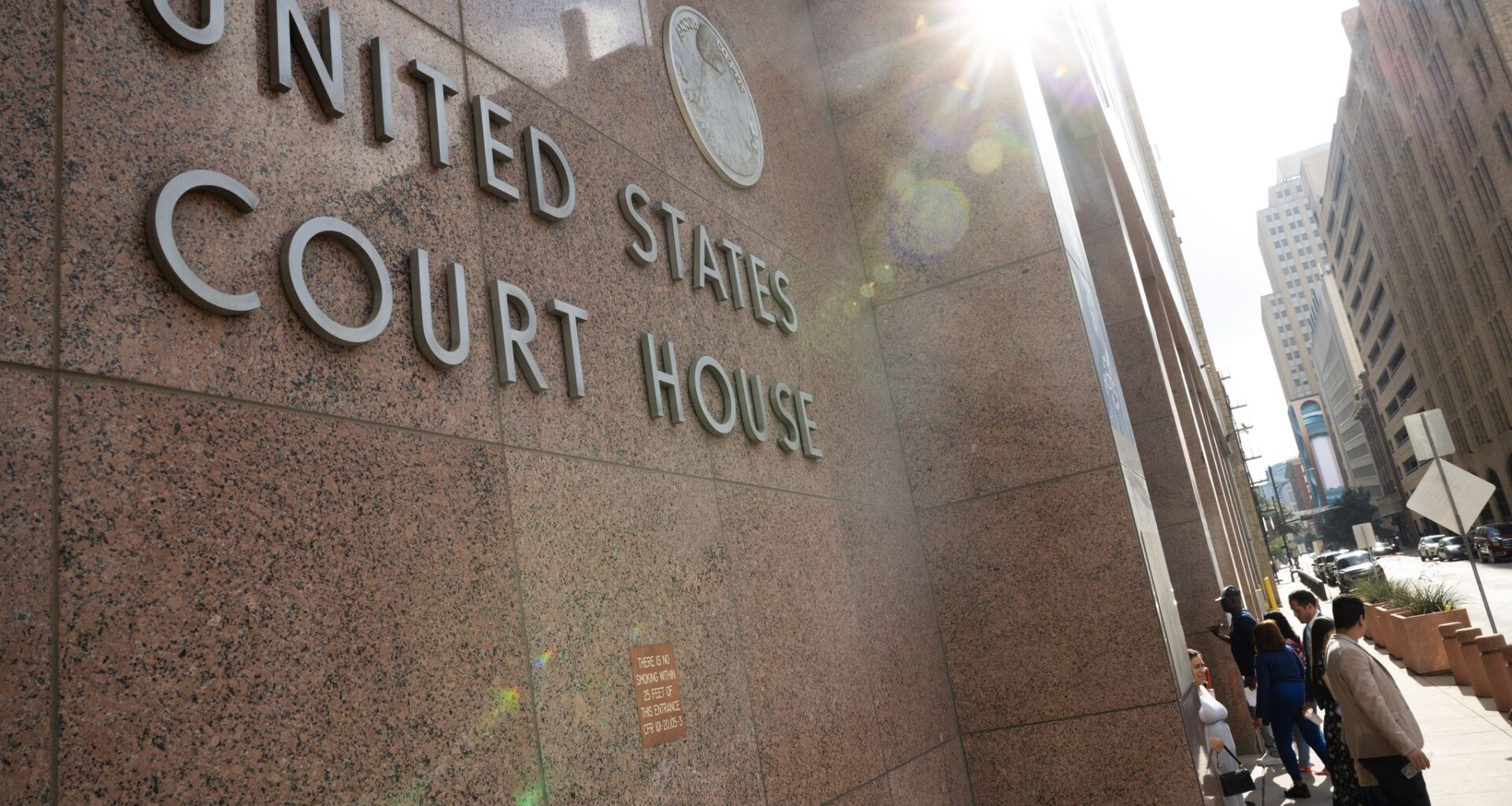
The exterior of the Earle Cabell Federal Building in Dallas, Tuesday, June 16, 2026.
Juan Figueroa/The Dallas Morning News
Judge Tara Naselow-Nahas, the top immigration judge in Dallas, scrambled to find another room where dozens of migrants could wait.

“I need all the space I can get,” she told a security guard as he opened an empty courtroom to use for the overflow.
Outside the lobby, migrants stood in a line stretching down the entire hallway. Families, single parents, toddlers, all waiting to enter courtroom No. 8. The federal government had accused the 122 people scheduled to appear that Monday afternoon in front of an immigration judge of not having a legal right to remain in the United States.
Article continues below this ad
“If you don’t have court, stay out,” a security guard said as he directed families to the federal building’s lobby and cafeteria.
The scene this week in Dallas immigration court reflects a broader national trend in which the Trump administration has in recent weeks begun scheduling 100 or more migrants to appear in front of a single judge. Judges previously heard a couple dozen cases a day.
The new tactic, known within the immigration court world as “mega master” hearings, has taken place in cities across the country, including San Antonio, San Diego, New Orleans and Boston. The emerging method worries attorneys and immigration rights advocates who say it risks violating the due process rights of migrants if they don’t receive notice far in advance of their court date.
“What the administration is calling a court proceeding is actually a mechanism for generating deportation orders in bulk,” said Caitlin Bellis, the director of advocacy for the National Immigration Project, a nonprofit organization providing legal representation for migrants.
Article continues below this ad
A spokesperson for the Justice Department, which oversees the immigration court system, said reducing the federal immigration court backlog is a top priority of the Trump administration. There are more than 3.2 million cases pending nationally and almost 166,000 pending in Dallas – the most in Texas.
A different spokesperson for the immigration court system said the administration would continue to adjust the schedule as more immigration judges are hired.
The consequence for missing an appearance in immigration court is usually a deportation order. The Trump administration has deployed new initiatives at immigration court, notably last year when Immigration and Customs Enforcement agents began arresting people at courthouses.
Dan Weiss, a former immigration judge in Dallas who is now an immigration attorney, said that the emphasis for the Trump administration appears to be case completions. But that emphasis could further strain an already high-pressure system.
“It’ll increase the case completions, but it also increases the pressure on the judges, increases the pressure on the staff to process all these orders,” Weiss said.
Article continues below this ad
Janeth Hernandez, who showed up Tuesday afternoon for her 1 p.m. hearing, had heard the rumors of ICE arrests at court. She pondered missing her court date, but decided against it. So Hernandez and her six children took a 35-minute bus ride from Irving to the federal building in downtown Dallas.
She came with a black folder carrying her family’s legal documents, a toothache that two Aleve painkillers hadn’t calmed down and an unsettled feeling about what the day had in store.
Hernandez and her six children presented themselves at the U.S.-Mexico border in October 2024. Originally from the state of Michoacan in Mexico, she decided to leave and head to the United States due to unrest where she lived, influenced by drug cartel violence. At the border, she received a notice to appear at the Dallas immigration court on June 16.
She was one of 142 individuals scheduled to appear in front of Immigration Judge John Poore starting at 1 p.m on Tuesday.
She was among the dozens who didn’t have an attorney. In federal immigration court, there is no constitutional right to a lawyer like in criminal proceedings. That a majority of those showing up to the longer hearings don’t have lawyers has worried immigration attorneys.
Article continues below this ad
“They are largely unaware of their rights to object or ask for time to respond to unfavorable motions by” attorneys from the Department of Homeland Security, said Robert Armstrong, an immigration attorney in Dallas who has not experienced the new hearings.
Now, 90 minutes past the scheduled court appearance, Hernandez placed her 4-year-old daughter on her lap. Her daughter wanted water from home.
Hernandez’s brother, who is a U.S. citizen but accompanied her to court, joked that they could go back home and be back before her name was called.
Shortly after 3 p.m., a court employee called them back to Poore’s courtroom, where the judge appeared via video. He advised Hernandez and the other 20 individuals in the courtroom of their rights under the law and then scheduled Hernandez’s next court date for July 31. She had until then to hire an attorney.
It was almost 4 p.m., too late to stop by the Social Security office like she’d hoped. She flipped through a packet of paper listing legal aid services for migrants.
Article continues below this ad
She had six weeks until she had to be back.
About two dozen people didn’t show up Tuesday afternoon to Poore’s courtroom, leaving them at risk of receiving a deportation order.