
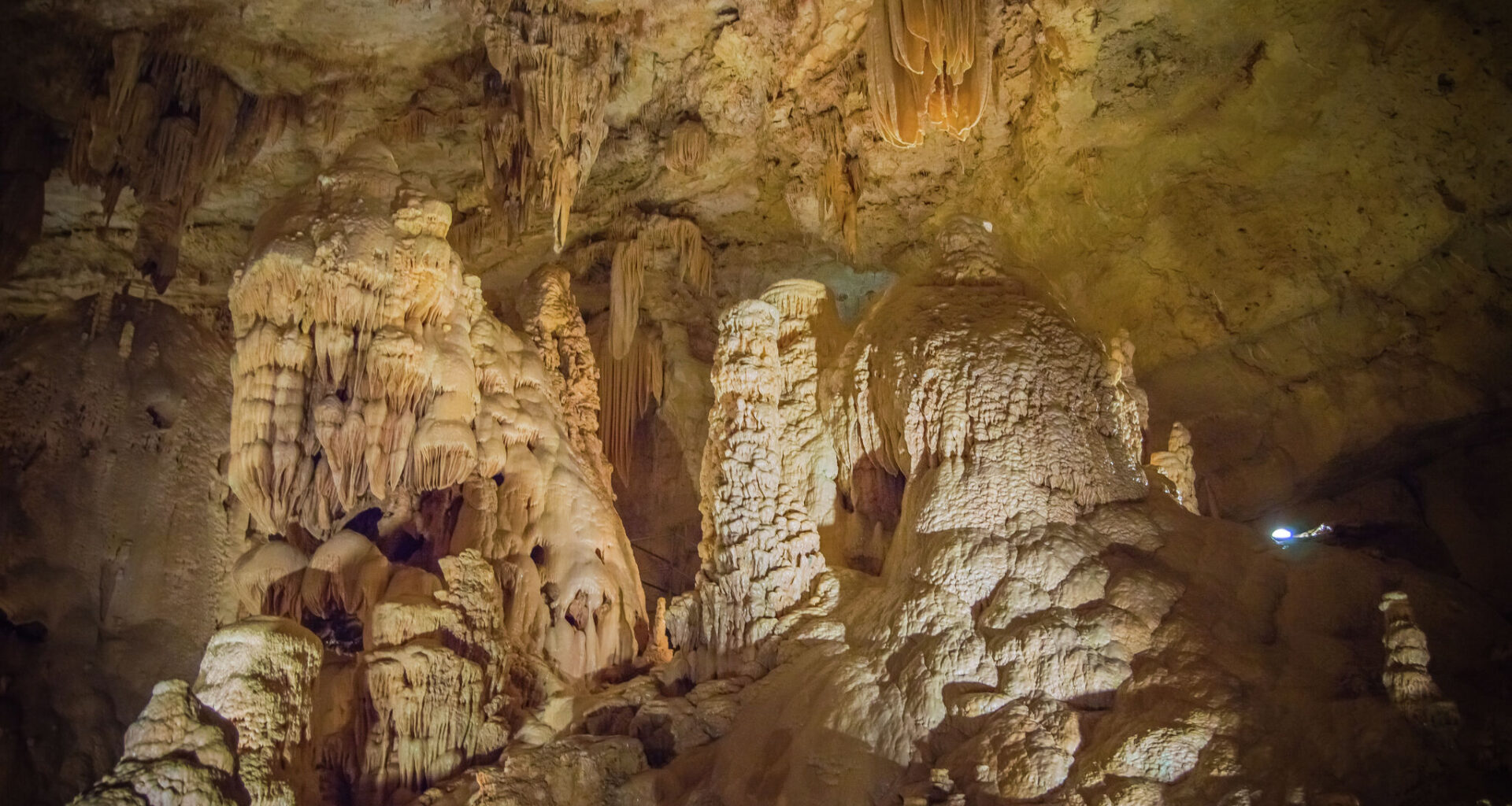
A Natural Cave in San Antonio. Researchers have made new progress inside what is believed to be a “hidden cave system” along the Pecan Springs Karst Preserve just outside of Austin.
Pugalenthi/Getty Images/iStockphoto
Researchers have made new progress inside what is believed to be a “hidden cave system” along the Pecan Springs Karst Preserve in northern Williamson County, just outside of Austin.

According to a June 12 Facebook post by the Hill Country Conservancy, cavers were finally able to squeeze through a tight opening in one of a “unique set of ‘triplet’ sinkholes this past April.
Article continues below this ad
Though few details about their initial findings have been shared publicly, those involved with the project say more details are still to come, and people interested in learning about what goes into discovering what could be a “hidden cave system” can follow along with their progress on social media.
The sinkholes were first discovered by Zarria Environmental Consulting in 2022, using LiDAR, or Light Detection and Ranging technology, which uses laser pulses to generate detailed maps of the Earth’s surface, according to the Conservancy.
The three sinkholes are nicknamed Barry, Robin and Maurice — a subtle nod to the Bee Gees.
Recently, the environmental exploration team, headed up by Rich Zarria and Rachael Lindsey, was able to get inside of the Barry Sink Hole, which had previously been inaccessible.
Article continues below this ad
The Pecan Springs Karst Preserve is a 1,205-acre property located along the Edwards Aquifer Recharge Zone in the Texas Hill Country. The Conservancy, a conservation nonprofit, takes care of the land by restoring and preserving ecologically sensitive landscapes across the state.
The conservancy’s current work at the preserve involves clearing debris away from caves and sinkholes so water from the surface can “permeate down the aquifer more efficiently,” according to the nonprofit’s website. The land is full of limestone caves and sinkholes, and the nonprofit says there are at least eight known caves on the property.
“While there’s still more digging ahead, this discovery marks an exciting step forward in understanding the hidden underground landscape beneath the preserve,” the Conservancy said through its social media post.
“Stay tuned as we share more about the science, teamwork, and hard work behind this discovery.”
Article continues below this ad
Currently, access to the Preserve is limited, with members of the public allowed to visit only during scheduled events.
Director of science and stewardship for the Conservancy, Richard Kostecke told MySA that although access into the cave’s opening is still limited, it’s already rich potential scientific value — from opening up filled-in sinkholes to improve aquifer to recharge to cave, to the potential for rare cave species discovery.
Teams of volunteer cavers have spent hours working their way into the cave, according to Kostecke.
Article continues below this ad
“One of the big next steps will be the formal mapping of [the cave],” he shared. Though there’s no telling how big or small the cave’s passges could be, the Conservancy official continued.
“Right now, it’s easy for the imagination to run wild. You know, that’s the whole aura of discovery. “