
U.S. agriculture officials announced a new confirmed case of New World screwworm in Texas on Monday, marking the latest concern in efforts to contain the flesh-eating parasite.
The organism, whose larvae feed on the living tissue of warm-blooded animals, was previously eradicated from the country decades ago through an extensive sterile-fly release program. The newly confirmed infection comes amid increased surveillance and response measures in affected areas in the United States.
Newsweek reached out to the U.S. Department of Agriculture (USDA) via email on Monday night for additional information.
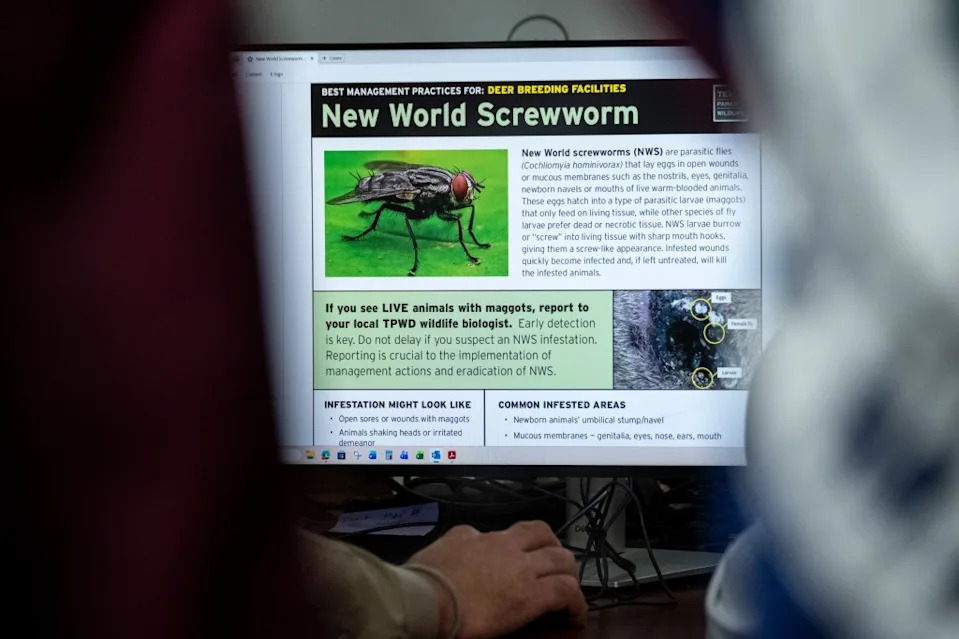
A view inside the Texas Division of Emergency Management State Operations Center, as officials respond to the New World screwworm threat on June 5 in Austin. (Photo by Joel Angel Juarez/Getty Images)
What To Know
In a post to X, the USDA’s screwworm rapid response account confirmed the new case, saying it was detected in a goat.
“The case was identified in a castration site wound. NWS only infests open wounds — it does not affect healthy skin. This detection is approximately 180 miles west of the initial Texas detection and 74 miles west of the nearest previously confirmed case,” the post said in part.
Mexico has nearly 30,000 reported cases since November 2024, with 1,800 still active, the post added. The U.S. has 16.
According to a USDA screwworm dashboard, the U.S. cases thus far involve cattle, sheep, goats and one dog. The case confirmed on Monday was in Terrell County, Texas. On Sunday, another was confirmed, in Edwards County, Texas.
The one case in New Mexico involves a dog and is inactive, according to the dashboard.
The confirmation comes amid growing concern among ranchers and animal health experts following reports of screwworm detections in parts of North and Central America. Response teams have intensified inspections, public outreach efforts and containment activities, including the use of sterile insect techniques that have historically proved effective in suppressing screwworm populations. Officials are also urging livestock owners to promptly report suspicious wounds and infestations.
The New World screwworm poses a significant threat to livestock, wildlife, pets, and, in rare cases, humans. Federal and state authorities are working to identify potential additional cases and monitor animal movements to reduce the risk of further spread.
What Is New World Screwworm?
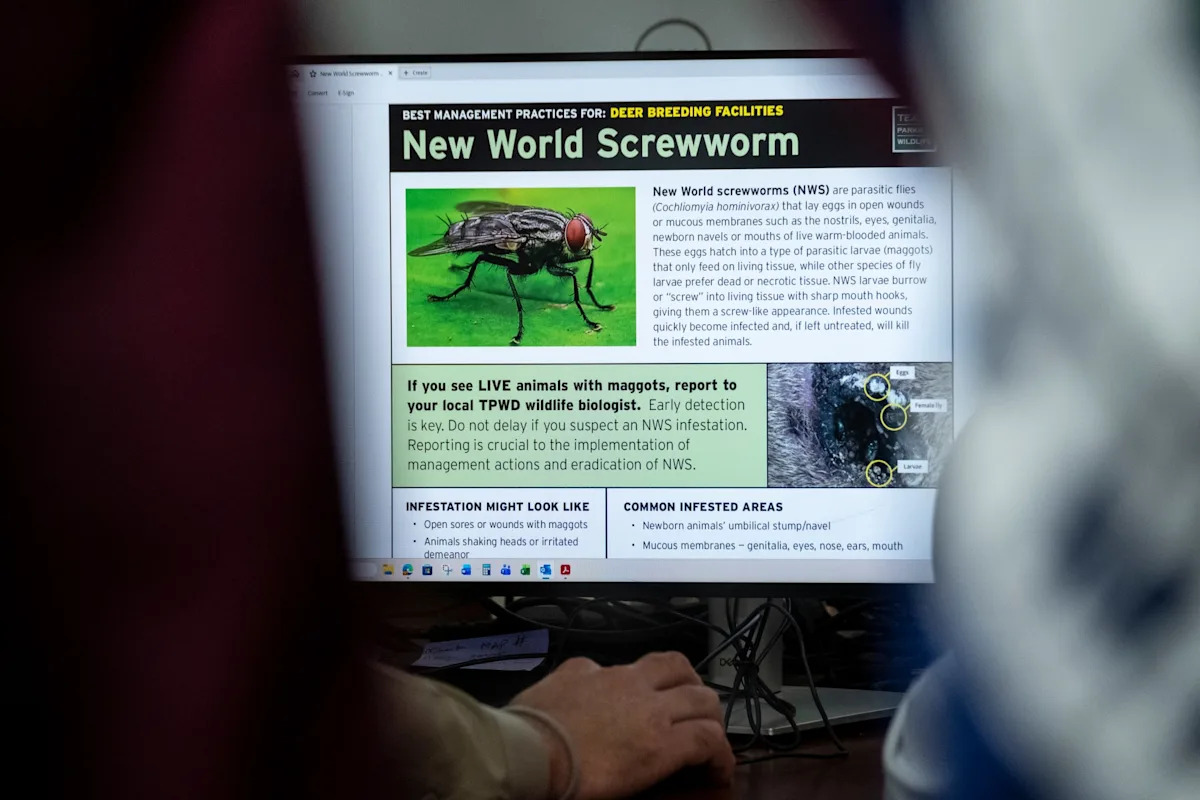
New World screwworm is a fly that lays eggs in open wounds on animals or their body openings like eyes, genitals, nose or mouth, the U.S. Centers for Disease Control and Prevention says. The eggs then hatch into parasitic maggots that eat the animal’s living tissue.
When Did Screwworm Come to the US?
New World screwworm was once widespread across the Southern U.S., triggering major losses for livestock producers. Federal and state officials spent decades eradicating the pest through a program that released sterile male flies to prevent reproduction, NBC News reports, as the U.S. reached zero cases in 1982.
Where Is the Outbreak Based?
The current New World screwworm outbreak is centered in parts of Mexico and Central America, where federal officials have reported the parasite spreading northward.
In the United States, current confirmed cases are in Texas and New Mexico, as of Monday.
Contact Newsweek editors on this story: Anna Commander and Edward Cummins.
Related Articles