
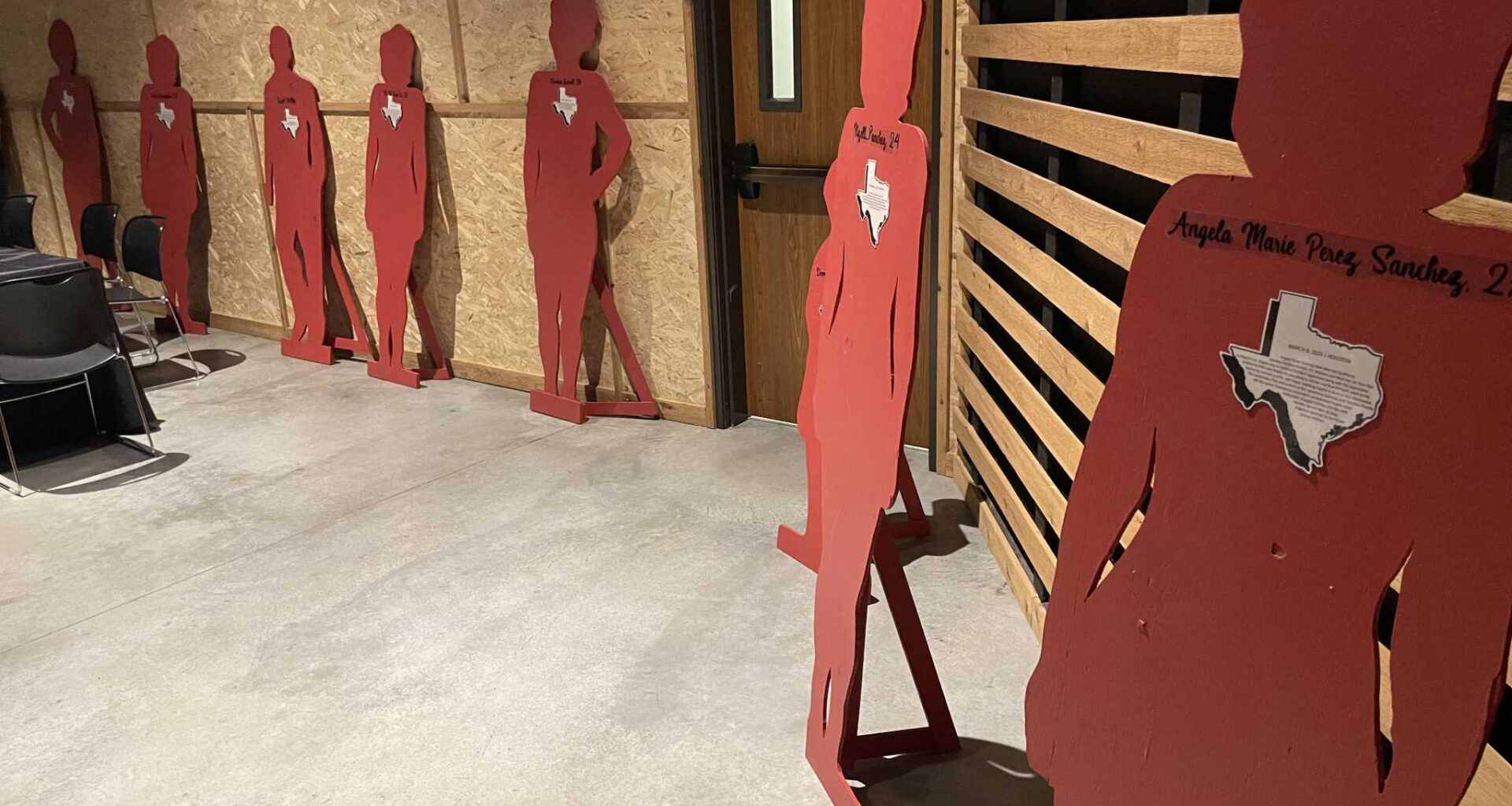
Silhouettes representing the murder victims of domestic violence adorn the walls of Westland Baptist Church as part of the Silent Witness program on Thursday, Oct. 28, 2021, in Katy.
By Claire Goodman / Staff Writer
Harris County leads the state in turning away women who seek shelter from domestic violence, a recent study found, underscoring a yearslong trend of local advocates struggling to keep pace with rising numbers of abuse cases.
The trend also is likely to worsen, with President Donald Trump’s administration cutting many grants nonprofits rely on to fund shelter beds and the Houston Police Department noncommittal about the future of many of its services for abuse survivors.
READ MORE: Federal cuts trigger layoffs at Houston domestic violence groups amid rising partner abuse deaths
Article continues below this ad
The result is that 75% of the women who sought a bed in one of Harris County’s domestic violence shelters were denied admittance last year, according to data provided to the Houston Chronicle by the Texas Council on Family Violence.
That figure leads all counties in Texas, according to a recent survey the nonprofit conducted of more than 200 women. Statewide, the study found the rate at which women are turned away has more than doubled in the last 15 years, to 51%.
The need is immense, said Barbie Brashear, executive director of the Harris County Domestic Violence Coordinating Council. Local organizations have about 425 shelter beds. Yet more than 2 million women live in Harris County, and data suggest a third of them will face an abusive relationship in their lives.
“The whole field is experiencing a crisis because of a perfect storm,” Brashear said. “You’ve got available grants dwindling, uncertainty around the future of existing grants, extremely stressed staff. And then you were already dealing with shortages started during COVID that never righted themselves.”
Article continues below this ad
Organizations in Harris County offered more days in a shelter in 2025 than they did in 2024, the study found – demand simply outpaced growth, said Molly Voyles, director of public policy for the statewide council, which conducted the survey.
“What you have in Harris County is an impressive system of advocates that are strained resource-wise,” Voyles said.
A third of those denied a shelter bed last year returned to their violent homes, researchers found. Another quarter opted to live in an unsafe place, such as a car or on the streets.
Local advocates call for more resources
Local advocates against domestic violence for years have tried to raise awareness about the lack of resources for victims in the face of rising numbers of family violence-related homicides in Harris County.
Article continues below this ad
“It’s like drinking from a fire hydrant,” Brashear said. “Demand for these services is really, really high. If you’re tracking the numbers, you’re seeing it.”
A 2022 report from the University of Houston found the region has significantly fewer shelter beds per capita than other major cities. Authors of the report recommended giving local organizations an additional $1 million per year for five years.
Yet local nonprofits have found themselves trimming staff in the wake of funding cuts. And leaders at the Houston Police Department have been noncommittal about the future of some of their domestic violence-related programs, such as the Domestic Abuse Response Team, which was expanded using pandemic-era federal funds that are running out.
The outlook for groups providing shelter hasn’t been universally negative, Brashear said.
Harris County Commissioners Court recently committed to continue providing $1.5 million in aid for victims to cover whatever needs they might have, such as a deposit on an apartment or funds for a hotel stay.
Article continues below this ad
Simply adding shelter beds isn’t the only key to improving conditions on the ground, Voyles added – an overall lack of housing is worsening the situation.
“This means people are staying longer in the shelters,” she said. “If you’re not safe at home, you’re more likely to stay in the shelters, especially if you can’t find a way to transition to a safer home.”