
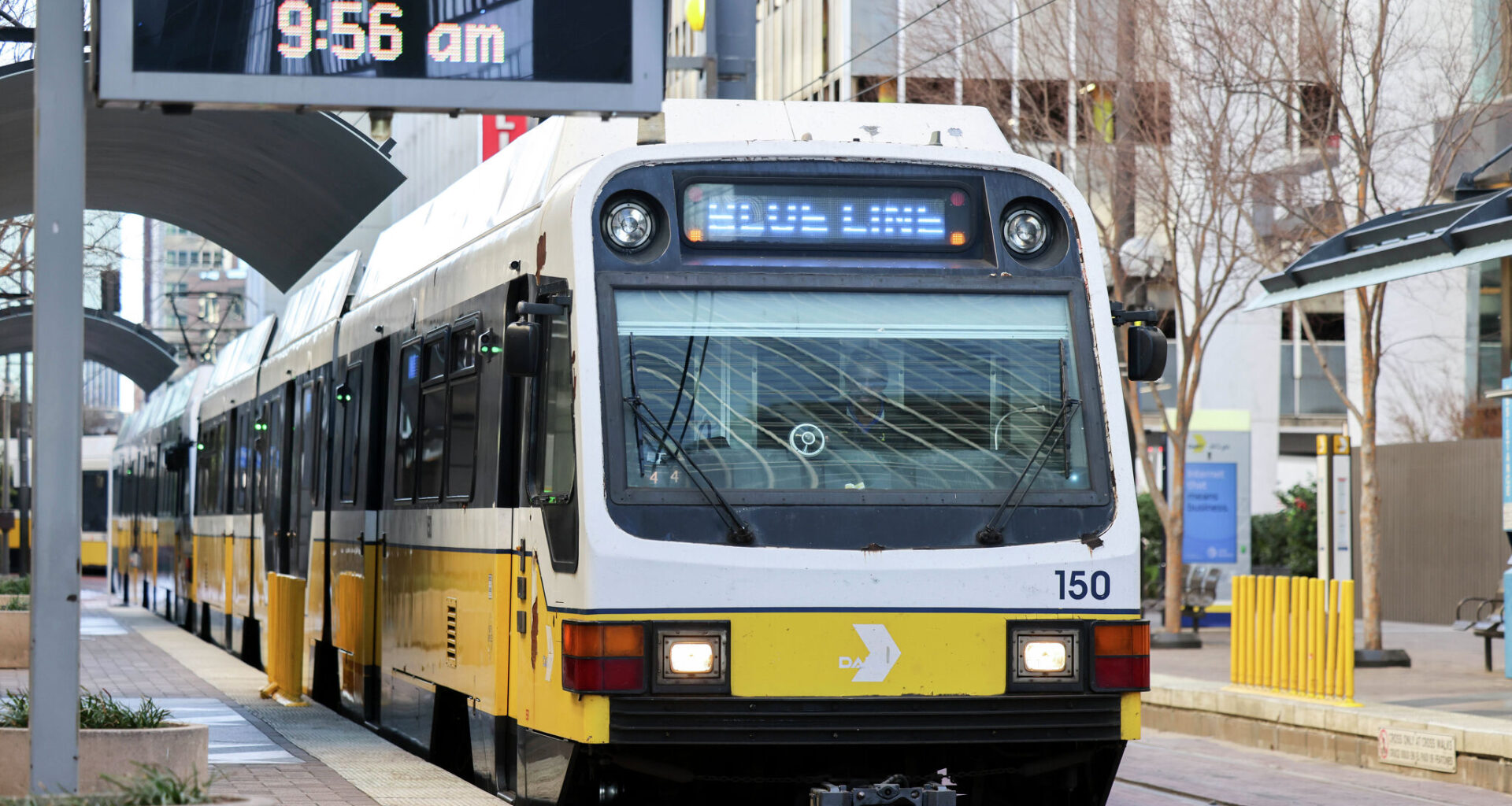
Transit officials report a years-long planning process has helped to manage an onslaught of traffic.
Shafkat Anowar/Dallas Morning News
Two years ahead of Dallas’ FIFA World Cup games, planning began to address a pressing concern: the traffic on major roadways and public transportation that inevitably would be generated by more than 1 million visitors.

This planning came to a head Sunday, June 14, as the Netherlands and Japan kicked off North Texas’ first FIFA World Cup match at Dallas Stadium.
Following England’s win against Croatia on June 17, North Texas transportation officials reported an uptick in traffic, but has it met expectations?
Article continues below this ad
Here’s what we know about each game day’s output so far.
Related: Which highways will be the most congested during the World Cup in Dallas?
How much traffic has the World Cup generated so far?
Multiple accidents along Interstate 30 forced traffic following the Netherlands-Japan draw to slow to a crawl. On June 17, though, traffic was mostly normal traffic, except for heavier traffic near the stadium after England doubled Croatia’s goals.
This was consistent with what Karla Windsor, a senior program manager at the North Texas Council of Governments, said regarding traffic for both games.
Article continues below this ad
Though accidents disrupted the flow of traffic from the stadium for the first game, Windsor cited England vs. Croatia match-day traffic flow as evidence the plans in place successfully controlled traffic.
North Texas Tollway Authority data shared by Media Relations Manager Micheal Rey indicated an increase in traffic on toll roads.The President George Bush Turnpike gantry north of Interstate 30 saw 50,907 drivers pass through compared to 47,512 the previous Sunday.
Malcolm Mayhew, a communications specialist for the council, said after the June 14 game that match traffic was in line with typical patterns for “major event” days in North Texas.
The LBJ Infrastructure Group and NTE Mobility Partners did not observe a “noticeable increase in incidents or accidents in any of the concessions,” according to Director of Corporate Affairs and Communications Robert Hinkle.
Related: Inside North Texas TEXpress lanes: Who owns them and how they work
Article continues below this ad
Hinkle said the change in traffic patterns on June 14 were primarily observed on Lyndon B Johnson Freeway, whereas the North Tarrant Express and Interstate 35W did not show a significant impact.
“While we do not have a way to identify which specific drivers were traveling to the stadium, the TEXpress Lanes on LBJ showed a clear shift in traffic behavior compared to the prior week,” Hinkle wrote.
From 1-4 p.m., Hinkle said tolls were higher than the previous Sunday across the LBJ segments, $4 per segment compared to the $3.50.
Unlike the June 14 match, the June 17 match concluded during rush hour, presenting a new challenge for match attendees and North Texas residents alike. In anticipation of World Cup traffic interfering with commutes, regional transportation leaders urged Dallas-Fort Worth residents to change their routes and adjust travel times to avoid rush hour.
According to Windsor, traffic did increase during rush hour. “Not as many people were able to change up their route as maybe we had hoped,” she said.
Article continues below this ad
NTTA traffic numbers for June 17 were lower than the day prior, though the reason wasn’t clear, Rey said. Traffic counts on President George Bush Turnpike at the main lane gantry north of the I-30 Interchange were 102,570 Wednesday compared to 103,417 Tuesday. South of the I-30 interchange, counts were 67,080 Wednesday and 69,684 Tuesday.
Following the June 17 match, Hinkle reported a 6% increase in traffic along the North Tarrant Express and Lyndon B Johnson Freeway in comparison to the June 14 match. He did not provide toll price averages for Wednesday.
How many fans took public transportation to World Cup matches?
After the June 14 match, officials reported an increase in ridership for both DART and Trinity Metro. More than 12,000 regional day passes were sold at train stations and via the GoPass app, according to Jasmyn Carter, director of public relations for DART.
“DART saw a significant increase in ridership during yesterday’s game as fans chose transit to avoid traffic and parking challenges,” Carter said. “TRE ridership was high and about double what we would normally see on a typical weekday.”
Article continues below this ad
DART declined a request for ridership data for the June 17 match between England and Croatia.
Windsor said DART had slightly lower ridership numbers June 17, and that the council would double down on efforts to encourage the use of public transit.
“Everyone that did use transit, we got wonderful feedback from them. They said it was a very smooth process,” Windsor said.
Related: How to get to Dallas Stadium for the World Cup games using public transportation
What should North Texans, World Cup visitors expect ahead of the remaining Dallas Stadium matches?
North Texans looking to avoid World Cup-related traffic should continue to anticipate congestion on I-30, Interstate I-20, State Highway 360, State Highway 183, State Highway 114 and the President George Bush Turnpike.
Article continues below this ad
Traffic on these roads is expected three to five hours before matches and three hours after.
Windsor said the council is working with ride-hailing companies to ensure drivers know where to stage and what time they are needed. The council and its partnering transit agencies are continuing to monitor the results of their planning, observing traffic cameras and the flow of roadways surrounding matches, Windsor said.
Related: Traffic expected near Dallas Stadium ahead of Argentina vs Austria World Cup match