
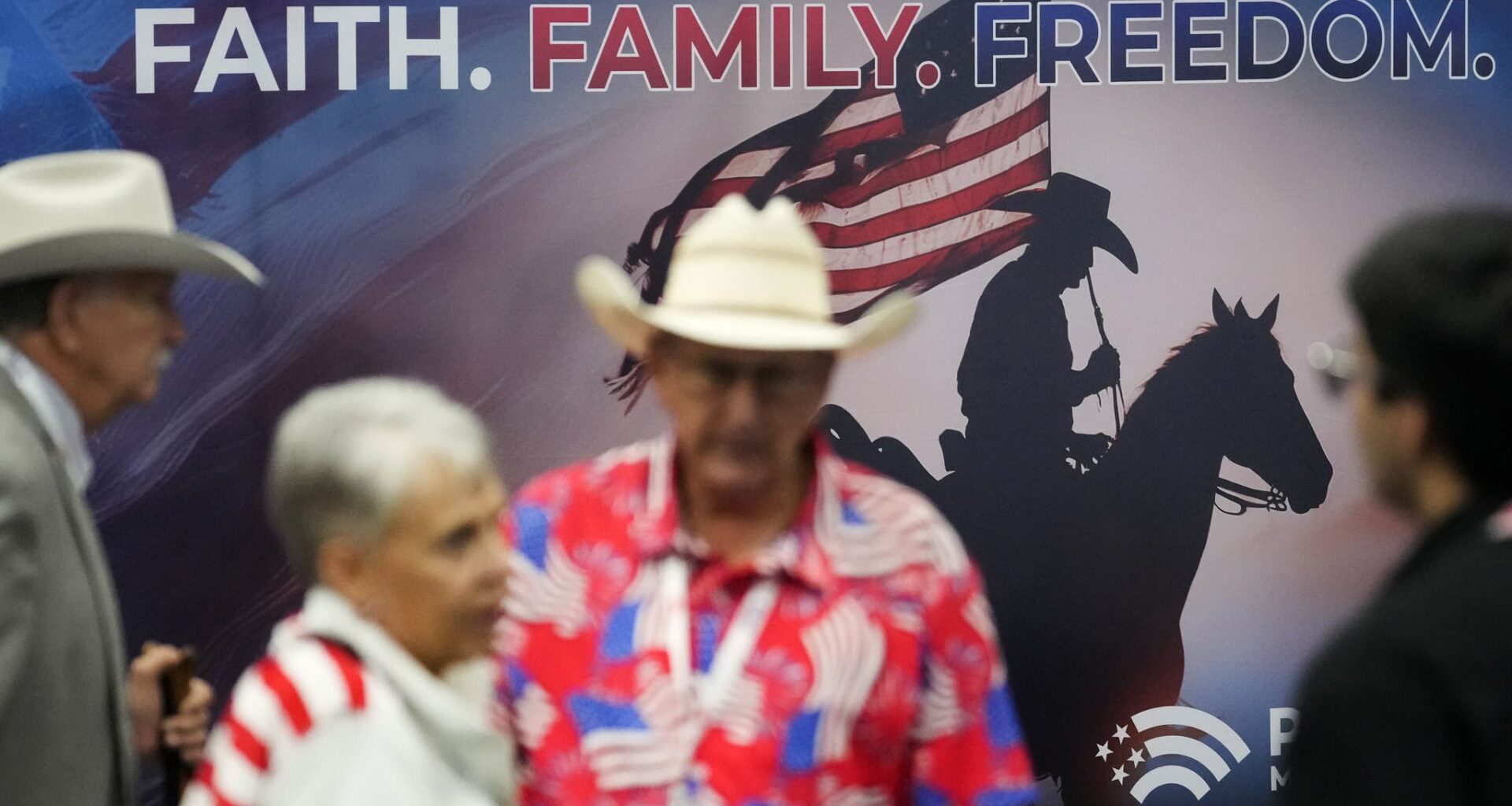
People attend the Texas GOP convention in the George R. Brown Convention Center in Houston Friday, June 12, 2026.
Melissa Phillip/Houston Chronicle
Abortion is already illegal in Texas, but a battle is brewing between factions of the anti-abortion movement over whether lawmakers should go even further, by banning in vitro fertilization and punishing women who get abortions.
At this month’s Texas GOP convention, delegates added both policies to the party platform, calling IVF “destructive” and saying anyone who has an abortion should face criminal penalties.
The push for more hardline restrictions shows how the state’s most extreme anti-abortion groups, known as “abolitionists,” are gaining sway.
Article continues below this ad
The new platform also puts the party at odds with some of its top leaders, including Vice President JD Vance and Attorney General Ken Paxton, who declared in recent days that he is a “strong supporter of IVF.” And it comes as Texas Republicans have moved to soften a strict abortion ban that women said put their lives in danger.
READ MORE: Texas ‘bounty hunter’ law targeting out-of-state abortion pills takes effect
The GOP platform is not a binding document, but the party uses it to pressure lawmakers and it often does influence the policy they set.
Some in Texas worry it’s a sign of what’s to come.
Article continues below this ad
“In the near term, in 2027, I think it’s almost impossible that bill would pass,” said Amy Bresnan, a lobbyist who has been involved in abortion policy in Texas and is pro-abortion rights. “In 2029, I don’t know.”
Anti-abortion groups were prominent at the GOP convention in Houston, putting up booths and handing out flyers fighting over the proposed “protect life” language.
The party adopted stances asking lawmakers to advance policy defending “equal protection under the law from the moment of fertilization,” a concept pushed by hardliners who believe the termination of a pregnancy should be equivalent to homicide. The platform also called for protection from “destructive practices, such as IVF and commercial surrogacy.” And it struck language that exempted women from criminal penalties related to their own abortion.
Abolish Abortion Texas, a sponsor of the convention, celebrated the changes, even as other prominent Texas anti-abortion groups say they don’t agree.
“We won the debate fair and square,” the group said on social media. “Anyone claiming otherwise is simply in denial that Texas conservatives support equal protection of the laws for preborn babies.”
Article continues below this ad
While the opinions of the party carry no inherent weight for lawmakers, the Texas GOP has taken steps to campaign against Republican incumbents it views as insufficiently conservative. Proof of its clout was also reflected in the convention speakers, including Gov. Greg Abbott, US Sen. Ted Cruz and House Speaker Dustin Burrows, the first sitting speaker to address the convention.
Incoming chair D’rinda Randall announced that delegates chose “protect life” as the eighth top priority for the party this year, according to a published letter.
The platform puts the party out of step with most Texas GOP lawmakers and with federal Republicans.
READ MORE: Texas bill that would clarify abortion access in emergencies draws rare bipartisan support
Texas has been deliberate in targeting doctors, family and others who help women get abortions in some way, but not women themselves. Last session, lawmakers passed a bipartisan bill to make it clearer when doctors can perform an abortion during a medical emergency, after lawsuits and widespread outcry from women who said their lives had been put at risk.
Article continues below this ad
Burrows and Lt. Gov. Dan Patrick did not respond to requests for comment on the GOP platform’s anti-abortion changes. The governor’s office released a statement that did not directly address them.
“Texas will continue leading the nation in protecting both mothers and their children,” Andrew Mahaleris, press secretary for Abbott, said in a statement.
Federally, Republicans have defended IVF, describing it as pro-family. Some have shied away from harsher abortion penalties as a matter of political reality.
Vance recently said in an interview that he hears “from the abortion abolition movement all the time, and my response to them is, we can’t be immune to the realities of modern politics.”
But since Roe v. Wade was overturned in 2022, Mary Ziegler, who studies the history and politics of abortion policy, says the abolition movement has grown.
Article continues below this ad
“There’s a lot of debate within the movement about what this idea of personhood actually requires, and if it either, in terms of practicality or logical consistency, it requires punishing women, and that was a very fringe position a decade or two ago,” said Ziegler, a professor and legal scholar at the University of California – Davis. “That wing of the movement has gained more influence.”
READ MORE: At least six Texas children under age 12 got abortions out of state in 2023
Ziegler also said that as states like Texas continue to crack down on medications that can be prescribed to induce abortions, the movement may realize that, as a practical matter, it’s easier to punish women than doctors.
“It turns out that it’s very hard to punish doctors when most people are getting abortion medication from states where abortion is legal,” she said.
While Ziegler said that in some states “abolitionists have a lot of influence in the state legislature,” Texas isn’t necessarily there yet.
But that doesn’t mean the idea among powerful anti-abortion groups isn’t being debated.
John Seago, president of Texas Right to Life, one of the most influential groups in the state, said right now the prospect of imposing new criminal penalties is “kind of like a family conversation amongst Republicans.”
Seago wouldn’t directly say whether the organization would support or oppose punishments for women who have abortions, only that it’s not their top priority right now. Currently, he said they’re focused on limiting access to abortion drugs. On the issue of IVF, he said they aren’t advocating for a ban, but want to regulate the industry to avoid any destruction of embryos.
At least one powerful anti-abortion group is fighting the recent changes in Texas’ platform.
Amy O’Donnell, executive director at Texas Alliance for Life, said punishing women will ultimately work against the goals of the movement. She described situations where a woman may need help that could ultimately lead her away from an abortion, but won’t seek it out of fear of prosecution. She also described situations where a woman’s life could be in danger, but she won’t seek medical attention out of fear.
“We want to hold abortion providers accountable and help women choose life,” O’Donnell said. “Repealing these statutes opens the door for prosecuting women for homicide instead, and that is not going to be an advancement for the pro-life movement.”
READ MORE: How many Texas women travel for abortions — and where do they go? This new study has answers.
Democrats in the state have warned that the laws against abortion will hurt women.
“The Texas Republican Party has once again shown how extreme its agenda has become,” the Texas Democratic Party said in a statement. “By removing protections for women facing pregnancy complications and calling for an end to IVF, Texas Republicans are interfering with some of the most personal decisions families will ever make.”
The state’s abortion ban, which offers no exception for rape or fetal abnormality, continues to drive women to leave Texas for care. Despite the state’s near-total ban on the procedure, about 43% of Texans said the state’s current abortion policy should be less strict and 53% said it should be legal for women to get abortion medication, according to 2026 polling from the Texas Politics Project.
Bresnan said while anti-abortion groups duke it out over the platform changes, she’ll be watching lawmakers. So far, when these types of policies have been introduced in Texas, they haven’t gotten anywhere.
“People should be watching legislation closer than platforms,” she said.