
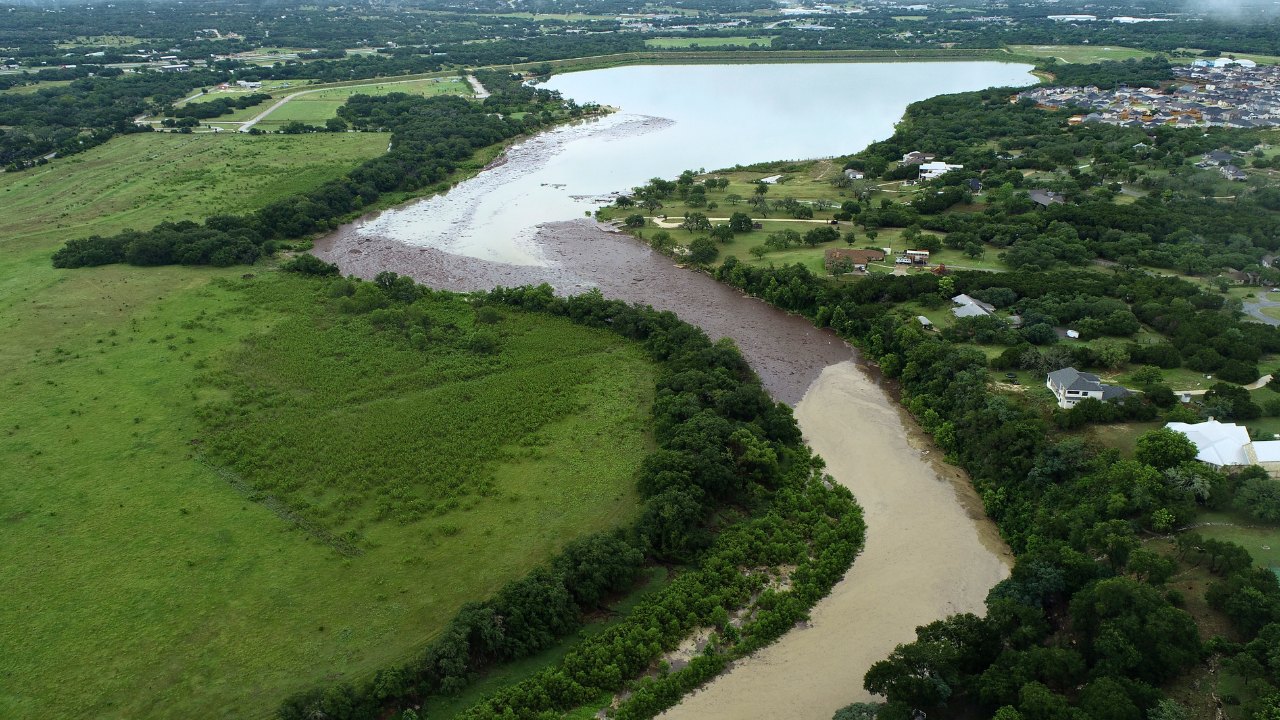
The City of Boerne announced on Tuesday, June 23, that recent rainfall across San Antonio and the Texas Hill Country has resulted in one of the “most significant” rises in water levels at Boerne City Lake in the last 26 years.
The city confirmed that between June 14 and June 22, the lake level rose from 29 feet and 3 inches to 39 feet and 1 inch in just eight days, according to a news release. That’s a total increase of 9.8 feet. Some rain gauges showed more than eight inches of water fell during that time.
This is the third most significant water-level increase recorded over the course of a single week in the past 26 years of the lake’s history. In past years, only two other historic flooding events have surpassed it. The summer 2002 floods caused the lake to rise by 23.5 feet in one week, and during the city’s May 2015 floods, water levels climbed by almost 18 feet in three days.
While the rise in water levels is a welcome sight for long-term residents ahead of the summer season, Boerne remains under Stage 2 drought restrictions, which have been in place since August 7, 2023. The restrictions limit lawn irrigation to one day a week.
City officials said the increase should improve conditions at the popular lake, which serves as both a recreational destination and a critical component of the city’s water system. They also noted that the location where the rain fell last week is just as significant as the amount of water that entered the lake’s “relatively small watershed.” Essentially, storms need to hit the right areas to make an impact of this magnitude on water levels.
Lissette Jimenez, City of Boerne’s Parks and Recreation director, said the outdoor lakeside park drew more than 200,000 visitors between 2024 and 2025.
“We’re excited to start summer 2026 with water levels looking this good,” she said.
The city owns and manages the popular Hill Country lake, which is fed by the Cibolo Creek. Last week, officials closed several roadways and low-water crossings as runoff from the creek began spilling onto city intersections. The city first saw the impact of summer rains earlier this month, when, on June 2, city data showed the lake rose from a stagnant 28 feet and 3 inches to 29 feet and 2 inches in a matter of days.
At full capacity, the lake can hold 42 feet of water. The last time the lake was full was in January 2022, according to a 2024 San Antonio Express-News article.