
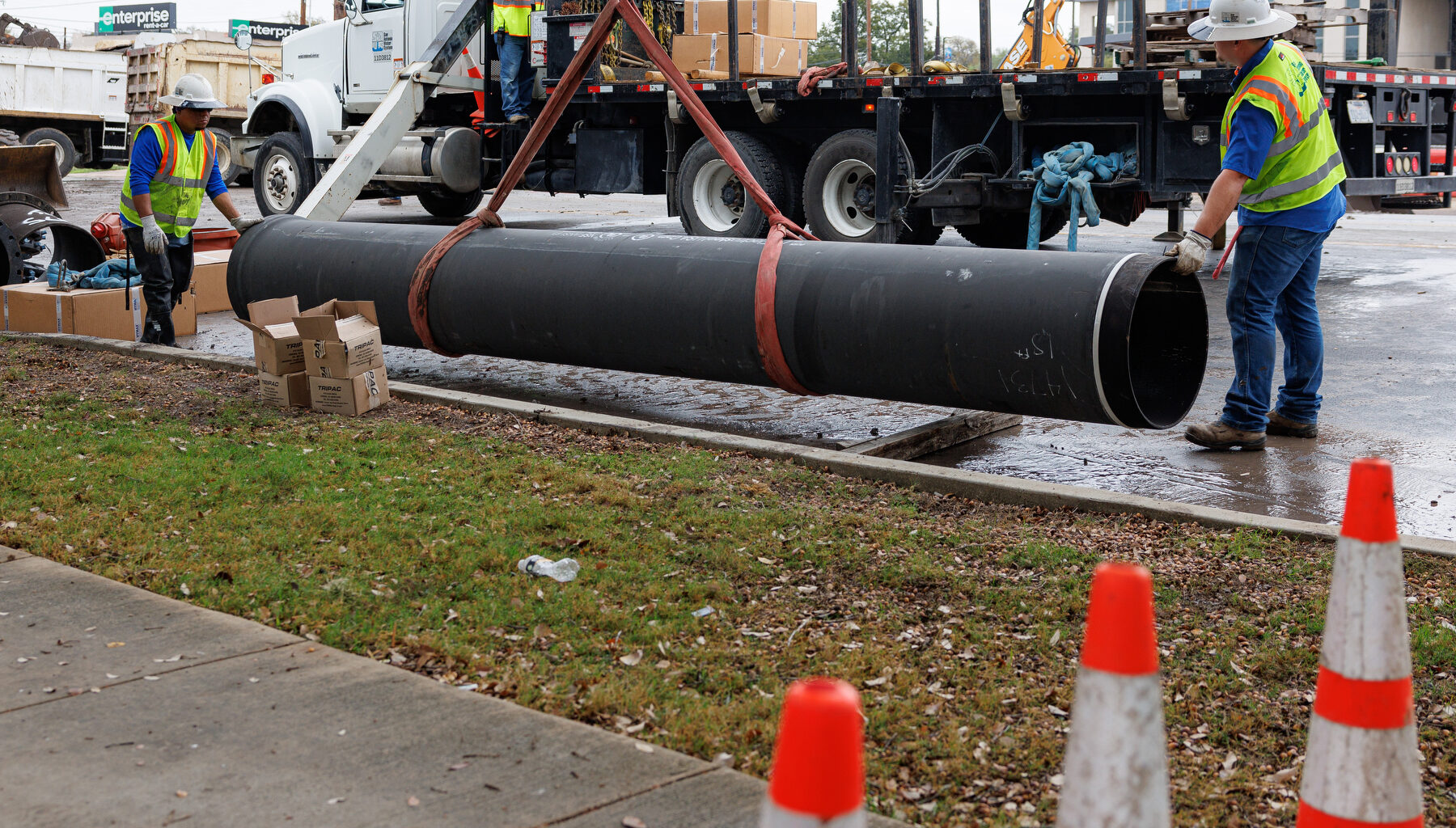
San Antonio Water System workers repair a broken water pipe along Broadway last year. In delaying a vote on SAWS’ proposed rate increase, the San Antonio City Council delays investing in water infrastructure.
Sam Owens/San Antonio Express-News
The City Council members who recently voted to delay deciding whether to raise water and sewer rates have achieved a pyrrhic victory.

They won last week’s vote 6-5, but they have gained nothing. Meanwhile, not only is a rate increase for the San Antonio Water System inevitable, the delay may cost ratepayers more.
Article continues below this ad
All council achieved was to put off a tough decision until the fall. When the next vote comes, a rate increase will still be needed, water will still be leaking from pipes, wastewater will still need to be treated, and aging infrastructure will still need to be modernized.
In striking a pose that could be viewed as advocating for affordability, a majority of the council may ultimately cost ratepayers more as construction costs rise with time. At some point, be it in the fall, the spring or two years from now, the infrastructure bill for SAWS will come due. It’s pay now or potentially pay more later.
We get it. Nobody wants a rate increase. No elected official wants to tell constituents they must pay more, especially for an essential service.
But it’s precisely because water is an essential service that the rate increase is so necessary. Maintaining and improving this system requires significant investment. The proposed rate increase of about 30% from this year through 2029 — the average bill would increase each year by about $4 a month — would support $3.2 billion in infrastructure.
Article continues below this ad
About $500 million would be directed to the Steven M. Clouse Water Recycling Center, which was built in 1987 and needs an overhaul. Hundreds of millions of dollars would be dedicated to replace aging mains to reduce water loss. Last year, aging mains led to the loss of 16.5 billion gallons of water.
The idea coming from some council members — if only SAWS were more efficient, the leaky pipes could be fixed and wastewater plants could be updated — is magical thinking.
We are all for efficiencies. By all means, put SAWS through a zero-based budgeting process; press its leadership to be more responsive to community concerns. But any gains to be found will only help on the margins. There are not enough efficiencies to replace 77 miles of pipes, reduce billions of gallons of lost water, treat effluent or buy available water.
SAWS President and CEO Robert Puente told the council it will have to reassess the proposed hikes, noting they may need to be “adjusted upward.”
Article continues below this ad
“I doubt if contractors will hold their prices,” he said. “Prices never go down. They always go up, so some of these projects will be more expensive.”
Should the council fail to act, SAWS may consider a 16.1% increase in 2027 to make up for lost revenue.
That’s not going to happen. We support a rate increase because we believe it’s essential for San Antonio to invest in its utility infrastructure, but it can’t be implemented in a way that will shock customers.
We thought SAWS’ initial proposal hit the mark in this regard. Yes, over four years, a household with average water use would see its bill rise from $56.68 to $73.60, but this would happen gradually. And the utility has taken steps to insulate lower-income households from experiencing any rate increase.
Article continues below this ad
Beyond this, while elected officials are understandably sensitive to how inflation limits voters’ purchasing power (the current occupant in the White House being a regrettable exception), inflation also limits the purchasing power of utilities. The price for materials and labor also rises. Inflation will occur over the next four years for SAWS, too.
We’re not sure what a majority of City Council members — Sukh Kaur, Jalen McKee-Rodriguez, Edward Mungia, Marina Alderete Gavito, Misty Spears and Marc Whyte — are trying to achieve by delaying the rate increase.
Putting off a tough vote only extends the political pain, but the need is so great for SAWS (and, separately, for CPS Energy) that approving a four-year rate increase should have been an easy vote. The bill always comes due.