
Fort Worth council member Deborah Peoples said she had one of the most extraordinary experiences of her life happen this summer.
She read to a group of children.
The students told her they wanted to grow up to work for NASA, become doctors and cure cancer.
“I was blown away,” Peoples said during a June 23 city council work session. “Their level of understanding and their intellect will absolutely blow you away.”
Her story on the power of reading came as city officials updated council members on Fort Worth’s literacy initiative, a partnership among the city’s library and park and recreation departments, community centers, and philanthropic and nonprofit partners.
The effort comes as 4 in 10 Fort Worth ISD students read on grade level, according to recent STAAR results. Across the city, fewer than half of students met grade level in reading.
The program is designed to keep children reading during the summer, prevent learning loss, screen students who may be at risk for dyslexia and connect families with support before children return to school.
This program has been going on since 2021, said Monique Hill, assistant director of the city’s park and recreation department.
The city’s approach is not to make camp feel like school, Hill said. Instead, children read, act out stories, play literacy-based games or participate in other activities that build reading skills.
The goal, Hill said, is to sneak education and literacy in.
The initiative includes Literacy Roundup, summer day camp, the Mayor’s Summer Reading Challenge and after-school programming. City officials said the work has grown through partnerships with Literacy Roundup, the Rainwater Charitable Foundation, the Sid W. Richardson Foundation, Rev Partnership and others.
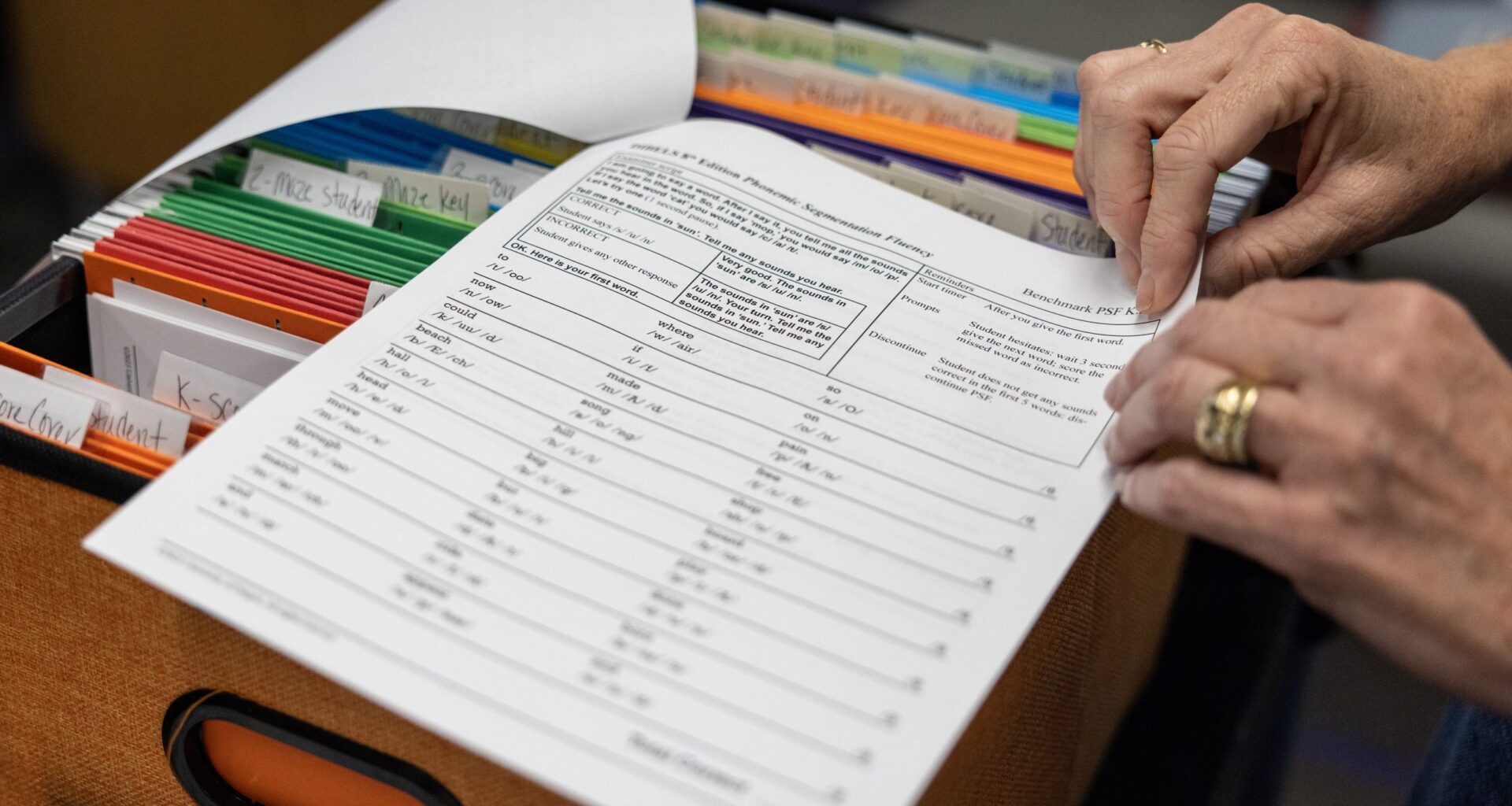
Literacy Roundup, a dyslexia screening and advocacy program, launched as a pilot in 2025. Volunteers are trained to administer DIBELS screenings, which are used to identify children who may be at risk for dyslexia.
This summer, Literacy Roundup grew from six community centers in 2025 to 13, with screenings also offered at five Fort Worth Public Library locations. Midori Clark, Fort Worth Public Library director, said expanding sites makes screenings more accessible for families.
Marley Kerr, a college student who is working with Literacy Roundup this summer, told council members the program had already screened 200 students this year and identified 64 as at-risk for dyslexia. The program is on track to nearly double last year’s number of screenings, she said.
Kerr said the work is personal. She was diagnosed with dyslexia when she was 7.
“Before my diagnosis, I worked incredibly hard in school, but no matter how much effort I put in, I always felt behind,” Kerr said. “The best way I can describe it is this: It felt like I was racing alongside my classmates, except everyone else was swimming through water and I was swimming through honey.”
Because someone identified her dyslexia early, she spent her childhood discovering her strengths instead of being defined by her struggles, Kerr said. She went on to serve as student body president at R.L. Paschal High School and is now studying at Oklahoma State University.
“When I was 7 years old, someone changed the course of my life by simply recognizing I needed help,” Kerr said. “Because of Literacy Roundup, hundreds more children will have that same opportunity.”
Several council members focused on what happens after a child is screened — and how the program can reach more parts of Fort Worth.
Council member Mia Hall, a FWISD executive, said some families have struggled to move from a screening result to receiving services at school. That becomes more complicated, she said, because some children screened at city sites may attend Fort Worth ISD, Crowley ISD, other districts, charter or private schools.
Caroline James, with Literacy Roundup, said advocates meet with families, explain their rights and, when needed, go with parents to school meetings.
“Right now it really is incumbent upon the parents, and so we do the best we can to inform the parents of all of their rights, but then we also go with them to their schools,” James said.
James said advocates work with families across seven school districts. Schools have legal timelines for responding to requests for testing, and Literacy Roundup helps parents understand those deadlines, she said.
“With Literacy Roundup, the parents don’t just get test results,” James said. “They get an advocate.”
Council member Charlie Lauersdorf said he wants to see the program expand farther into north Fort Worth, the area of the city he represents. He pointed to the Corporal Don Graves YMCA, which he said fills up quickly, and said his district includes students served by the Keller and Eagle Mountain-Saginaw school districts.
District-reported dyslexia rates appear lower than estimates from researchers who say dyslexia may affect closer to 15% or 20% of students, he said.
“Clearly they’re all not testing as well as they could, and so that’s where your program comes in and really helps kind of fill some of that gap,” Lauersdorf said.
Some districts are more prepared than others to receive requests for dyslexia testing, James said. Literacy Roundup’s role is to help parents navigate the process and press schools to follow the law.
The Rainwater Charitable Foundation awarded more than $338,000 to expand the city’s literacy work, Hill said. The funding will support literacy support specialists, additional oversight across sites, incentives for “literacy champions” and equipment tied to the initiative.
The city also highlighted its summer slide prevention program, which aims to help students improve or maintain their reading levels during summer break. Last summer, 957 participants were assessed, with 66% growing and 32% maintaining their reading levels, according to the city presentation.
The city’s literacy work is about more than summer programming to council member Peoples. To her, it’s about what Fort Worth could become if children get support early.
“If we continue to fund programs like that, Fort Worth is just going to be on the cutting edge of literacy,” Peoples said.
Matthew Sgroi is an education reporter for the Fort Worth Report. Contact him at matthew.sgroi@fortworthreport.org or @matthewsgroi1.
Disclosure: FWISD manager Pete Geren leads the Sid W. Richardson Foundation, a financial supporter of the Fort Worth Report. FWISD manager Laurie George is a member of the Report’s reader advisory council. Rainwater Charitable Foundation has been a financial supporter of the Report. News decisions are made independently of our board members and financial supporters. Read more about our editorial independence policy here.
This <a target=”_blank” href=”https://fortworthreport.org/2026/06/24/fort-worth-literacy-push-gives-young-readers-a-summer-boost/”>article</a> first appeared on <a target=”_blank” href=”https://fortworthreport.org”>Fort Worth Report</a> and is republished here under a <a target=”_blank” href=”https://creativecommons.org/licenses/by-nd/4.0/”>Creative Commons Attribution-NoDerivatives 4.0 International License</a>.<img src=”https://i0.wp.com/fortworthreport.org/wp-content/uploads/2021/04/cropped-favicon.png?resize=150%2C150&ssl=1″ style=”width:1em;height:1em;margin-left:10px;”>
<img id=”republication-tracker-tool-source” src=”https://fortworthreport.org/?republication-pixel=true&post=628918&ga4=2820184429″ style=”width:1px;height:1px;”><script> PARSELY = { autotrack: false, onload: function() { PARSELY.beacon.trackPageView({ url: “https://fortworthreport.org/2026/06/24/fort-worth-literacy-push-gives-young-readers-a-summer-boost/”, urlref: window.location.href }); } } </script> <script id=”parsely-cfg” src=”//cdn.parsely.com/keys/fortworthreport.org/p.js”></script>