
The program, which has already attracted attention from several local high schools, is expected to launch in August.
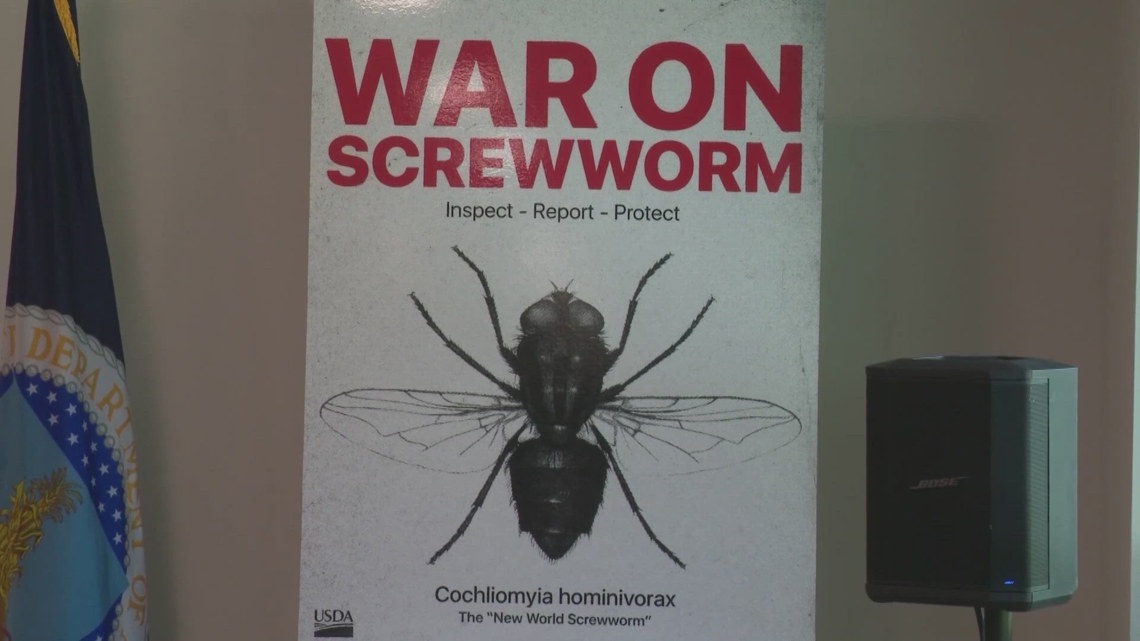
SAN ANTONIO — As New World screwworm spreads across Texas, local agriculture leaders are working to prepare the next generation of farmers and ranchers to respond to the parasite.
The latest confirmed detection was reported Wednesday in Medina County, bringing Texas’ total number of confirmed cases to 19. Most of those cases have involved cattle, though goats and sheep have also tested positive.

This story continues below.
Ty Chumbley, department head and lead professor of agriculture of Palo Alto College, believes education is one of the state’s strongest tools in preventing future outbreaks.
“The ag industry is definitely a family,” Chumbley said.
Chumbley calls it a first-of-its-kind educational program focused specifically on New World screwworm awareness.
“One thing being at Palo Alto College, we’re the only higher education ag program here in Bexar County, we’ve really developed a strong program to identify, how do we let our young people know about the screwworm,” Chumbley said.
The initiative will partner with agricultural programs at local schools including East Central, O’Connor, James Madison and Judson high schools. Students who raise livestock through FFA and other agricultural programs will receive training on how to identify New World screwworm, understand the risks it poses and learn how to respond if they encounter a suspected case.
“They are going to be raising livestock, whether it be goats or pigs or chickens or steers,” Chumbley said. “And so they need to really be a part of this program to understand, ‘Hey, what’s out there? What really is a screwworm? How can I identify it? How can I treat it? And how can I be a part of this process moving forward?'”
The curriculum will include classroom presentations, educational posters, PowerPoint lessons and hands-on training designed to prepare students before they enter the agricultural workforce.
Chumbley noted the effort isn’t just about today’s outbreak. He hopes it will strengthen Texas agriculture for decades to come.
“I think by having this younger generation really understand, be a part of this process, we’re not only going to make Texas safer, we’re going to make our stock shows safer, we’re also going to make our ag community more intelligent and more prepared,” Chumbley said.
Chumbley and his team have already been traveling across Texas discussing the program with agricultural organizations and educators. The goal is to launch the program at local schools by August.