
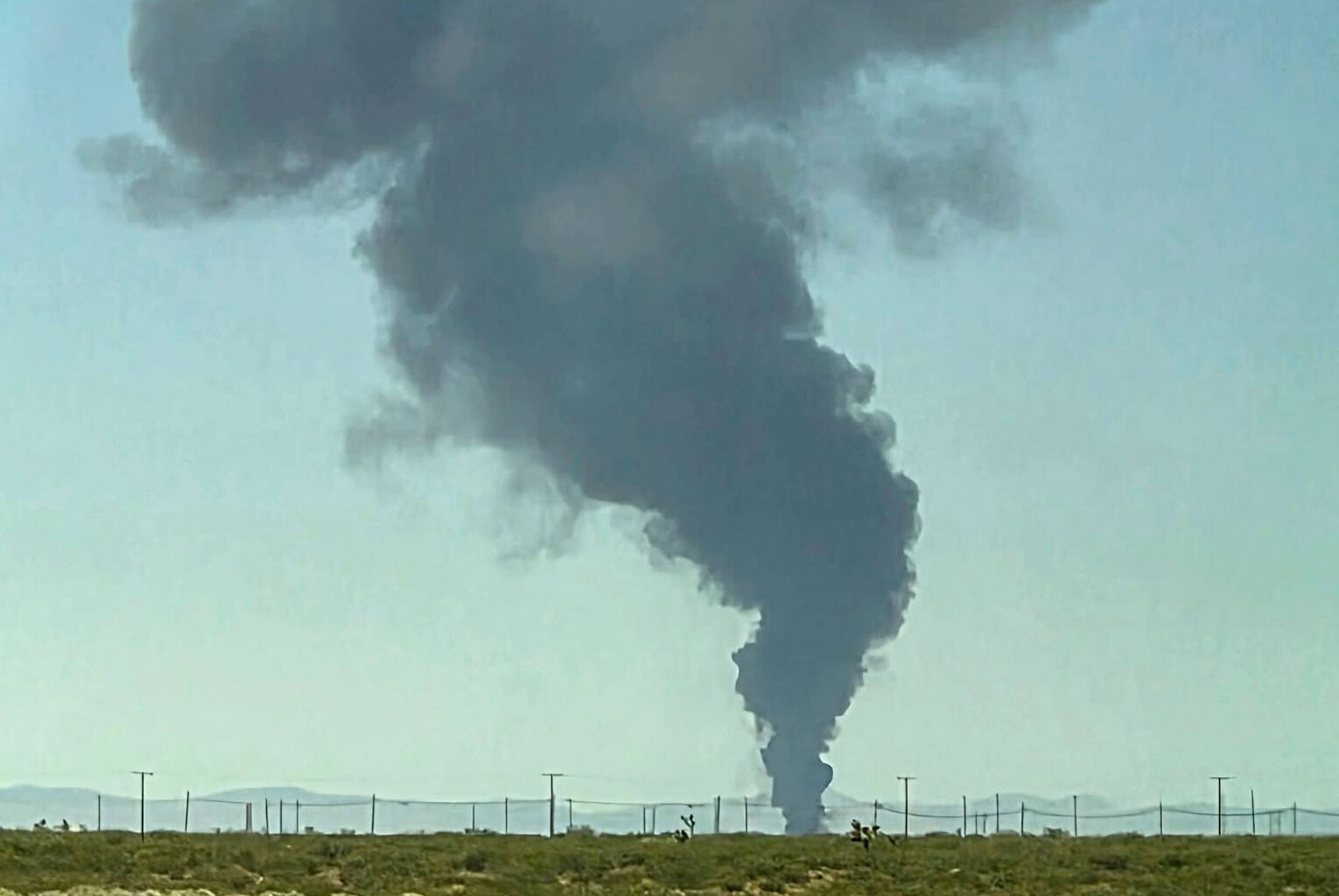
Smoke plumes rise from a B-52 bomber that crashed shortly after takeoff June 15 at Edwards AFB in Southern California.
Debbie Reyes Katz via Associated Press
The Air Force B-52 that crashed June 15 at Edwards AFB, Calif., is seen arriving at the base Dec. 8 after a flight from Port San Antonio.
James West
The Air Force B-52 that crashed June 15 at Edwards AFB, Calif., is seen arriving at the base Dec. 8 after a flight from Port San Antonio.
Air Force
The Active Electronically Scanned Array radar has been installed on a B-52 Stratofortress as part of the B-52 Radar Modernization Program.
Air Force
The crash of an Air Force B-52 in California will slow a nearly $3 billion program underway at Port San Antonio to upgrade radar systems across the nation’s fleet of the bombers.

The June 15 crash at Edwards AFB, Calif., killed eight people — five airmen and three civilian contractors — when the jet slammed into the runway moments after taking off on a flight to test a new radar system Boeing Co. had installed at its San Antonio site.
Article continues below this ad
An Air Force Safety Investigation Board inquiry into the crash is ongoing.
The 66-year-old bomber once nicknamed “Spirit of Aggieland II” had been at Boeing’s facility at the port from May 2023 until December while crews put in the upgraded system.
It was the first of two B-52s equipped with the new radar to be used as test beds of the new system.
San Antonio Express News Logo
Make us a Preferred Source on Google to see more of us when you search.
Add Preferred Source
RELATED: Boeing at Port San Antonio in $2B deal to keep 1950s-era bombers flying
Article continues below this ad
Flight and ground tests are needed before the Air Force will clear Boeing to begin retrofitting the rest of the B-52 fleet, another 74 airplanes, with the system.
But like Boeing’s troubled Air Force One program that’s also underway at the port, the B-52 Radar Modernization Program has experienced significant cost overruns and delays. The bomber that crashed was flown to Edwards three months later than expected.
The loss of that test aircraft will add to the problems.
Further testing is held up as the Air Force awaits the second test plane, which “is nearing completion (at Port San Antonio) and will ferry to Edwards AFB later this year,” the service said in a statement. The jet is expected to be delivered in January.
Article continues below this ad
Program leaders plan to continue testing with the second plane after it arrives and is deemed ready by the 412th Test Wing, the service said.
The testing holdup pushes back timelines and could potentially spike costs on a program that’s been sounding alarms since last year.
RTX’s Raytheon builds the components for the radar system, known as AN/APQ-188, which includes a new antenna array and 14 individual hardware boxes for each jet.
READ ALSO: Air Force allows trainer jet back to the sky after 10-day grounding
Article continues below this ad
By spring 2025, the cost to buy each radar kit had hit about $19 million, roughly 19.5% above expected costs. The $229 million overrun was considered a “significant breach” of the Nunn-McCurdy Act, which mandates the Pentagon to notify Congress of cost growth on major weapon system buys.
The Air Force notified Congress of the increased costs in April 2025, with officials assuring legislators that the program would not exceed Nunn-McCurdy’s “critical breach” threshold of 25%.
Critical breaches put programs at risk of cancellation and require the defense secretary to certify their need for national security.
A Pentagon report on the program from last June blamed the cost increases on redesigns and a six-month slip of a design review in 2022. It also blamed “supply chain and laboratory part delivery delays, setbacks in development lab standup and integration testing, hardware fabrication quality deficiencies, and poor software development productivity.”
Article continues below this ad
The report listed delays in 2023 and 2024, including an 11-month slip due to “continued technical challenges,” lab delays and “slower than expected progress” on software development.
MORE AVIATION: San Antonio firm worked on doomed UPS jet, then audit found 11 problems
It also noted that since the test aircraft had been unused for a long time, crews would need to do “wake up checks” when the craft was powered up to check for fuel or hydraulic leaks. Any problems were to have been repaired before the craft flew to Edwards.
B-52s have a long history in San Antonio. The Air Force performed depot maintenance on the bombers at the former Kelly AFB from the 1960s through the early 1990s in a hangar known as Building 375, which was built to support the jets.
Article continues below this ad
Boeing has done maintenance on B-52s at the port since 2015. In addition to the B-52 radar work, it’s also upgrading the jets’ engines as part of a $2 billion deal to keep the jets flying into the 2050s.
The Air Force completed a design review of that upgrade, and work on the first two jets is expected to begin at the port later this year. Once complete, they’ll also go to Edwards for testing.
Boeing previously has said that about 70 to 80 people are working on the radar project at the port. They’re among 3,000 Boeing employees at the port and 7,000 across Texas.