
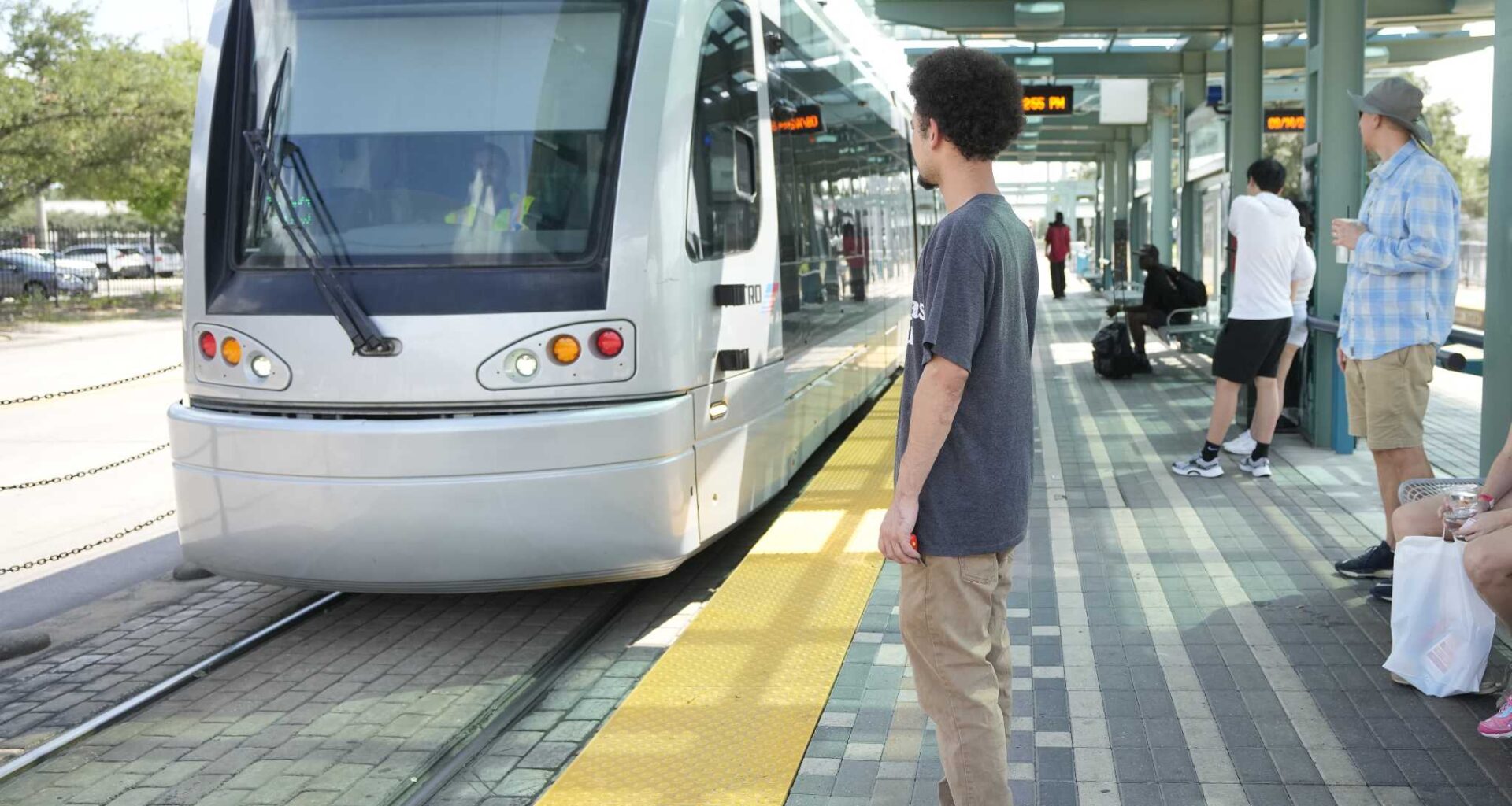
Ricko Caesar waits to board a METRORail after work at the train station near NRG Park on Saturday, Sept. 14, 2024, in Houston.
Karen Warren/Staff photographerMetro’s expanded bus and rail service for the World Cup has increased frequency and extended hours, drawing praise from local riders who want the changes to continue after July 11.Metro Board Chair Elizabeth Gonzalez Brock reported the services moved 20,000 riders during the World Cup events.Metro officials will review data from the boosted World Cup services and have not yet committed to extending them beyond July 11.
Houston-area transit riders want Metro to keep its expanded 2026 FIFA World Cup service long after the tournament ends, saying the longer hours and more frequent trips have made it more reliable.
Metro began boosting its rail, bus and shuttle services for the World Cup to meet the demand from crowds of soccer fans starting in early June. The agency increased transit service frequency and extended operating hours along key corridors and near major venues hosting World Cup-related events.
Article continues below this ad
The expanded services are scheduled to end July 11, but some residents at Thursday’s board meeting urged Metro to make the enhancements permanent.
RELATED: A commuter’s survival guide to Houston traffic during the 2026 World Cup
“My hope is that the Metro board can see how good the service expansion has been for not just the visitors of FIFA, but also regular Houstonians and Harris County residents who utilize these services,” Spring resident Felipe Woods said.
Before the changes, Woods said he often had to take two different routes from the Park & Ride site in Spring to get downtown on weekends and after 7 p.m. on weekdays. But having the 209 bus route available during the evenings and weekends has helped him save time.
Article continues below this ad
“These types of services are things that many Houstonians that work in the evenings and weekends will definitely need and appreciate,” he said.
Metro Board Chair Elizabeth Gonzalez Brock said the agency is working with the transit advocacy group Link Houston to evaluate the transit services and analyze ridership. There has been no promise of a permanent change yet.
How residents felt about Metro’s enhanced services
Midtown resident Briana Barr uses Metro to get downtown, to the airports and to Rice University and Parkside. She said it helps her avoid expensive parking fees. She also relies on transit when her car is in the shop or when a bike ride ends with a flat tire.
“I hope that you guys decide to make these upgrades permanent because they’ve been really great for reliability,” Barr said.
Article continues below this ad
Houston’s newly elected District C council member, Joe Panzarella, opened his remarks by thanking Metro for the extended World Cup service. He said a friend visiting from Chicago who was staying with a family in Cypress almost paid $50 to $60 for an Uber to downtown. The friend instead saved money by using a Park & Ride bus that ran on Sunday, one of the changes Metro made to handle the World Cup influx.
“These services are really important, and they are making a difference right now,” he said to the board.
Panzarella added that if Metro continues the weekend Park & Ride buses and more frequent rail service, more Houstonians could adopt these options, and hopefully, ridership could continue to increase.
HOW BAD WILL TRAFFIC BE? Will Houston drivers give up their cars during the World Cup?
Link Houston has been pushing for more frequent and reliable public transportation. The organization urged Houstonians to use Metro’s expanded services and make the case for keeping the improvements after the tournament.
Article continues below this ad
“Metro is proving today that the transformative transit service promised to voters in 2019 can be a reality,” said Robin Holzer, executive director of Link Houston, in a statement. “With extended hours, all-day service linking suburbs with downtown and more frequent buses and trains, Houstonians can confidently choose transit for more trips than ever.”
Soccer fans line out to go through security as they head to FIFA’s Houston stadium to watch Germany and Curaçao play on Sunday, June 14, 2026.
Elizabeth Conley/Houston Chronicle
How did Metro deal with the influx of riders?
Brock said that while World Cup-related events such as the FIFA Fan Festival could hold about 15,000 people, Metro was moving 20,000 riders. After the first World Cup match at NRG Stadium on June 14, fans faced long lines to board the MetroRail red line, and Metro worked with event partners to change how crowds moved through the area.
Brock highlighted those changes at the Metro board meeting, saying the agency worked with partners to secure the NRG Center as a temporary shelter for fans waiting for trains and buses.
Article continues below this ad
Metro also deployed “cooling buses” outside and around NRG Stadium so fans could sit in air‑conditioned vehicles, helping prevent people from overheating in the summer heat.
Metro Interim President and CEO Thomas Jasien said the Metro workforce rose to the challenge, from operators, police and maintenance to hundreds of off-shift employees serving as ambassadors on platforms at stations and even at the airport.
Brock described crowds of fans as “happy to take the Metro,” adding that the extended service made it easier for visitors and residents to get around the city despite extreme heat and sudden thunderstorms.
Metro staff and their partners also reviewed after‑action reports after every World Cup event to identify areas for improvement in how the system handled the crowds, Brock said.
“Just bringing everyone together, it has been remarkable because there have been lessons learned after every single game,” she said.
Jasien called the World Cup “a unique time in Metro’s history and Houston’s history.” Despite overwhelming crowds and periods of extreme heat and heavy rain, he said ridership and activity have been high across the system, even on non‑match days, and promised to share official ridership figures with the Metro board.
“We’re about halfway through. We’ve got more work to do, but it’s going extremely well,” he said.