
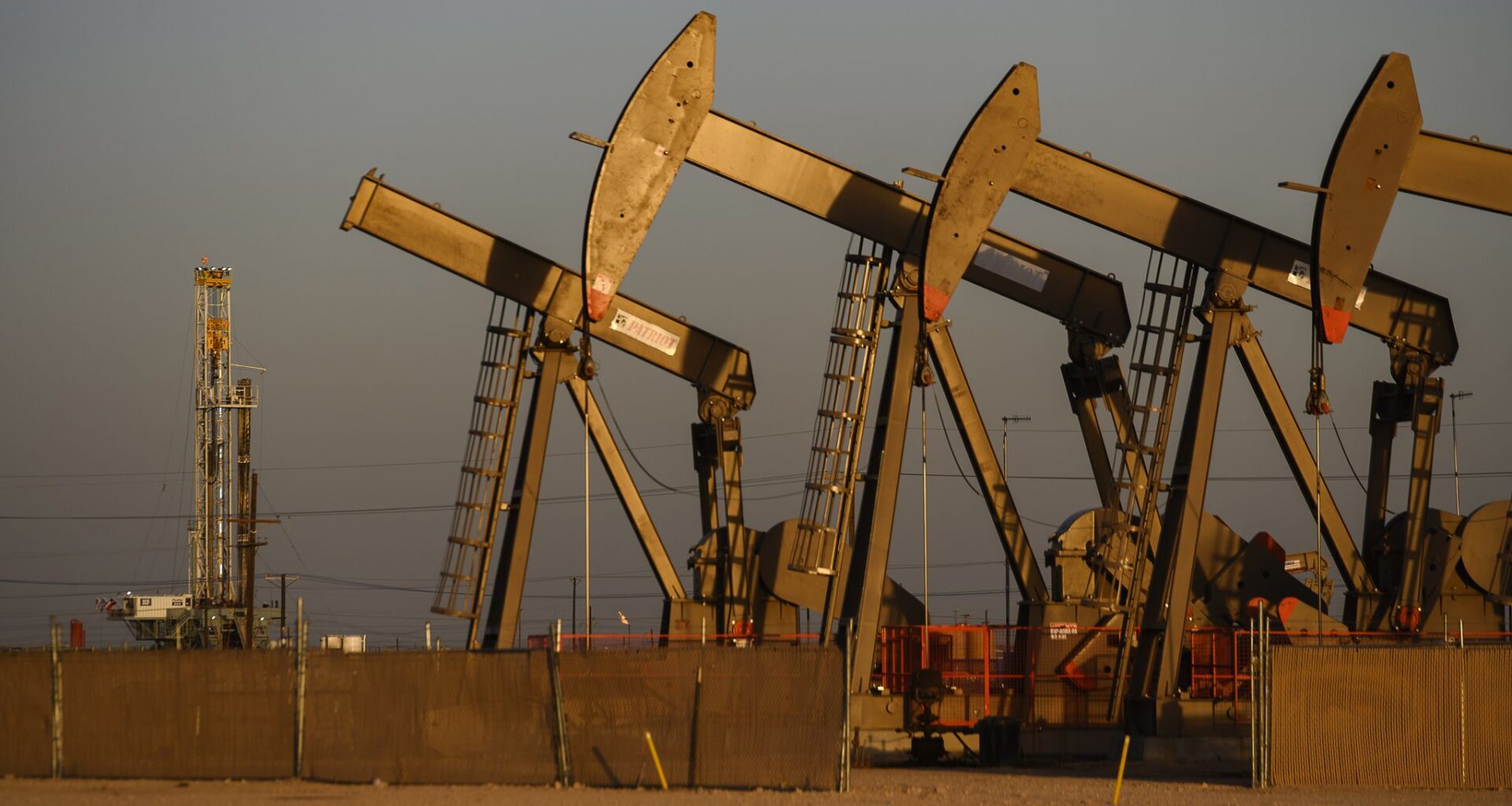
The state’s oil and gas sector, which has benefited from higher oil prices associated with the war in Iran, posted job gains last month, the Dallas Fed says.
2022 File Photo/The Associated Press
Job growth in Texas cooled in May, but the state still remains on track for a surprisingly robust year of employment gains, according to the latest model-based forecast from the Dallas Fed.

The regional bank’s latest forecast is for a statewide jobs increase of 1.8% for 2026, a figure that would be nearly in line with Texas’s longer-term growth trend and far better than the nearly flat job growth the state experienced last year.
“It’s pretty good,” said Luis Torres, a senior business economist with the Dallas Fed. “It’s along the long-run trend of 2%.”
Article continues below this ad
It’s also relatively unexpected: While economists have broadly predicted prolonged negative economic impacts caused by the war in Iran, the Trump administration’s restrictive immigration policies and persistent geopolitical uncertainty — and other surveys have shown that half of Texas companies were in fact suffering as a result of the Iran conflict — the U.S. and Texas economies have also proved resilient.
In Texas, Torres sais, part of this year’s unexpectedly positive jobs performance stems from the massive AI investment and construction projects underway throughout the state. The state — now in the middle of a decadeslong economic and population boom driven largely by its relative affordability — also remains a magnet for companies and residents, with recent census data showing that D-FW, in particular, continues to rank among the country’s fastest growing metro areas.
“We haven’t changed the rules of the game here in Texas, right?” Torres said. “Pro-business, low taxes. All these things are still working in our favor.”
The regional bank’s latest forecast, released in late June, is based on an average of four models that incorporate a range of economic data, including projected U.S. GDP growth, oil prices and Texas unemployment claims. The newest projection also included adjusted May jobs data for the state, which showed that last month Texas added 14,400 jobs, representing an annualized increase of 1.2%.
Article continues below this ad
That increase amounted to a downshift from April, when the Texas economy added jobs at a rate of 2.2%, according to the bank’s revised figures. In March, Texas added jobs at a rate of 3.4%, up from around 1% in January and near zero in February, a month when the U.S. economy overall shed jobs in part because of severe winter storms and healthcare industry strikes.
In Texas, the strongest job gains last month came from trade and transportation services, leisure and hospitality and construction. Manufacturing and the government sector also posted gains, the Dallas Fed report notes, as did the state’s oil and gas sector, which has benefited from higher oil prices associated with the war in Iran.
Other industries — including education, the financial sector and the state’s large professional and business services sector, which had previously seen five months of job gains — posted monthly job losses.
Early this year, researchers at the bank had predicted Texas would add jobs at a rate of 1.1% for the year, with the slower-than-usual growth largely attributable to labor supply issues caused by low immigration. In the coming months, the fate of the U.S.-Canada-Mexico trade agreement that replaced NAFTA in 2020 and is coming up for review beginning July 1 — could have a significant impact on Texas jobs, Torres said.
Article continues below this ad
Last year, the state exported around $450 billion worth of goods, according to government figures, far outpacing any other state. Mexico and Canada are Texas’ largest trading partners.