
Natalie Weber / Houston Public Media
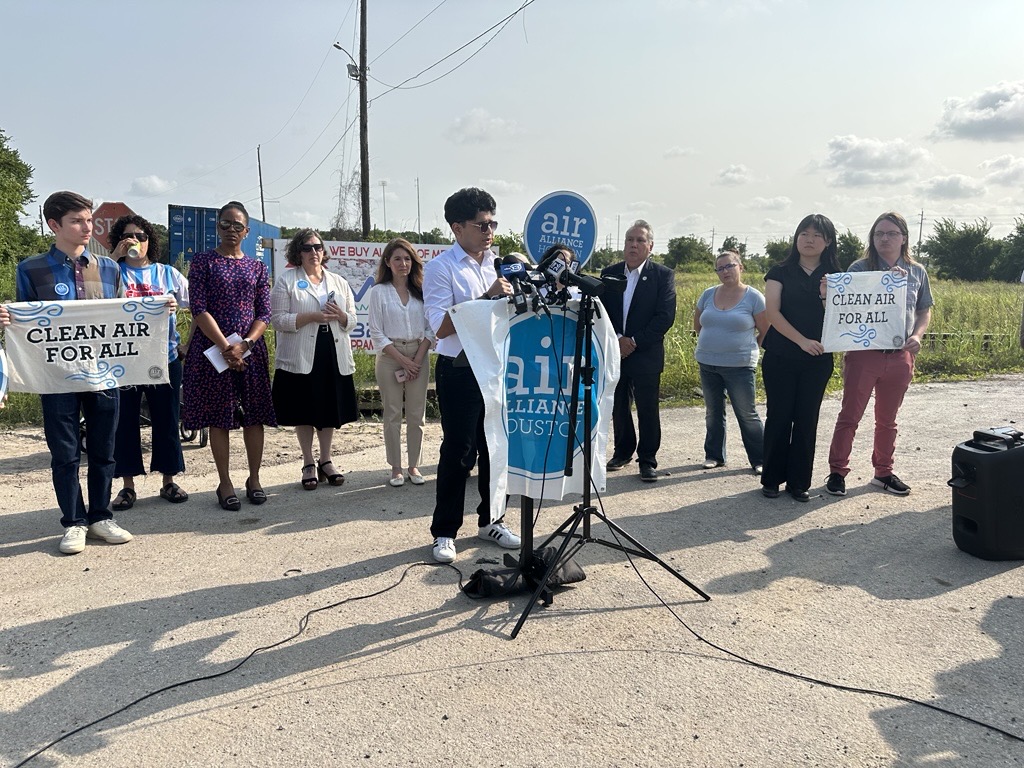
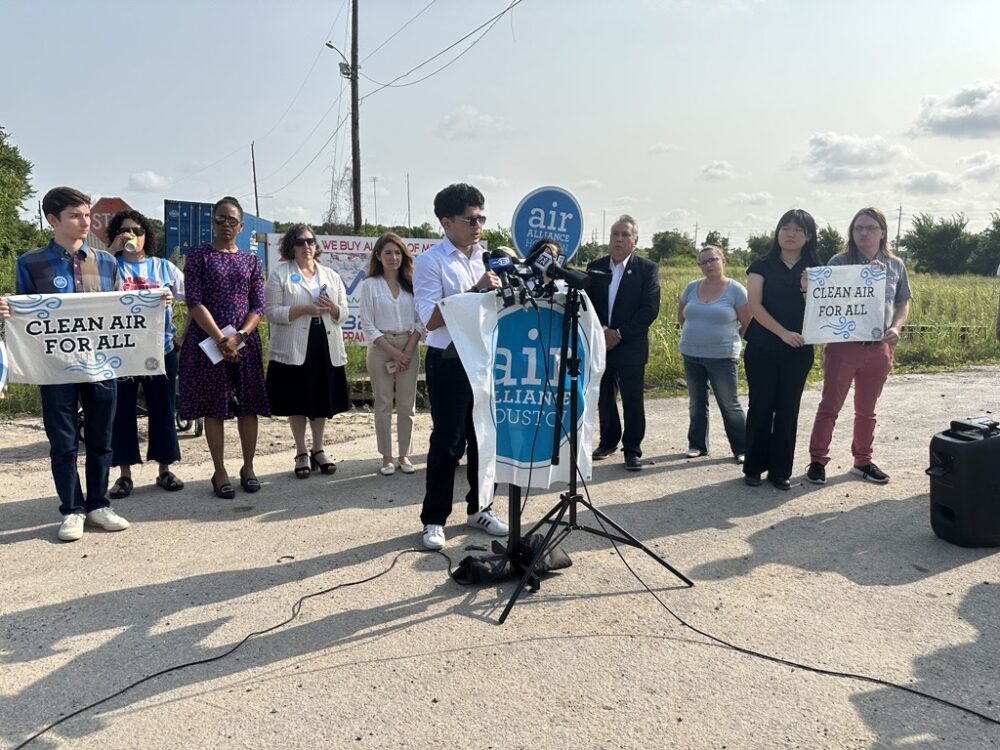
Air Alliance’s community air monitoring program manager Anthony D’Souza speaks at a news conference on Thursday, June 25, 2026.
After a tire fire erupted near her home this week, Blanca Garza said she received a set of instructions meant to protect her health: shut off the air conditioning in her house, close all of the windows and turn on air purifiers.
When state and local officials said they did not detect significant air pollution from the fire, Garza was skeptical.
“My son and I were sitting in our home in 90-degree weather with everything closed and we had pounding headaches,” she said at a news conference hosted by Air Alliance Houston on Thursday.
Sign up for the Hello, Houston! daily newsletter to get local reports like this delivered directly to your inbox.
It’s unclear just exactly how much air pollution was released from the fire at the Mammoth Metal Recycling facility in southeast Houston on Monday. The company did not immediately respond to a voicemail on Thursday afternoon.
The Texas Commission on Environmental Quality, which monitored air quality during the fire, said none of its readings were “above action levels.” The Houston Health Department had similar findings at the time of the fire.
“At this time, the reading for dangerous particles in the air remains below the National Ambient Air Quality Standard level of concern, and no serious air quality concerns have been reported,” Houston Health Department Director Dr. Theresa Tran said in a statement Monday night.
But environmental advocates with Air Alliance Houston said their community air monitors found elevated levels of PM 2.5 — tiny molecules of air pollution linked to heart and lung disease — at locations downwind of the fire in Denver Harbor and Kashmere Gardens.
Air Alliance’s community air monitoring program manager, Anthony D’Souza, said readings across the organization’s community air monitors suggest that the spike in pollution was created by the fire.
“We noticed these levels were caused by the fire because our monitors on the other side of the fire, sort of upwind, didn’t record any spikes. They stayed at the baseline level like most of the other monitors across the Houston area,” he said at the Thursday news conference.
The health department and the TCEQ did not immediately respond to requests for comment Thursday afternoon.
The greater Houston region does not currently meet the federal air quality standards for ozone, and Harris County has also exceeded federal standards for particulate matter in the past. Recent analysis from Air Alliance found industrial facilities regularly emit unauthorized pollution, often during accidents, fires and explosions.