
AUSTIN, Texas — As Texas moves to add more biblical content to public school reading lists and reshape social studies standards, a key question is emerging: Who will pay for the new curriculum materials and the training that could come with them?
The Texas State Board of Education approved changes to the K-12 curriculum Friday that add biblical stories and Bible verses to the literature curriculum. The board also discussed social studies curriculum changes that would place a stronger emphasis on Texas history, Western civilization and government.
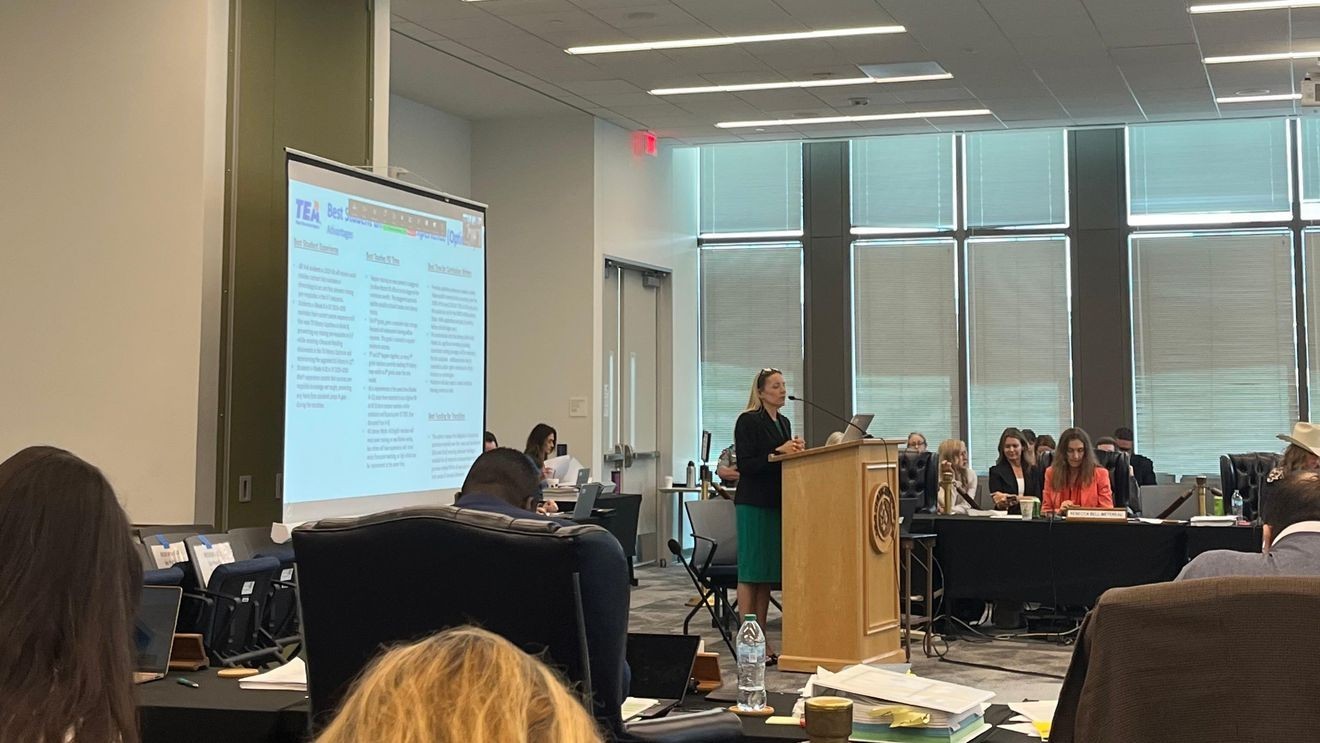
District 5 member Rebecca Bell-Metereau raised concerns about whether the state or local school districts would be responsible for the costs tied to implementing the changes.
“It’s not clear to me at all. That’s one of the errors in our reasoning here,” Bell-Metereau said.
Bell-Metereau questioned whether the costs would “fall on the shoulders of the local school districts,” and pointed to the state’s Permanent School Fund as a potential source of funding.
“Is it gonna fall on the shoulders of the local school districts? Ideally, we have a huge permanent school fund now, I don’t even know how many billions it is at this point. But it should be coming out of that,” she said.
RELATED | Texas board approves Bible stories as required reading in public schools
District 10 member Tom Maynard, who chairs the school finance committee, said the state funds instructional materials.
“Instructional material is always funded by the state and its funded from tax payer resources but not tax dollars,” Maynard said.
Still, Maynard said some costs beyond instructional materials could remain uncertain as the changes move forward, including training and other implementation needs.
“It remains to be seen just in terms of things like in-service and training and all of those pieces,” Maynard said, while remaining hopeful the state will approve of the funds.
Maynard was asked about districts facing budget deficits and whether state funding would prevent the curriculum changes from becoming an added financial burden. “Well we hope so,” he said. He also said the board is not planning implementation until the 2030-31 school year to help supplement with some of those issues.
Bell-Metereau warned that if districts end up covering costs, communities could feel the impact.
“They may have to pay higher property taxes, they may have to do all kinds of things,” she said.
Maynard said he is confident the state legislature will approve the necessary funds to distribute to districts to cover the costs.
The earliest any of the curriculum changes would be made is in the 2030-31 school year.