
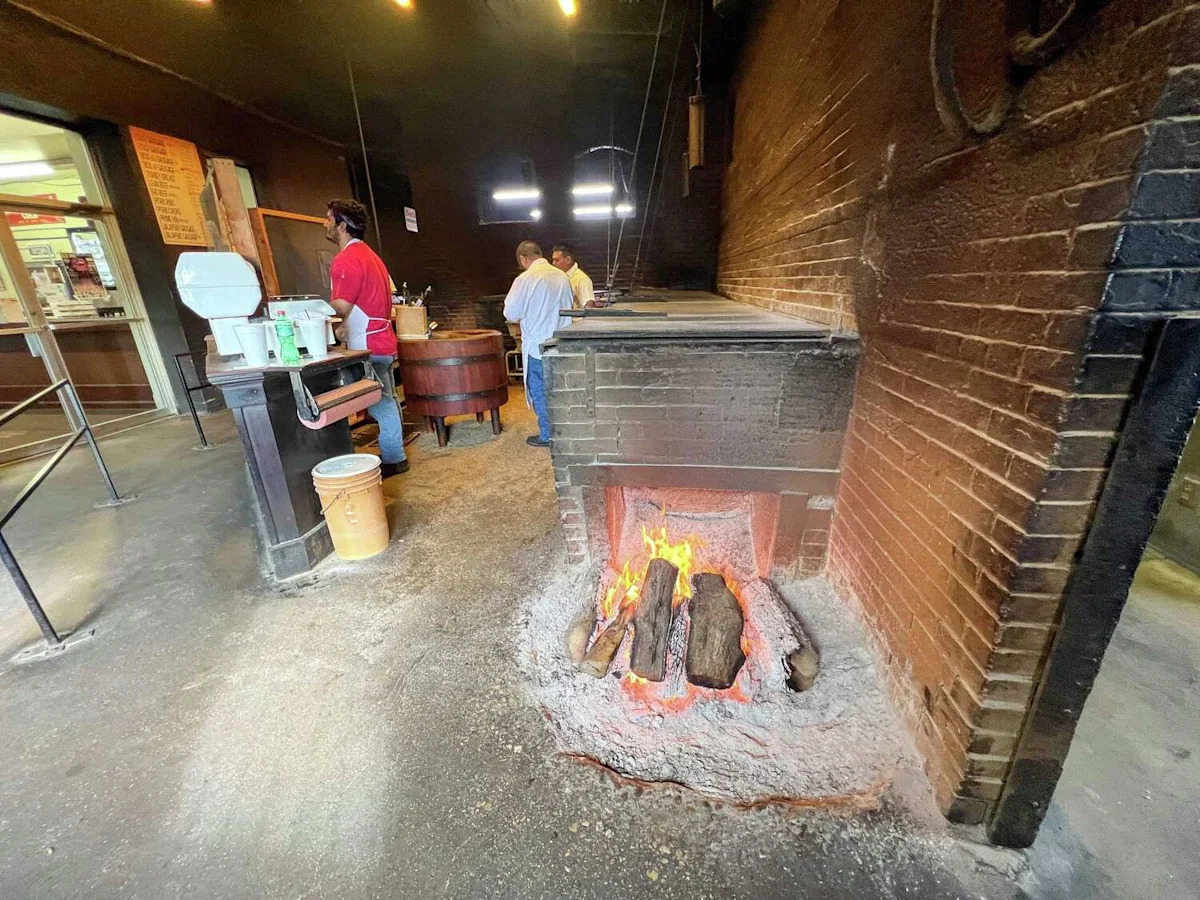
The defining characteristic of Texas barbecue is indirect-heat cooking.
That method gave rise to the low-and-slow style that transforms tough cuts like brisket into tender, smoky masterpieces fueled by hardwoods such as post oak and pecan.
But how did this foundational Texas cooking technique come about?
Beginning in the 1920s, Central Texas barbecue underwent a quiet revolution. Until then, most barbecue was cooked directly over a fire. The method worked, but it had a drawback: As meat cooked and fat rendered, drippings hit the coals below, causing flare-ups that coated the meat with ash, soot and bitter smoke.
At the time, Americans were increasingly focused on food safety and sanitation. Concerns about unsanitary food preparation helped spur reforms such as the Pure Food and Drugs Act of 1906. Meat covered in creosote and ash no longer fit the ideal of a clean, wholesome meal.
So an enterprising pitmaster – whose identity remains unknown – made a simple but transformative change. Instead of placing the fire beneath the meat, the cook moved it to the side of the cooking chamber. A flue or smokestack on the opposite end drew heat and smoke across the meat, cooking it indirectly while eliminating flare-ups.
The result was a cleaner, more consistent cook.
Remarkably, some of the earliest known pits of this type are still in operation at Smitty’s Market in Lockhart. The rectangular brick pits were built in the 1920s, when the restaurant was still known as Kreuz Market.
The earliest known reference to an indirect-heat pit appeared in the Jan. 16, 1928, edition of the Austin American. Charles Nitschke, manager of the Barbecue Café at 104 E. Fifth St. in Austin, described the restaurant’s setup:
“The best packing meat on the market is treated in a specially constructed pit. In this pit there is no fire under the meat, but the fire at both ends provides for heat and smoke to do the work. Grease from the meat runs through the screened bottom.”
The indirect-heat, or offset, pit was born.
Rectangular brick offset pits remained the standard through the 1950s. The pits still used at Houston’s Pizzitola’s Heritage BBQ trace their roots to designs from the 1940s.
By the 1950s and ’60s, pit construction began shifting to steel. Tubular cooking chambers improved airflow and smoke circulation, helping pitmasters cook more evenly. Meanwhile, postwar prosperity fueled America’s backyard grilling craze, bringing direct-heat cooking back into fashion at home.
Commercial pit builders took notice.
As oil refineries expanded across Texas in the 1970s – particularly in Houston – commercial barbecue and competition cooking were booming. Around that time, Houstonians Dickie Hartis and Lawrence Whitworth, owners of a metal fabrication shop, began experimenting with steel offset designs.
When the oil bust arrived in the 1980s, they turned pitmaking into a full-time business, building smokers from surplus refinery materials, including large steel pipes and tanks.
In 1983, Pitts & Spitts was born. More than four decades later, the company is still producing offset smokers.
A new generation of pitmakers emerged in the 2010s. Aaron Franklin of Franklin Barbecue in Austin and manufacturers such as Moberg Smokers refined the offset design using thermodynamic principles to improve airflow, combustion and temperature control.
One hundred years after its invention, the offset pit remains the defining technology of Texas barbecue – and the reason the state is producing some of the best barbecue in its history.
Subscribe
There’s more to Houston with the Chronicle. Subscribe today for just 25¢.
This article originally published at 100 years later, the offset pit is making Texas barbecue better than ever.