
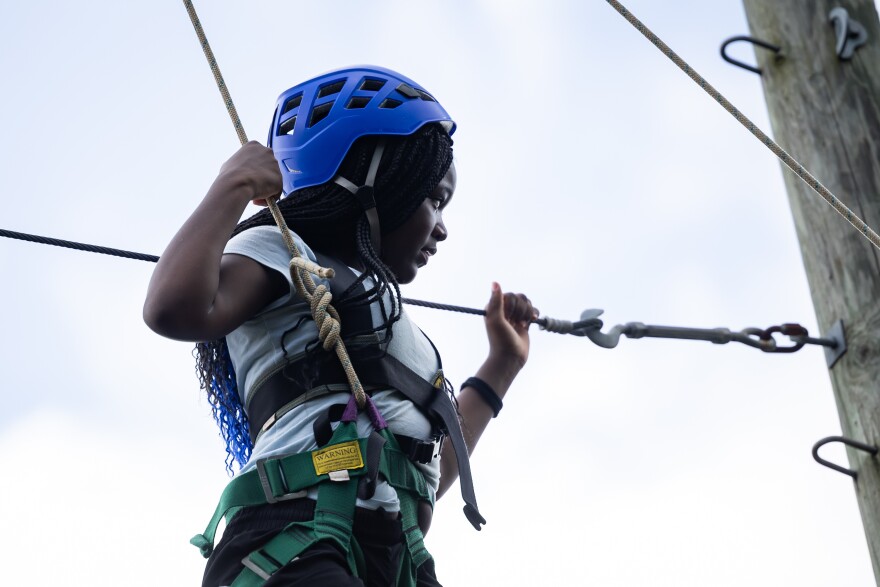
On a Friday in mid-June, middle school-aged kids lined up for their shot at a summer camp rite of passage: the infamous high ropes course at John Knox Ranch in Fischer, Texas. The ranch hosts Camp Brave Heart, Hospice Austin’s annual camp for kids and teens who have experienced loss.
13-year-old Alisa bravely stepped up to the challenge first. Soon enough, she was strapped into a harness, inching along ropes strung 30 feet in the air.
“You are rocking this!” the counselor belaying her from the ground yelled as Alisa neared the end of the course. “Take a second — you want to look at the view?”
“Oh, Jesus Christ!” she yelled, catching a glimpse of the treetops beyond her and laughing. With some coaching from the counselor, Alisa leaned back from the ropes and allowed herself to be safely lowered to the ground, receiving cheers from her fellow campers.
Camp director Esmerelda Huerta said the high ropes course is about more than fun; it gives kids a chance to practice courage, true to the Camp Brave Heart name.
“They have to learn how to trust themselves,” Huerta said. “Life throws things at you, but you’ve got to learn how to trust yourself that you can do it, and you can do hard things.”
Michael Minasi
/
KUT News
Alisa, 13, participates in the high ropes course at Camp Brave Heart.
Different ways to grieve
Huerta helps run Camp Brave Heart as part of her role as a program manager for Hospice Austin, a palliative and hospice care nonprofit. The organization has held the free summer camp for nearly 30 years. Huerta considers it a natural extension of Hospice Austin’s mission.
“Our care doesn’t stop at Hospice Austin once family members die,” she said. “It continues afterward … to provide support to adults, but also to kids.”
Campers range from rising second graders to rising 10th graders. Huerta said many of them arrive apprehensive, nervous to attend a camp associated with grief and reluctant to discuss their losses. Meanwhile, worried parents often feel a sense of urgency for their kids to talk about what they’re going through.
“From time to time, I get calls that say, ‘My kid needs to really come talk to somebody,’ and the parent is actually projecting how they’re feeling,” Huerta said.
“They can still have fun at a grief camp. It’s not all gloom and doom and sadness.”
Esmerelda Huerta, director of Camp Brave Heart
But sometimes, that’s not what their child actually needs. They want the “grown-ups” to give them space to be a kid and stop pushing them to react or process in particular ways.
“They’re like … ‘Let me navigate this, and let me figure out my school and my friends. Things are already so hard,’” Huerta said. “Everybody grieves differently.”
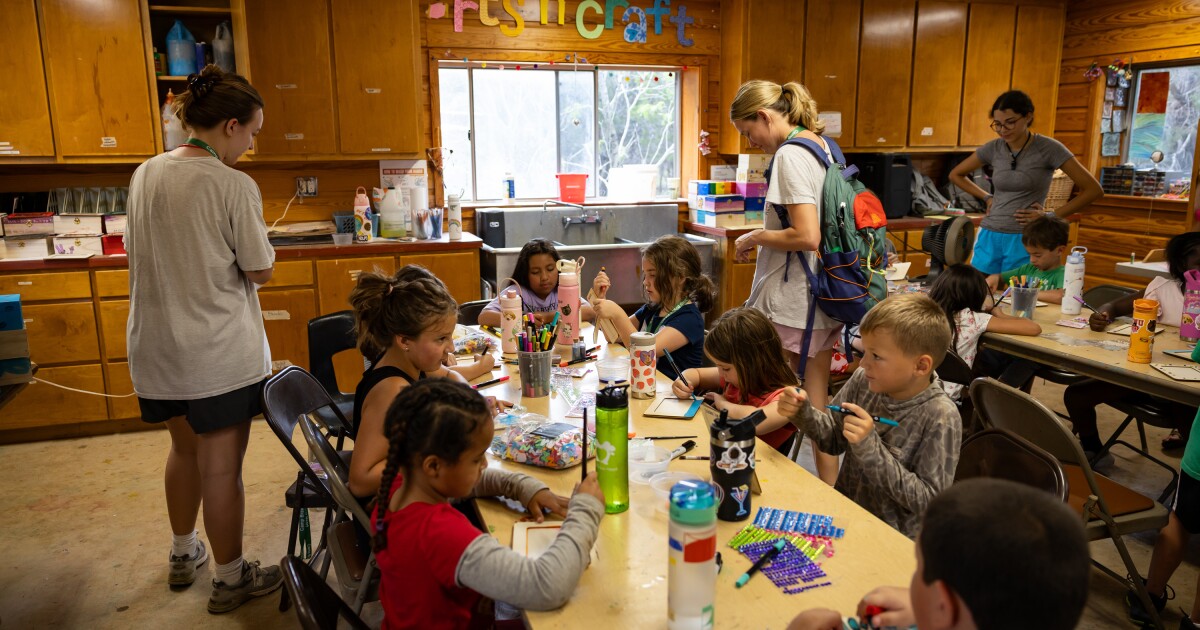
Sometimes, Huerta said, it’s the freedom to have some fun doing normal camp things — from ropes, to archery, to arts and crafts and swimming at Wimberly’s Blue Hole — that turns out to be the most therapeutic.
“They can still have fun at a grief camp. It’s not all gloom and doom and sadness,” she said.
Fast friendships
The opportunity to talk is there, though. The staff and volunteers at Camp Brave Heart are prepared to help kids through tough feelings and conversations and learn healthy ways to cope with grief.
Angela Baucom, a trained social worker, has returned to Camp Brave Heart as a counselor for five years now.
“When I was young, I lost my mother, and it was just like falling into the ocean with nowhere to go,” Baucom said. “So when I come here and I get to be with these kiddos who are going through similar things, it gives me an opportunity to be a person for them that I needed when I was their age.”
Michael Minasi
/
KUT News
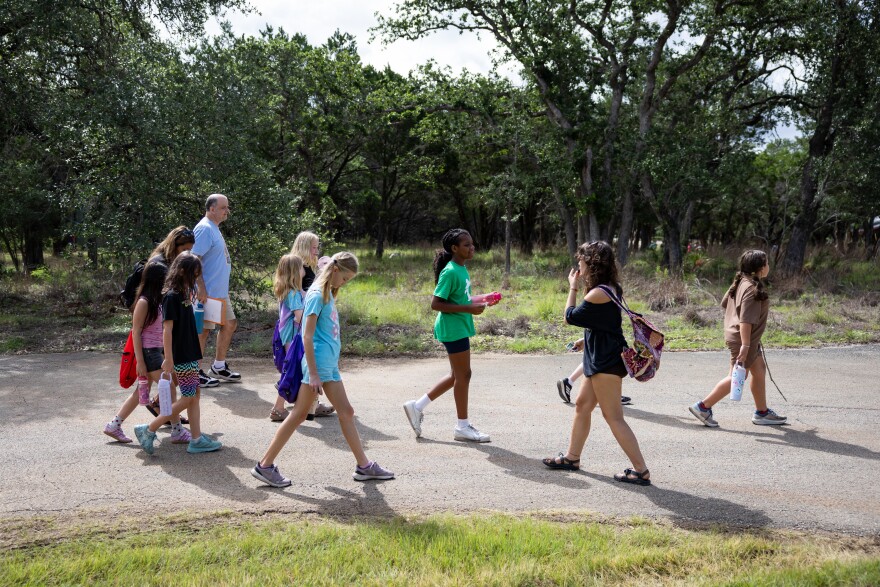
Attendees of Camp Brave Heart hike to their next activity at John Knox Ranch in Fischer, Texas.
Sometimes, that looks like listening to a kid as they open up. Other times, it’s climbing a ladder and swinging from a rope on the ropes course to show the campers that it’s not so scary. It’s being an adult who gets what they’re going through.
“It takes a matter of hours for them to realize that there are other people around them, adults and young folks who have been through something similar,” Baucom said.
Those camp bonds are formed quickly; 13-year-old Dashona’s nervousness about meeting a big group of new kids quickly dissolved at a pool party the first night when she and other campers her age laughed their way through creating synchronized swimming routines. Soon enough, she had made fast friends — and given them nicknames.
“Alisa, I call her Love Bug,” Dashona said while waiting her turn for the high ropes course, also pointing out her pals “Country Boy” and “Ladybug.”
“We’ve made such great bonds,” she said. “Although we’ve only been here for like two days, we’ve all gotten to know each other really well.”
Memory boxes and group chats
Through camp, kids are periodically split up into small groups with others who have experienced similar losses. Campers bring a variety of experiences to the table: they have lost loved ones to prolonged disease, suicide, or sudden accidents and health issues. Some have lost parents or grandparents. Others have lost siblings or friends.
For Dashona, it was her grandmother’s death that brought her to Camp Brave Heart.
“She was one of my favorite people, and one of the most amazing people that you would ever meet, mainly because she understood everything,” Dashona said. “She was sweet, she was caring, she was very loving — and her favorite color was red.”
Michael Minasi
/
KUT News
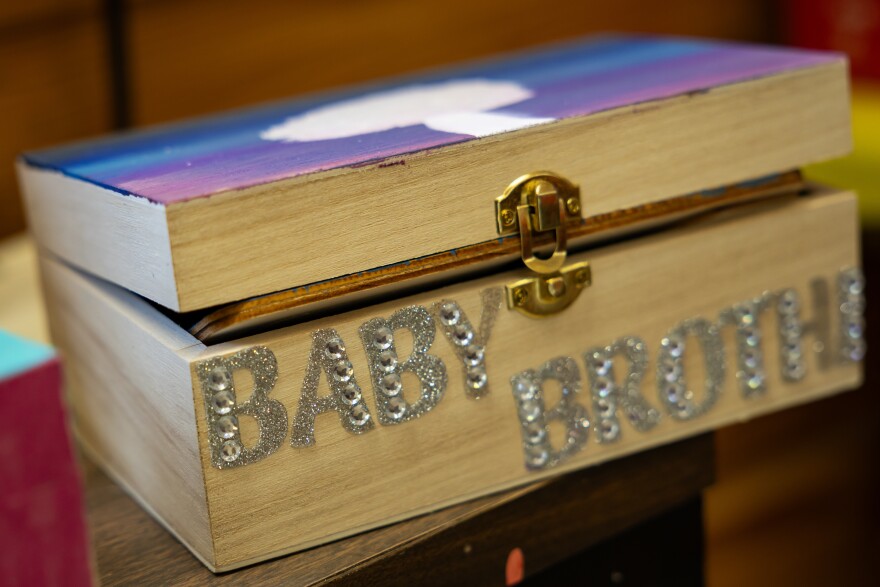
Each camper at Camp Brave Heart decorates a memory box to honor a lost loved one.
One of the ways campers have the chance to honor their loved ones is by decorating special wooden memory boxes. Each box is unique. One has an American flag and a football painted on it. Another has “Baby Brother” written on the side in silver stick-on letters. Dashona’s is bedazzled with red gems.
On the last night of camp, the kids bring their memory boxes to a final memorial service and talk about what they plan to put inside of them. Huerta said it’s a way of building a ritual for them to lean on as they leave camp, something they can carry with them as they grow up.
Dashona said she’s glad to have the box to take home with her, along with the lessons she’s learned at camp.
“I learned that it’s okay to be sad, and that you’re not alone in this process,” she said.
She’s also taking something else with her: the phone numbers for Love Bug, Country Boy and Ladybug. They plan to start a group chat and invite each other over for their birthday parties.