
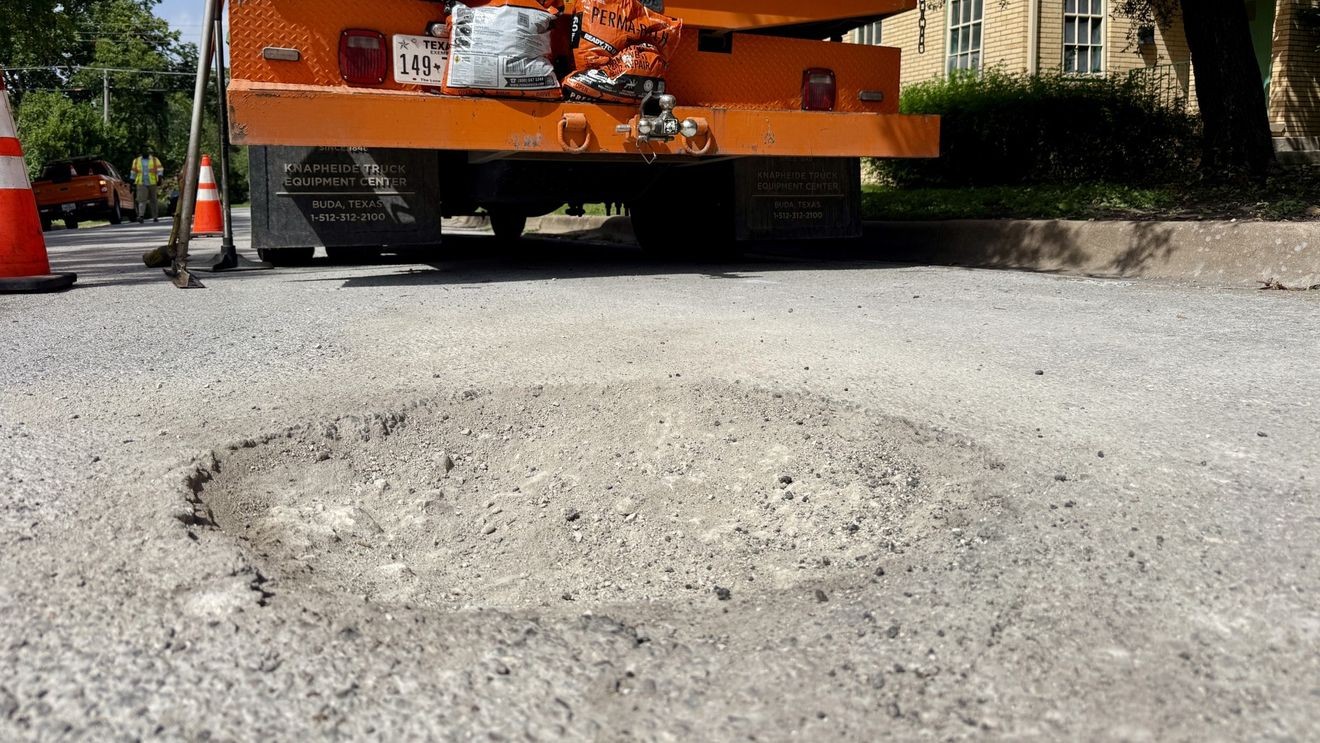
AUSTIN, Texas — Austin’s potholes are more than just a nuisance. They can damage cars and cost taxpayers an average of $1,300 to permanently repair. But now Waymo’s self-driving cars are on the hunt for potholes with the City of Austin using Waymo’s data to fix roads.
“When we go over a pothole it is that dip, that dip that our system logs,” said Arielle Fleisher, Waymo Policy Director and Research Manager.
Waymo robotaxis aren’t just programmed to avoid potholes; they are also helping the City of Austin find them.
A Waymo driverless car hit a pothole north of the University of Texas campus at Montrose Street and Carolyn Avenue. Vehicle sensors recognized the jolt and the location data was sent to Austin’s Transportation and Public Works Department and the Waze for Cities platform.
“Austin is really familiar with the Waze for Cities platform which made it easy for them to get in there, download the data, and start integrating it into their 311 system,” said Fleisher.
ALSO| Driver dead after crash sends semi-truck off overpass onto SH 130
KEYE
The sooner city crews know about a pothole the sooner they can repair it.
Waymo is currently operating 200 autonomous vehicles on a 130 square mile footprint within Austin. The city spans 305 square miles.
“I think we’re always interested in more data and information,” said Lewis Leff, Asst. Director of Operations at Austin Transportation and Public Works. “These vehicles are collecting a lot of informational data throughout the day and throughout our 300 square miles of Austin. What that information can provide for us is another set of eyes on the streets, if you will.”
In 2025, the City of Austin filled about 1,800 potholes that were reported by drivers using the traditional 311 system. This year, Waymo and Waze are testing the free pilot program to see if it can be an effective supplement to 311.
CBS Austin Reporter Bettie Cross asked, “Do you ever see this becoming a pay for service?”
“Completely free. 100% free,” said Fleisher.
Leff says the pilot program is not costing the City of Austin additional funds because it uses the Waze for Cities platform that Austin already has in place to process the data.
Since April, Waymo and Waze have alerted city officials to four dozen road hazards. With Waymo’s coverage area continuing to grow, officials expect even more problems to be identified before drivers have to report them.