
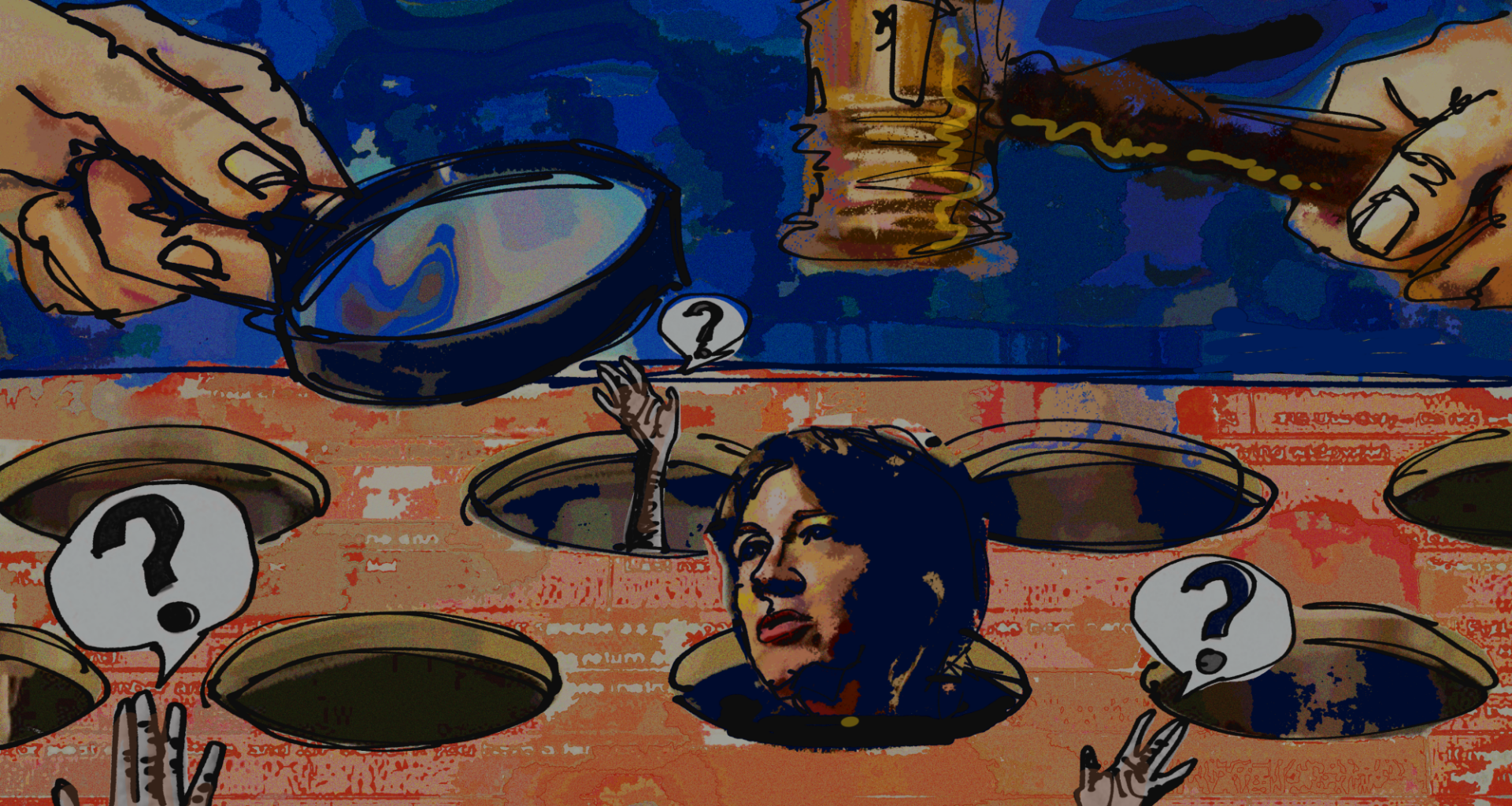
Moody interim dean Anita Vangelisti fired KUT general manager Debbie Hiott on June 15 after 7 1/2 years working for the Austin NPR station, which is licensed by UT. In Hiott’s termination letter, Vangelisti cited safety concerns during Hiott’s management of the KUT Festival in May as grounds for dismissal.
While University policy provides leadership the authority to dismiss Hiott at will, exercising that authority without meaningful explanation undermines public trust, and UT’s reasoning for firing Hiott falls short considering the abundance of disputed records.
“This came out of the blue,” Hiott said. “Our team had been working with all the different departments at UT, had been working with UTPD (on) every request they were making.”
UT general counsel Amanda Cochran-McCall wrote a letter stating the festival lacked police staffing, youth protection measures, emergency medical responses, crowd control staffing, inclement weather shelter plans and unmanned aerial vehicle overwatch. However, Panacea Collective, the company hired to produce the event, had already developed a proposal outlining several key points directly contradicting those claims.
Agenda items included a security plan in coordination with UT police and a rain plan. Additionally, numerous documents obtained by the Texas Tribune, including invoices and email exchanges, counter every point made in the letter.
“She was not looking to pick a fight, I don’t believe, but she’s a journalist,” said John Reetz, president of Friends of the Daily Texan who has previously worked with Hiott and known her for 30 years. “If somebody makes accusations about her and things that she has done, she’s going to resist.”
Hiott’s firing has reignited conversations about the political climate surrounding public media. Prominent Austin leaders have spoken out against the firing, including U.S. House representative Greg Casar, who recently praised Hiott for speaking out despite the consequences.
Although no conclusive evidence proves Hiott’s firing was politically motivated, UT’s interference in KUT’s leadership — for seemingly disproven reasons — may have a chilling effect on free speech and independent journalism.
“A censor is rarely going to say, ‘My intention is to censor you,’” said Marie McMullan, student press counsel for campus rights advocacy at the Foundation for Individual Rights and Expression. “Even if the government or a government actor is not intending to act as a censor, it’s the final product of what’s happening. Whether a reasonable person who has experienced a negative action is going to think twice before they talk, that’s … a chill. That’s a risk we shouldn’t have to take.”
Public media has faced new challenges following President Trump signing Executive Order 14290, titled “Ending Taxpayer Subsidization of Biased Media,” on May 1, 2025. The order sought to end federal funding for public broadcasters NPR and PBS by the Corporation for Public Broadcasting and federal agencies.
NPR and PBS have contested the order, with a judge ruling in March to block it, stating it violates the First Amendment. Despite these legal challenges, significant damage to the public broadcasting system has already been done.
Congress officially voted to defund public media on July 18, 2025, by passing the Rescissions Act of 2025, which rescinded $1.1 billion in previously appropriated funding for the CPB. This legislative action eliminated federal support for all 330 PBS and 246 NPR stations.
University public broadcasting licensees depend on “non-operating revenue,” which includes CPB funding, meaning stations must now cover the deficit in lost federal funding. Inevitably, some universities will not fill the gap.
WPSU was one of the first NPR stations set to close down due to federal funding cuts after its university affiliate, Penn State, was unable to continue its financial support. While community support and a partnership with WHYY will help WPSU stay on air, other stations’ futures remain uncertain.
“Initially, some of the funding was going to have to be sponsored by (Penn State) to provide a glide path, but the finance committee of the Board of Trustees voted no on that, so it never went to the full board for a vote,” said Greg Petersen, immediate past chair of the WPSU Board of Representatives. “So the decision was that they would shut down WPSU TV and FM at the end of June.”
As public media continues to struggle through legislative upheaval, UT’s decision to stay silent after its initial statement on Hiott’s firing leaves many questions unanswered.
“In the absence of information, people tend to connect dots and build narratives that may or may not be true,” journalism professor David Ryfe said. “Of course the dots that people are connecting, again in the absence of information, have to do with the increasing pressure being put on journalism from several different directions. … I think it’s natural in an information void that people begin to connect dots.”
In the wake of Hiott’s firing, donors and community members of KUT have expressed intent to withdraw support from the organization. However, these donations affect the livelihoods of KUT staff, not the university holding the license. The importance of public media lies in its obligation to serve the public interest, and it is more important than ever that the Austin community continues to rally around KUT and support it while it resists further interference.
UT owes the public a fuller explanation of Hiott’s firing because trust in independent journalism depends on it.
The Editorial Board is composed of associate editors Caris Gray, Abigail Tuscano and editor-in-chief Tiffany Lam.