
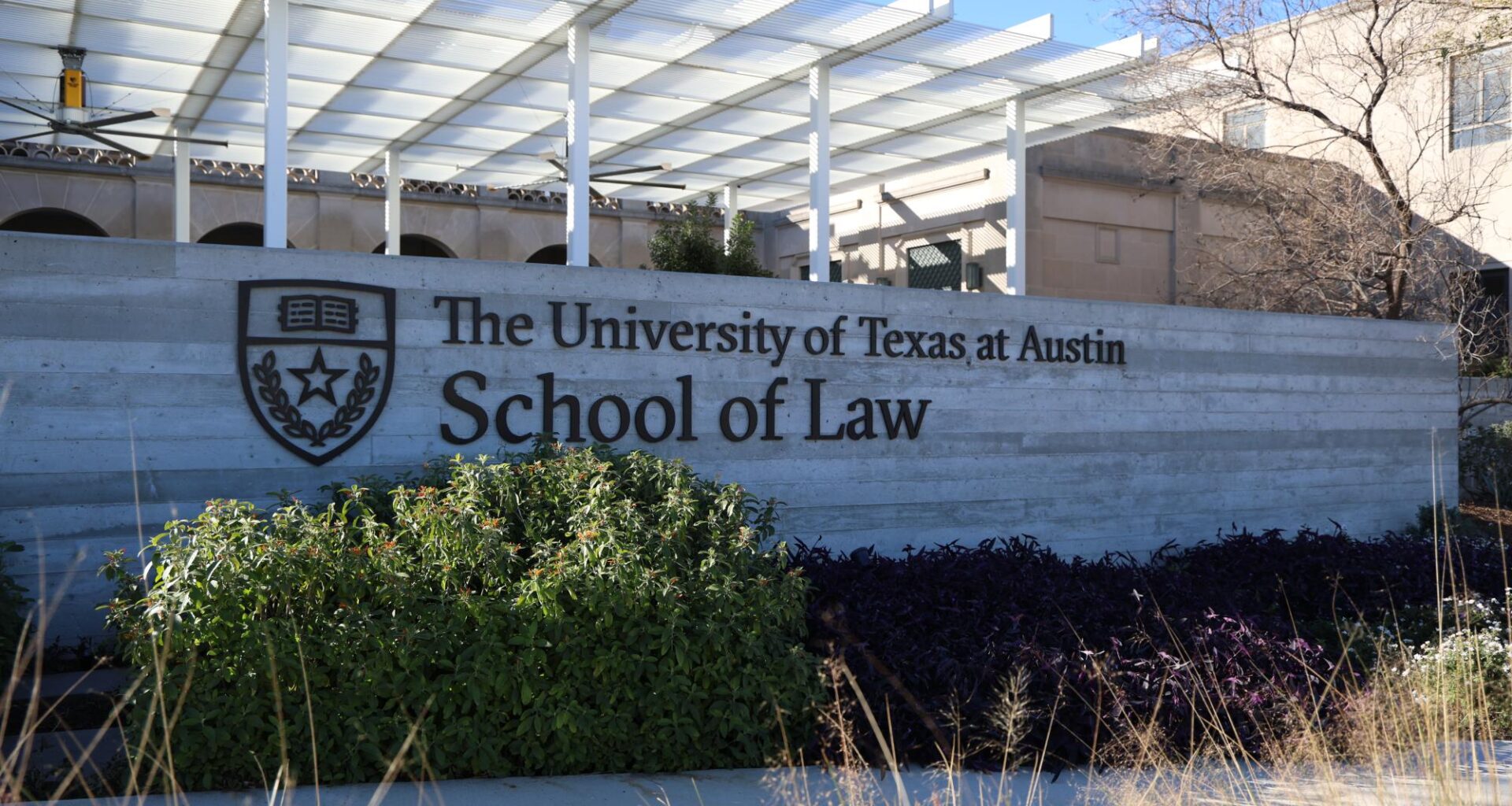
The UT School of Law called for a dynamic and collaborative approach between faculty and administrators in adapting to challenges posed by AI and incorporating the tool into the school responsibly in a June 16 memo.
Bobby Chesney, dean of the School of Law, sent a memo titled “AI and Legal Education” to faculty and published it on LinkedIn. The document breaks down key challenges posed by AI in the context of legal education.
“The impact of AI on legal practice is a topic that is of great interest to basically every lawyer and judge I encounter, every alum, every employer, everybody,” Chesney said. “It’s a constant subject of conversation, … what does that mean for legal education?”
Chesney said he developed the perspective outlined in the memo through talking with employers and alumni, who said they want to hire graduates who have familiarity with AI tools.
“Employers are … increasingly wanting to see that you already know certain things about … responsible but effective AI use,” Chesney said. “They also want to make sure you’ve not outsourced your brain to the chatbot. The number one message I was trying to convey in my memo was (that) these are not zero-sum.”
In the memo, Chesney asks professors to evaluate their teaching techniques and consider prioritizing the Socratic method over lectures, emphasizing the value of in-person classroom time. For out-of-class assessments, he asks professors to anticipate AI use and integrate it into the assignment.
In October 2025, the school launched the AI Innovation & Law Program, which aims to prepare students to be at the forefront of AI in legal practice. The program includes AI-related courses, job fairs, a podcast and the AI Opportunity Inventory, which tracks how AI is used to solve public policy issues.
“The core capacities of Texas Law’s curriculum, and our recruitment of the best and brightest professors, that’s not changing,” said Kevin Frazier, director of the AI Innovation & Law Program. “Instead, we’re looking for the ways that AI can augment and improve the educational experience.”
UT was part of the first wave of law schools to give students free access to AI legal tools such as Harvey and Legora, Chesney said. On June 22, UT students received free access to ChatGPT and Claude through the University. Chesney said the access will “(level) the playing field” for students.
“There’s an advantage for schools that are willing to be thoughtful about this,” Chesney said. “The important thing is doing right by the students, and that requires being adaptable and creative. Not reckless, but thoughtful.”