
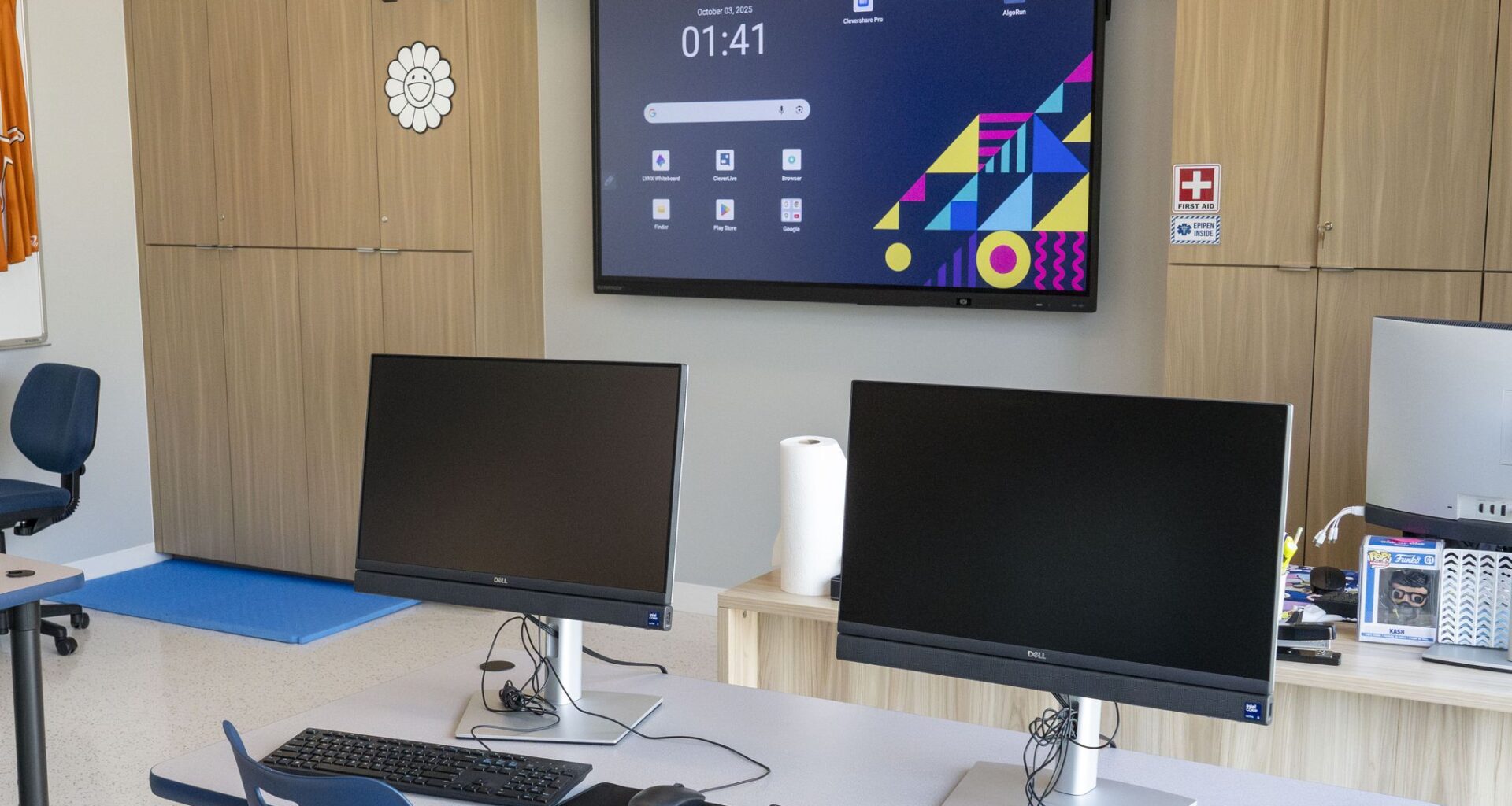
A technology classroom is seen at The Westview School in Houston, Friday, Oct. 3, 2025. The Westview School is a private school for students with autism that is eligible for Texas’ new school voucher program, the Texas Education Freedom Accounts.
Kirk Sides/Houston Chronicle
One of the biggest selling points of Texas’ new private school voucher program was that it would support students with disabilities, offering up to $30,000 in state-funded accounts for tuition and other services.
The possibility drew thousands of applications from across Texas, and hundreds of families flooded public school districts with requests for special education evaluations to qualify for higher amounts.
However, fewer than 30 students with disabilities actually received the $30,000 maximum, according to data from the Comptroller’s Office. That’s less than 1% of applicants who indicated that they had a disability.
Article continues below this ad
NEWS: School district size can change a student’s special education voucher by thousands of dollars
It’s something the Texas Education Freedom Account directors tried to warn parents about earlier this year. “Most students will receive less than the maximum,” a handout about special education vouchers read.
But many families still hoped that they would get closer to $30,000 to pay for private schools dedicated to students with disabilities, which can easily cost between $25,000 to $60,000 a year, according to a Chronicle analysis.
One in four of the over 100,000 students awarded vouchers had a documented disability, and their average funding award was about $16,000, or roughly half the maximum amount, according to the Texas Comptroller’s Office. While nearly 13,000 families received more than the base amount, only around 220 families received over $20,000, records shared with the Chronicle from June 23 show.
Article continues below this ad
“The headline in everything we communicated was: ‘Homeschoolers get $2,000, private school students get $10,474 and students in special education get up to $30,000,’” said Travis Pillow, communications director for the education accounts. “It might be natural to see that round number and say, ‘My student is getting $30,000.’ When in reality, the ‘up to’ was very important, and the vast majority are getting less than that.”
Dee Carney, executive director of the Texas Center for Voucher Transparency, said families told her group through its online comment form they were “surprised and disappointed” by the amount of funding they received. Carney said some families were also struggling to find a private school that would enroll some of those students with disabilities.
ALSO READ: Texas voucher program fuels surge in special education evaluations, straining public schools
“That disconnect raises important questions about whether the program can deliver on its supporters’ promises or whether vouchers will offer more options on paper than in practice,” Carney said.
Funding gaps for large, small districts
A review of the special education funding data submitted by the Texas Education Agency — which consists of hundreds of pages — reveals how few students could qualify for the maximum amount. One reason is that the larger the district, the smaller the voucher award for students with disabilities, as the Chronicle first reported earlier this month.
Article continues below this ad
In Houston ISD, for example, the most a family could receive for a student who doesn’t spend any time in the general education classroom and attends a separate campus for children with disabilities is about $18,000. That’s $10,400 from the base amount all families receive, plus $7,500 for special education, but still $12,000 short of the state’s cap on voucher awards.
Funding data for students in small, rural school districts shows that they could receive much more from the program, between $25,000 and $29,000.
The funding discrepancies are tied to the state’s formula to pay for special education services in public schools. Lawmakers voted to change that from a flat-rate model to funding services based on their intensity, but that overhaul won’t be complete until 2027-28.
PARENT VOICES: ‘What’s the worst case?’ — Meet 8 Houston-area families hoping to win Texas’ school voucher lottery
“Families have not always had visibility into the special education funding that their students generate, and so now they’re able to see, in many cases for the first time, the dollars attached to their child’s education,” Pillow said. “I think that has been an eye-opening experience.”
Article continues below this ad
Type of service also a factor
Another possible explanation for why so few families are receiving the maximum amount is that most students who applied for special education vouchers had disabilities that prompted less funding than students needing more intensive services.
Pillow said that the comptroller’s office plans to work with lawmakers in the 2027 legislative session to provide more clarity around special education funding and whether it can be adjusted in the future. For now, under the program’s rules, students with disabilities will receive the same funding amounts next year as they did this year.
Of the 100,000-plus voucher recipients, two-thirds will receive funding Wednesday. Private school applicants who already confirmed enrollment with a participating school will receive the first installment of their funding, while homeschool applicants will receive their entire $2,000 allotment.
Article continues below this ad
“Lawmakers did prioritize applications from students who require special education services, but Texans won’t have a clear answer on whether that promise is kept until we know how the final awards shake out,” Carney said.