
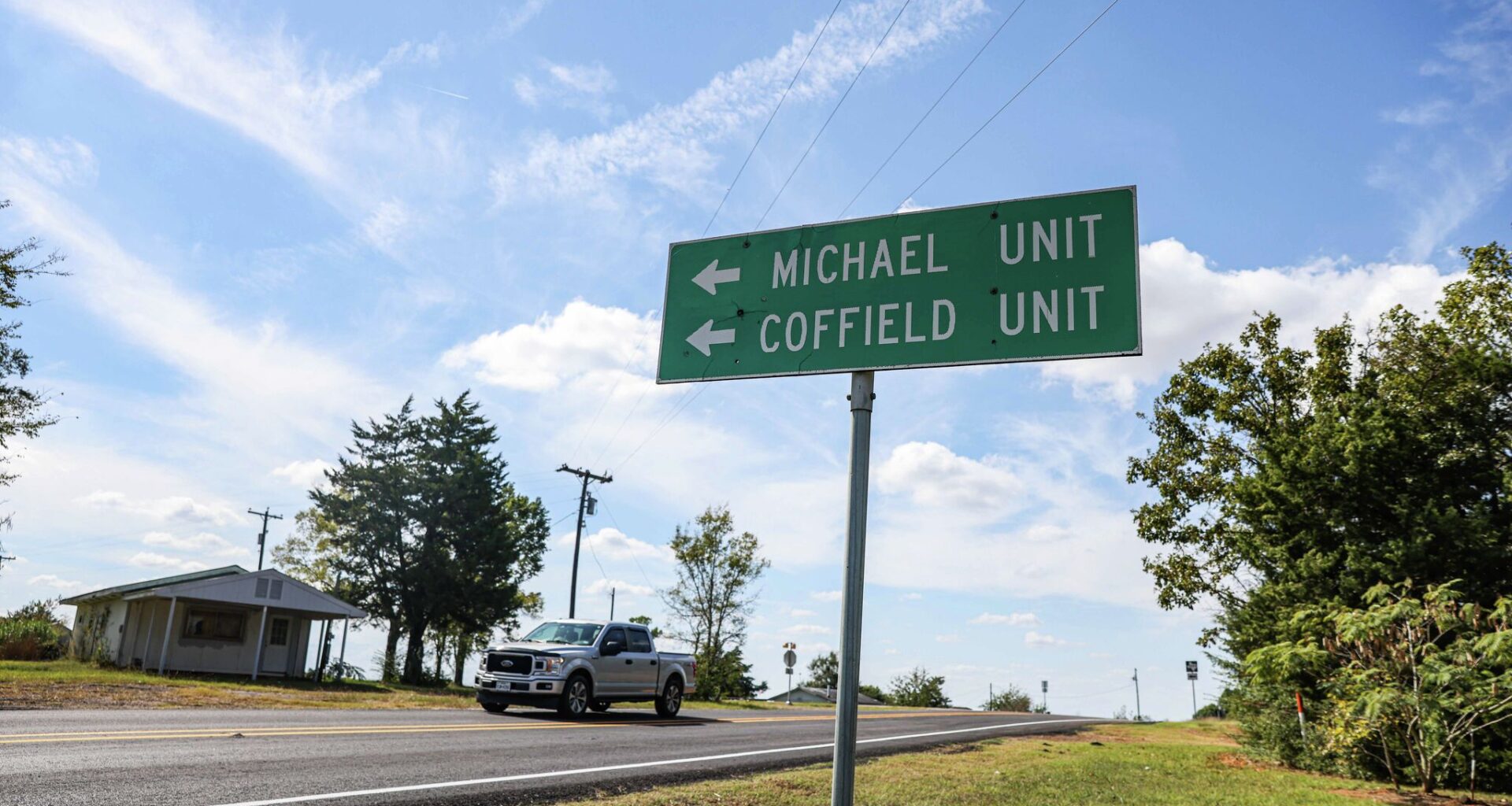
Earlier this year, drones were used in a smuggling scheme at the Mark W. Michael Unit leading to seven arrests. In this file photo, a sign points at Michael Unit and Coffield Unit in Tennessee Colony, Texas.
Lola Gomez/Dallas Morning News
Contraband has become a growing concern for officials who run Texas prisons.
Smugglers are using creative methods to introduce drugs, cellphones, deadly weapons and other illicit materials. Criminal networks adapt faster than prison security measures, as a May hearing in the Texas Senate revealed.
The Texas Department of Criminal Justice needs more tools, including updated technology, personnel training and stronger laws. The upcoming legislative session will provide an opportunity to tackle this problem. We urge lawmakers to do so, but this is a case in which the federal government also needs to intervene.
Article continues below this ad
Particularly troubling is the use of drones to deliver cellphones and drugs.
In May, nine arrests were reported in what officials called a large-scale operation involving the use of drones at Memorial Unit, south of Houston. Earlier this year, drones were used in another scheme at Mark W. Michael Unit in Tennessee Colony, Texas, leading to seven arrests.
Cellphones are the “most dangerous” form of contraband, TDCJ officials told lawmakers. They enable trafficking coordination and even contact with crime victims. Last year, TDCJ seized more than 2,000 cellphones. A burner phone can cost up to $3,500, an official said.
A high number of recorded overdose deaths is also evidence of the consequences of prison contraband. Last year, the state reported 129 custody deaths due to overdoses, up from five in 2018, TDCJ officials said.
Article continues below this ad
Jamming technology could be a solution, but it is complicated. First, it requires approval from the Federal Communications Commission, particularly for its unintended consequences, like blocking residential areas. TDCJ relies on phone confiscation, K9 programs, drone interdiction, intelligence gathering and cooperation with carriers.
While the state can increase penalties for drone-assisted smuggling, it needs the federal government to authorize restrictions like no-fly prison buffer zones. Recently, 21 states, including Texas, asked the Trump administration for explicit legal authority to intercept, track or disable drones before they reach prison grounds.
This is a high-tech problem, but there is also a low-tech problem that could be more challenging: Paper.
Smugglers have been caught using paper – Bibles in one case – laced with drugs like synthetic cannabinoids and other narcotics. TDCJ recently banned hardback books and used books in an effort to curb this contraband. But officials are basically playing whack-a-mole, as new methods arise. Now, smugglers are hacking Amazon shipment boxes mimicking authorized dealers, a TDCJ official told lawmakers.
A letter is sometimes a lifeline for prisoners, so completely banning paper is problematic, but Texas should consider alternatives like digitizing paper and doing targeted chemical screening. Synthetic drugs are harder to trace and deadlier than conventional drugs, so they can cause even more havoc when they get into a prison.
Article continues below this ad
Lawmakers need to take a harder look at prison contraband and should consider a meaningful investment to manage the problem. They should also pursue new policies, including agreements with the federal government over drone regulation. A sophisticated problem needs a sophisticated response.
Have thoughts about this? Send a letter to the editor using our letters form or email letters@dallasnews.com. Letters should be no more than 200 words and include the first and last name of the writer and city of residence.