
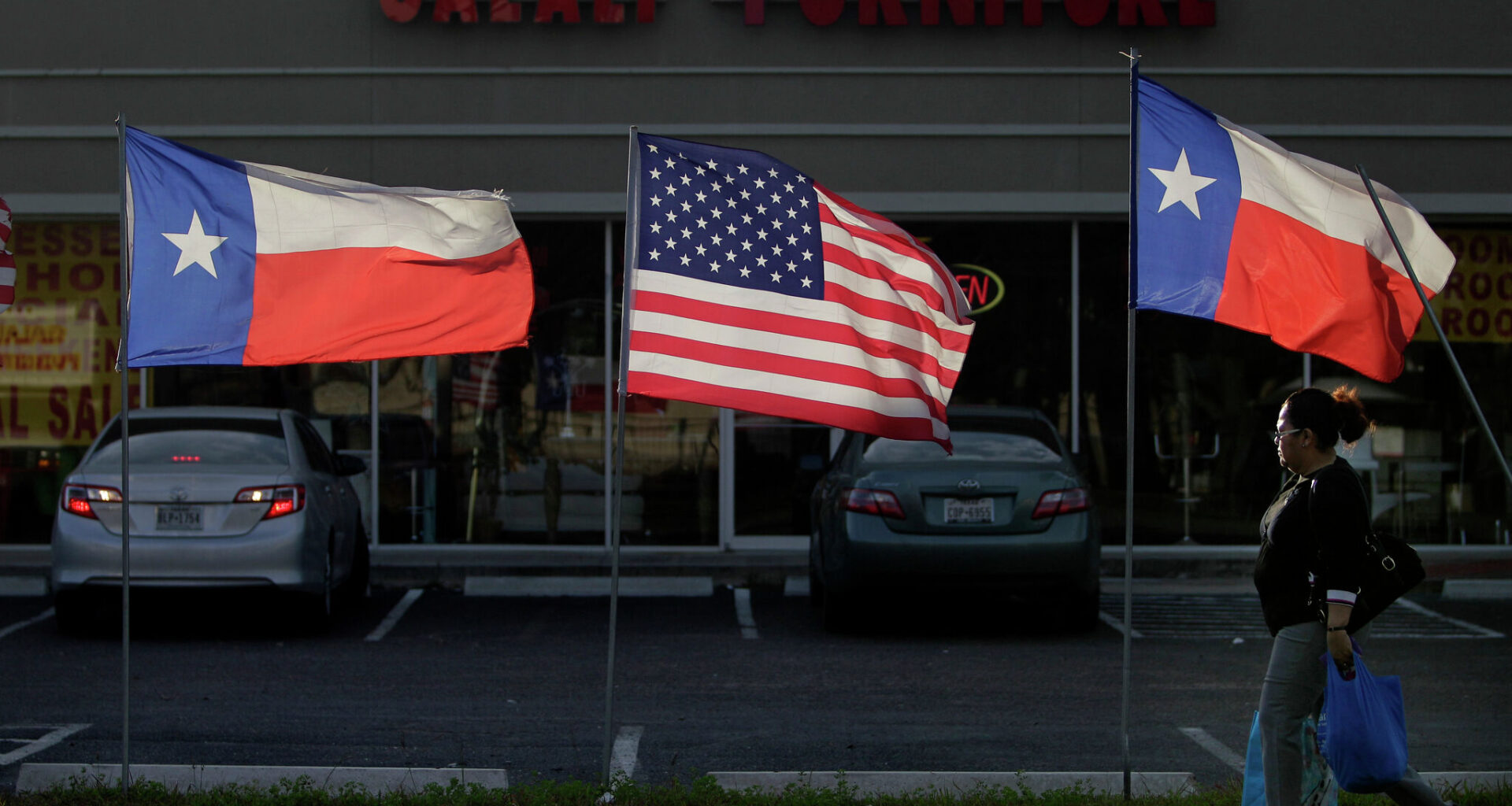
In my sojourns here and there, telling somebody that I’m from Texas conjures up a thousand different images of who I really am. To be a Texan is to be a living, walking Rorschach test, ink blots that may look like a rough-and-tumble cowboy or a close-minded bigot or a friendly neighbor, depending on who is looking and how hard they are doing so.
Over the past few months, my colleagues here at Chron have tried to assemble a list of the 250 most influential Texans; the people who, for better or worse, have shaped this place and left a mark on it. The peg for it is that on Saturday, this big, diverse, contradictory, infuriating, beautiful, generous, greedy, confounding United States of America, a country that is its own collection of ink blots, turns 250 years old. (The Republic of Texas, founded in 1836, turns 190 this year, so close enough.) But it can be argued that to be a Texan is to be fundamentally American. To steal, as I often do, from that burnt orange college up the road in Austin: “What starts here changes the world.”
You can easily apply this principle to politics, arguably our great state’s chief export. Texans have frequently influenced national policy; Gov. Greg Abbott busing immigrants from the southern border to blue cities inspired copycats and national outrage. We gave this country Lyndon Baines Johnson and George W. Bush (by way of Connecticut). Many of the men (and a smattering of women) who reside in the Texas Canon of Great Guys, your Davy Crocketts and your Stephen F. Austins, are spoken about in the same breath as George Washington and Benjamin Franklin.
Of course, the founding myths we cling to are often as shallow as a creek in summer. There’s a bumper sticker you see around, often plastered to the back window of brand-new pickup trucks, declaring “I wasn’t born in Texas but I got here as fast as I could.” This maxim could apply to many of our state’s luminaries: Crockett was from Tennessee, as was Sam Houston, for whom Texas’ largest city is named. That a subgenre of this bumper sticker, bearing the phrase “You may all go to hell, and I will go to Texas,” was uttered by Crockett after losing his bid to represent Tennessee in Congress in 1836 only makes things funnier.
See, a state this big both produces people who do great things and also attracts those destined for them. Matthew Gaines, who was born into slavery in Louisiana in 1840, rose to become one of Texas’ first Black politicians and lived long enough to see slavery abolished, even if its remnants lingered and festered. Jose Altuve, one of the greatest second basemen of his generation, was born in Maracay, Venezuela. He was considered too short to play but brought glory to the Houston Astros and will end his career at the Baseball Hall of Fame in Cooperstown. Two people who couldn’t be more different, sure, but both ended up in Texas and became legends.
Unlike New Yorkers who constantly debate who can really call themselves a New Yorker, we Texans don’t generally do so (our politicians who are obsessed with Muslims aside). There is an idea of Texas that we are all cowboys roaming a wild frontier. This idea is older than the Texas Revolution, rooted in bloodshed against Native Americans who were here first, and amplified by Hollywood. But despite everything, there is truth to it. Texas, much like our nation, is still a land of opportunity, in theory if not always in practice.
The city of Frisco is a great example of this. For many on the right, the North Texas city has become an unrecognizable outpost of Islam. But having visited Frisco countless times because my girlfriend’s family lives there, I can tell you it is a much different place. Yes, it is home to South Asian families, including those who practice Islam. They go to church and the bank, they have backyard cookouts and cut you off in traffic and sit in the cheap seats at Rangers games, just like you and me. And isn’t it incredible that these people from all over the world have chosen suburban America, sprawling Dallas-Fort Worth, land of barbecue and six-lane highways and Them Cowboys, to live and work and play? The Lone Star State is the American Experiment personified. It tastes like brisket shawarma and, by God, it is delicious and beautiful.
You can be anyone in Texas. This, of course, attracts all manner of grifters and play actors. But it is also a promise that anyone, despite your country of origin, your gender or sexuality, the color of your skin, your creed or religion, can make it here. Texas has given our country saints and sinners, whackos like David Koresh and native sons and heroes like Mickey Leland. Texas is good and the bad, the gauche and the serene. And if that ain’t America, what is?