
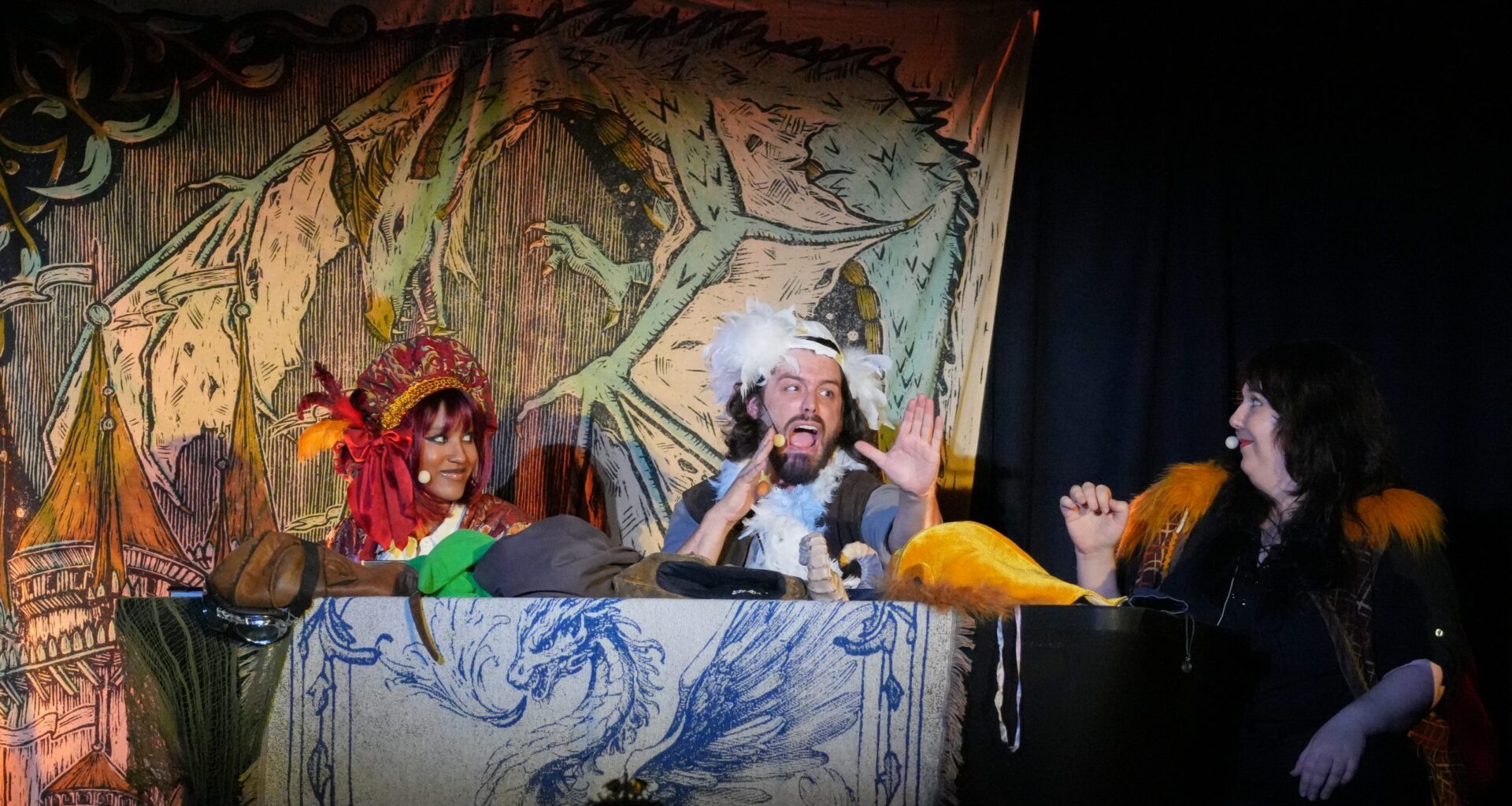
A sorcerer, a bard and a monk walk into a bakery.
Their mission? To fulfill a mother’s plea to find her son, Skeg, who went missing shortly after he began working at the shop.
Patty Cakes, the bakeshop owner, exudes shady behavior. Her answers are inconsistent about Skeg’s whereabouts. She wipes her brow a questionable amount of times for a temperate shop. The group investigates and discovers a secret door inside the bakery. The bard rolls a 17, just enough strength to push it open and reveal what’s on the other side.
“This could only be one thing: an underground fight club,” dungeon master Brad DeBorde tells the gamers playing the sorcerer, the bard and the monk.
The far-off land was brought to life through a one-shot session of QueerQuest, a Dungeons & Dragons gaming group hosted at Fort Worth’s Galileo Church. Anyone 16 and older can participate in the group, which aims to be a welcoming space for LGBTQ+ and neurodiverse gamers.
“It’s just a way for us to break down those walls of isolation and bring people into community together — and just make some joy happen along the way,” said Katie Hays, pastor of the church.
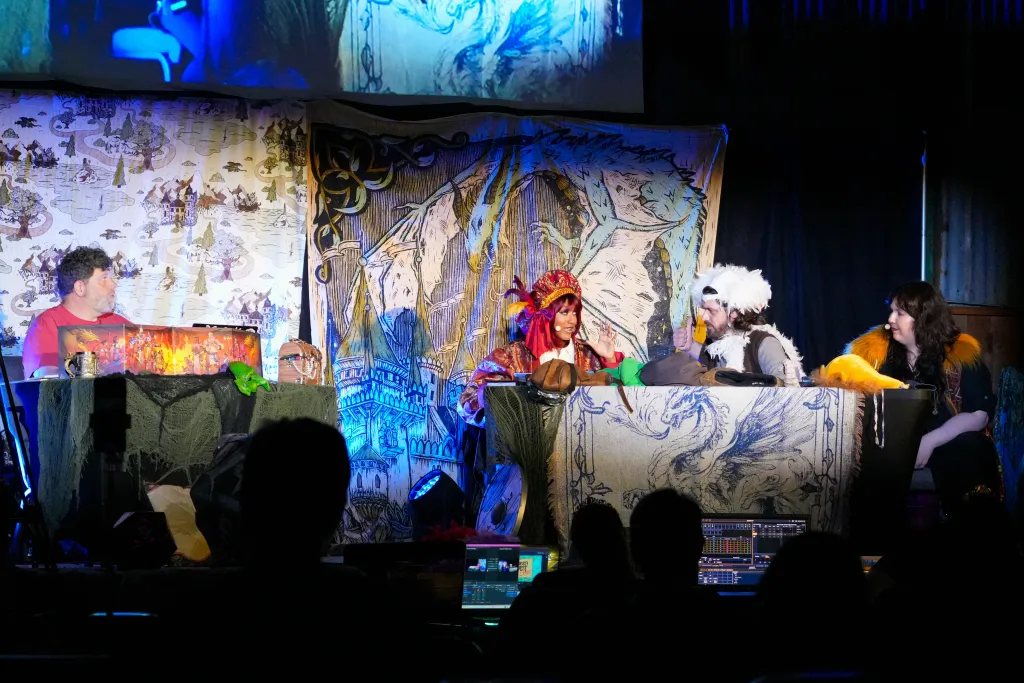 From left to right, Brad DeBorde, Azriela “Brie” Arevalo, Colby Savell and Heidi Fischer play a one-shot session of Dungeons & Dragons through a gaming group called QueerQuest at Galileo Church on June 17, 2026. (Marissa Greene | Fort Worth Report)
The idea of QueerQuest manifested in 2025 after the church received a grant from the denomination’s regional group, the Christian Church (Disciples of Christ) in the Southwest.
In an effort to create community, church members shared a vision at public Pride festivals last summer: host six tables for people to play Dungeons & Dragons and pay their dungeon masters. The congregation aimed for at least 30 interested gamers but opened up its first gameplay at the end of summer with over twice that amount, Hays said.
QueerQuest furthers the church’s missional priorities of being a welcoming space for LGBTQ+ and neurodiverse communities to explore themselves, Hays added.
“You get to try on different personas, different identities you can play as a different gender,” Hays said. “There’s all kinds of ways that you can really just explore questions of identity, and so that’s nice for queer folks.”
A 2024 study by researchers at the University of Plymouth found that tabletop role-playing games like Dungeons & Dragons can offer neurodiverse people a way to develop relationships and build social skills.
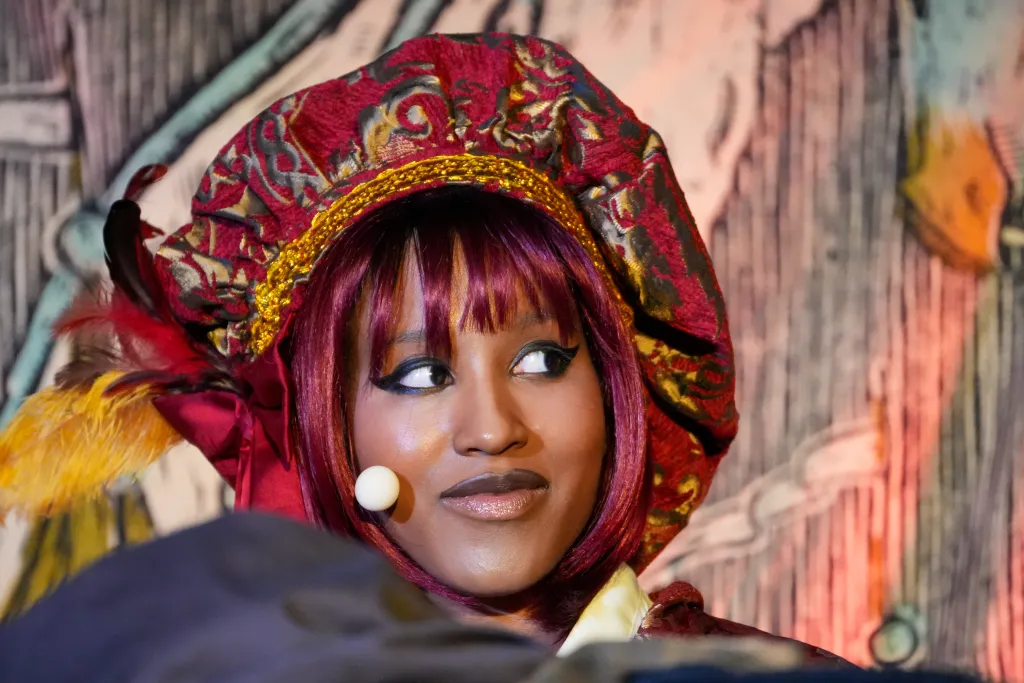 Azriela “Brie” Arevalo performs as a dragonborn bard named Mel Balcanto during a live performance of QueerQuest. (Marissa Greene | Fort Worth Report)
Azriela “Brie” Arevalo found QueerQuest through social media. The 26-year-old was excited about joining a gaming group that was welcoming toward LGBTQ+ people, Arevalo said.
“When you’re a young queer person, you don’t know whether or not you’re going to be accepted in these spaces, especially because gaming as a whole has grown a terrible reputation for being very gatekept,” Arevalo said.
In mid-June, Arevalo was selected to participate in a live performance of a Dungeons & Dragons session, where the audience would have a say in which characters Arevalo and other actions would portray.
Sporting a red-feathered hat and Shakespearean attire, Arevalo transformed into Mel Balcanto, a plucky young dragonborn bard.
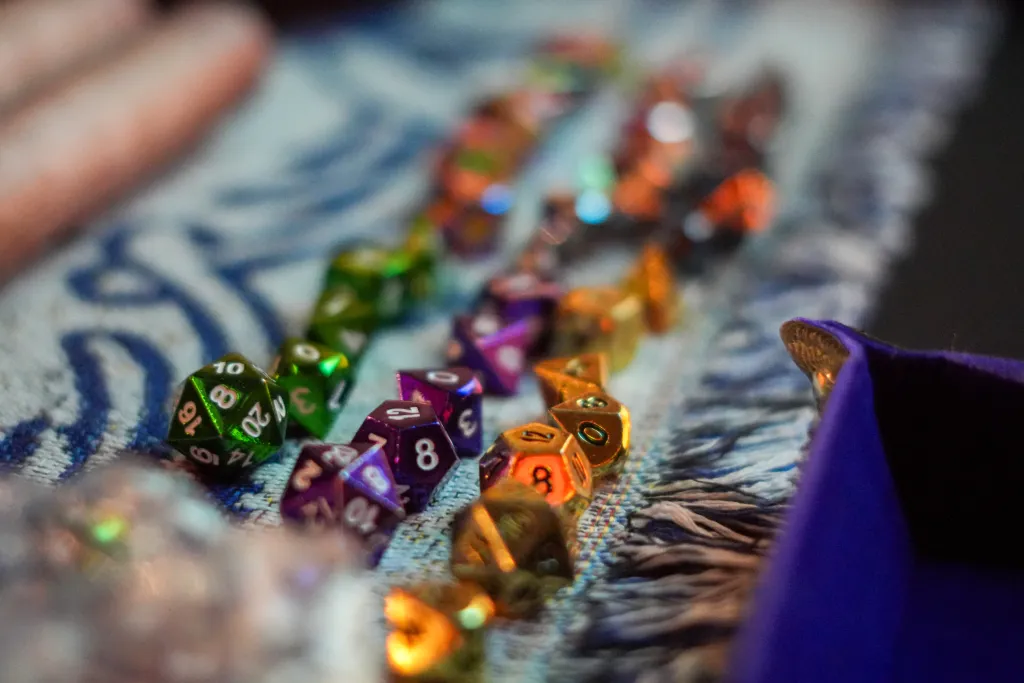 Dice sit on a table at Galileo Church for a live performance of QueerQuest, a Dungeons & Dragons gaming group offered at the church. (Marissa Greene | Fort Worth Report)
Heidi Fischer, 31, transformed into Jeremy Irons, a lion-like humanoid sorcerer, not to be confused with the award-winning English actor. The character’s hobbies included magic — both missiles and mushrooms.
The two performed with Colby Savell, who played as a “muscular-bird man” called Gale-Force Gary. The monk’s character card describes Gary as a “golden retriever of a hero who operates on pure confidence and zero thoughts.”
Fischer remembers being skeptical about joining a Dungeons & Dragons gaming group hosted by a church. The game was subject to criticism by fundamentalist religious groups as it was gaining popularity in the 1980s.
When Fischer walked into the church for her audition, she saw Pride flags of every variation hung on the church walls.
“I felt like doubting Thomas all of a sudden,” Fischer said, referring to the apostle who refused to believe in Jesus’ ascension.
Religion in the south is intrinsic to how people form social bonds and a sense of community — and the fantasy role-playing game can do the same, Fischer said.
“D&D is storytelling, in its most raw and basic form. It’s what we’re meant to do as humans,” Fischer said.
QueerQuest operates in two seasons. The first included 10 gaming sessions from August through December. Season 2, which began in January, runs through June.
The most recent season had 160 players, Hays added.
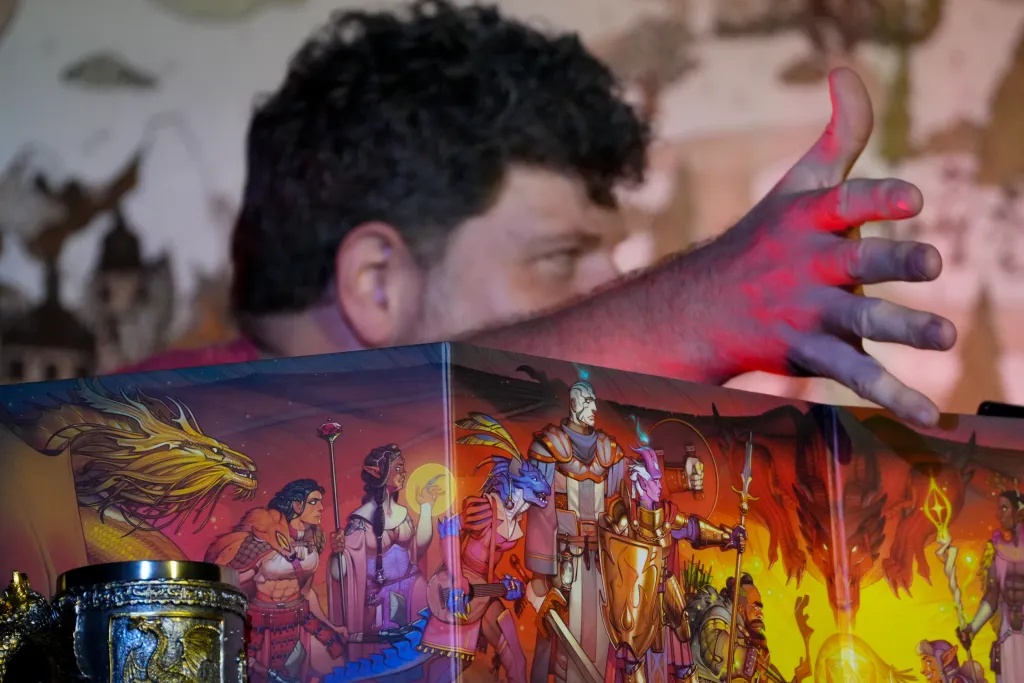 Brad DeBorde, executive director of QueerQuest acts as the dungeon master for a Dungeons & Dragons live gaming session on June 17, 2026. (Marissa Greene | Fort Worth Report)
Brad DeBorde, executive director of QueerQuest, noted people traveled from Weatherford to Fort Worth just to play.
After participating, the two Parker County natives want to start a cohort in their hometown, DeBorde said.
“Getting to make this happen has given me so much joy in getting to spread joy,” DeBorde said.
Back in the bakery shop, the adventurers discover that Skeg was being held in the fight club against his will. With some imagination — and some lucky “Nat 20” rolls — the group uses a thieves’ tool to free Skeg and disguises him to escape.
Patty Cakes transforms into a giant wererat. The sorcerer, bard and monk fought for their lives and defeated the owner of the bakery-front and saved the day.
The end.
Marissa Greene is a Report for America corps member, covering faith for the Fort Worth Report. You can contact her at marissa.greene@fortworthreport.org.
At the Fort Worth Report, news decisions are made independently of our board members and financial supporters. Read more about our editorial independence policy here.
This <a target=”_blank” href=”https://fortworthreport.org/2026/06/30/dd-is-storytelling-fort-worth-church-hosts-sage-space-for-lgbtq-neurodiverse-gamers/”>article</a> first appeared on <a target=”_blank” href=”https://fortworthreport.org”>Fort Worth Report</a> and is republished here under a <a target=”_blank” href=”https://creativecommons.org/licenses/by-nd/4.0/”>Creative Commons Attribution-NoDerivatives 4.0 International License</a>.<img src=”https://i0.wp.com/fortworthreport.org/wp-content/uploads/2021/04/cropped-favicon.png?resize=150%2C150&ssl=1″ style=”width:1em;height:1em;margin-left:10px;”>
<img id=”republication-tracker-tool-source” src=”https://fortworthreport.org/?republication-pixel=true&post=640253&ga4=2820184429″ style=”width:1px;height:1px;”><script> PARSELY = { autotrack: false, onload: function() { PARSELY.beacon.trackPageView({ url: “https://fortworthreport.org/2026/06/30/dd-is-storytelling-fort-worth-church-hosts-sage-space-for-lgbtq-neurodiverse-gamers/”, urlref: window.location.href }); } } </script> <script id=”parsely-cfg” src=”//cdn.parsely.com/keys/fortworthreport.org/p.js”></script>