
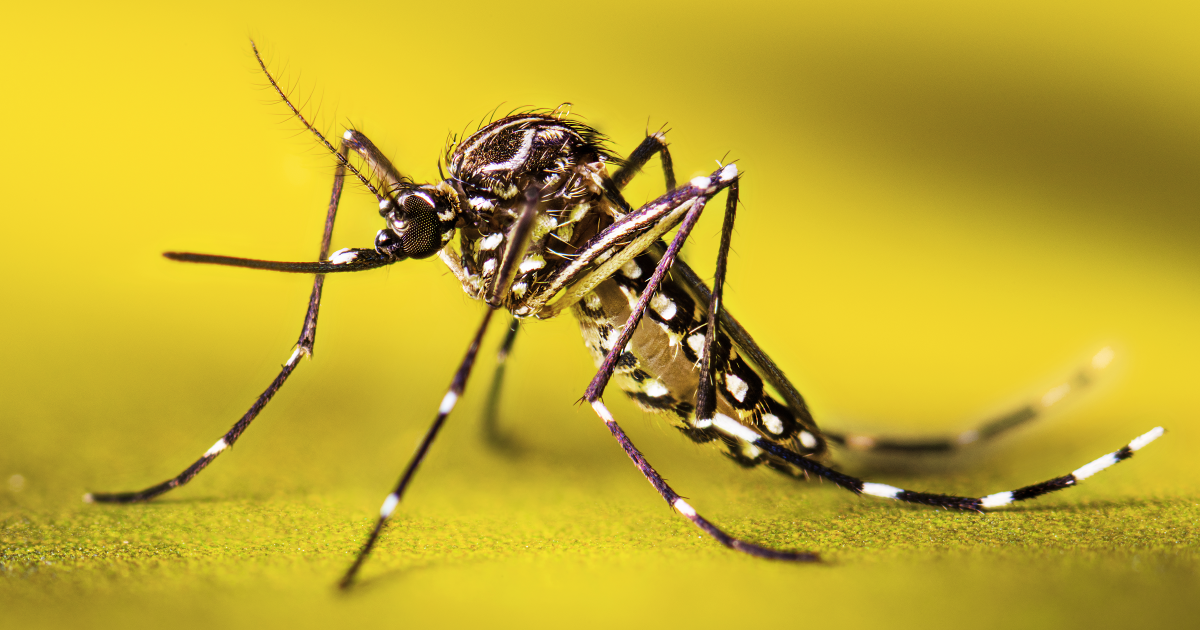
Central Texas is well into mosquito season, with West Nile virus detected in both Travis and Williamson counties in the past week, and public health experts say the insects have been especially active this year.
That’s due in part to a mix of good weather conditions, particularly a warm-but-not-too-hot spring with sustained temperatures between 50 and 90 degrees, plus lots of precipitation.
“We have seen a bit more of an uptick with mosquitoes than normal because we have had some great rain,” said Aaron Urbanek, a senior health officer with Austin’s Environmental Vector Control unit. “Some of the places that would normally dry out are staying with stagnant water for longer periods of time, which is a great breeding ground.”
Mosquito activity is usually highest from May through November, and they had a head start after a warm winter with fewer hard freezes, which allowed more mosquitoes and their eggs to survive when they would normally die off.
“The more you have out there, the more they’re able to reproduce and increase in population,” Urbanek said. “And some of the eggs that even might be sitting dormant in the ground, even those are viable.”
Urbanek and his team from Austin Public Health set around 30 mosquito traps around the city each week to monitor mosquito populations for diseases including West Nile, St. Louis Encephalitis and Eastern Equine Encephalitis. Mosquitoes from the traps get collected and sent to a lab at the Texas Department of State Health Services for testing.
Bethany Bolling, manager of the zoonotic virology group at DSHS, said that despite the high numbers of mosquitoes this year, disease activity has been about average.
“We have seen some West Nile activity, but I wouldn’t say there’s anything too concerning at this point,” Bolling said. “It remains to be seen how the season plays out, if we are going to see an increase in virus activity because of increased numbers of mosquitoes that we’re seeing.”
Two human cases of West Nile have been confirmed in Texas this year, both in the Houston area. In Travis and Williamson counties, the virus has been detected in mosquitoes but not yet humans.
While the virus can cause serious health complications in rare cases, Bolling said only about 20% of people infected with West Nile actually develop symptoms — those include fever, chills, vomiting and joint pain.
“So there can be a lot of people who get bit with a mosquito and actually get infected with West Nile virus, but they will be asymptomatic,” Bolling said. “Less than 1% of people who get infected will actually have a more severe response. And typically, it’s people that are either immunocompromised or maybe older, like over 70. So there’s usually other conditions involved with that more neuroinvasive disease.”
Mosquito protection tips
To help protect against mosquito bites, Urbanek urges people to remember the four Ds: dress, dawn and dusk, defend, and drain.
Jorge Sanhueza-Lyon
/
KUT News
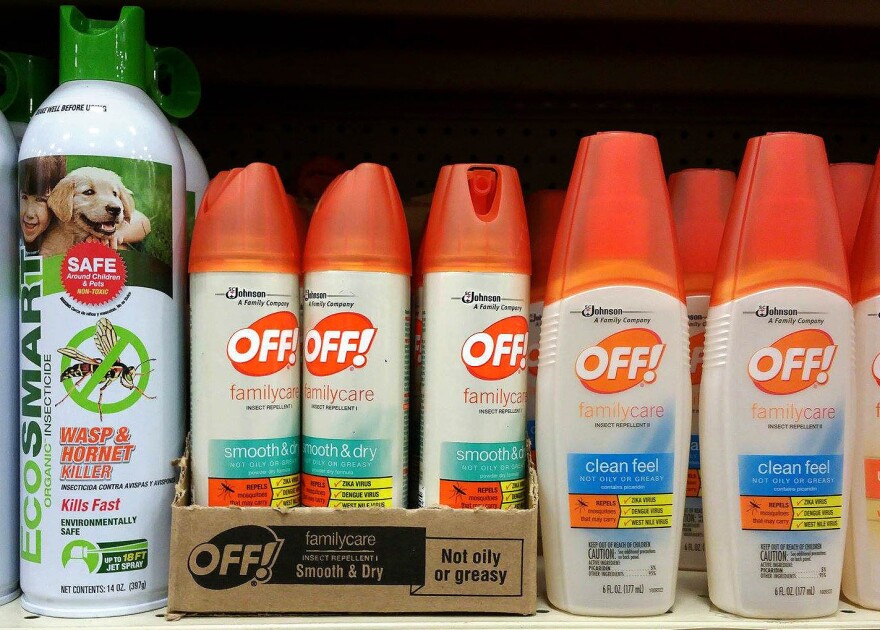
Austin Public Health recommends insect repellent to keep mosquitoes at bay.
“Making sure you’re wearing long clothing — so pants with long-sleeve shirts — if you do have to be out,” he said. “If you’re out during dawn and dusk, those are the times when they’re most active. So trying to stay in and trying to dress appropriately at those times.
“Any product that has DEET or something to that effect that helps prevent a mosquito bite. And I think the biggest one, the one that we ask for the biggest help with within the community, would be draining.”
He said the easiest way to help keep mosquito populations in check is to dump any standing water that may accumulate around your home to reduce opportunities for them to breed. Sometimes just a tablespoon of standing water is enough for mosquitoes to lay eggs in, he said, so be on the lookout for sneaky spots where water can accumulate.
“Even potted plants that have a base at the bottom, sometimes there’s enough water in those,” Urbanek said. “And toys and rain gutters that are not draining appropriately. A lot of times people want to point to a creek and say that’s where some of the mosquitoes are coming from. But a lot of times, they’re just homegrown mosquitoes right in someone’s backyard.”
Support for KUT’s reporting on health news comes from St. David’s Foundation. Sponsors do not influence KUT’s editorial decisions.