
DALLAS — As America turns 250 years old this week, we’re looking at the issues veterans say they’re dealing with today.
According to the American Revolution Institute, about 250,000 men served in the Armed Forces in the Revolutionary War, winning U.S. independence and creating the world’s first veterans. Much has changed in the 250 years since, but the issues faced by those returning from service are similar.
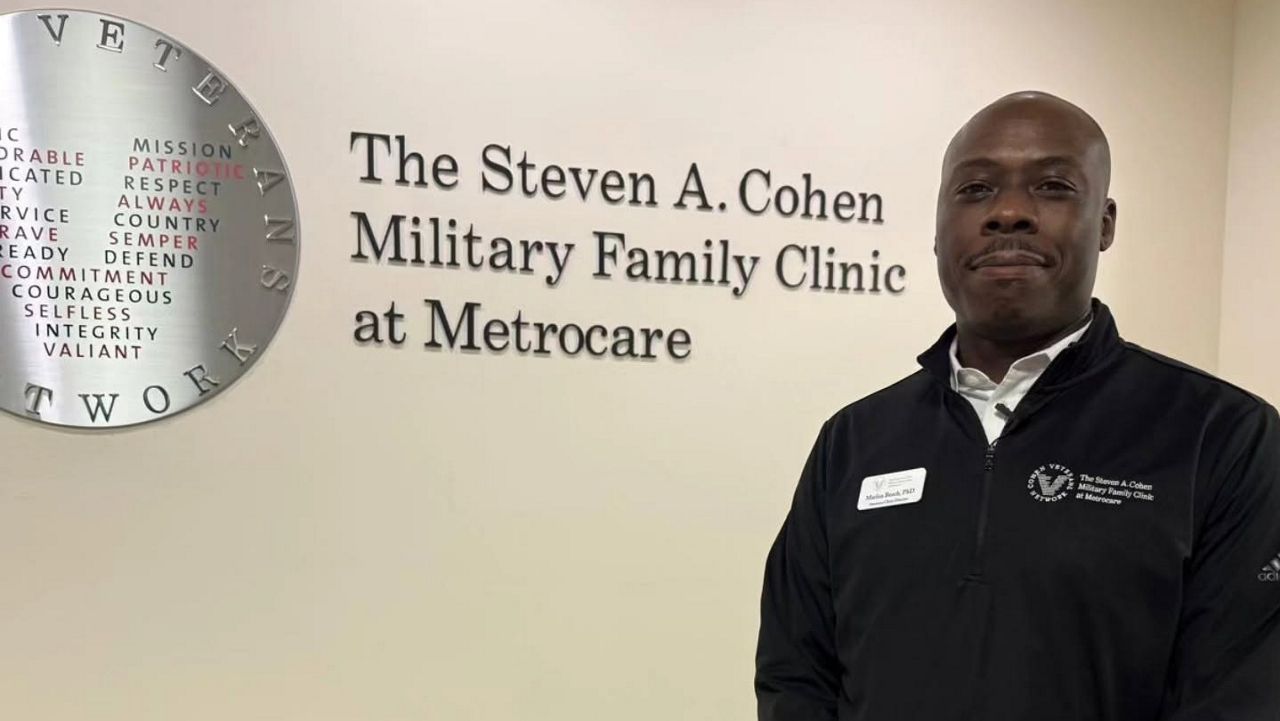
Dr. Marlon Beach and his team are still trying to get settled into their new building and his new role. They opened their doors back in September. He’s the interim clinic director at The Steven A. Cohen Military Family Clinic at Metrocare in Dallas.
Before that, he was the lead clinician, where he and staff said they cared for more than 7,000 clients over the past decade.
“Back when we opened around 2016, you know, we were still seeing folks that were dealing with, you know, our presence over in the Middle East,” said Beach.
That’s something Beach can relate to. He served four years with the U.S. Army and said that transition to civilian life has been the constant issue veterans are coming to the clinic for.
“Just like many Americans, our veterans are also facing, you know, employment struggles, employment instability,” said Beach.
Ashly Smith, the clinic’s intake coordinator, has been with the clinic since it opened its doors.
While she said PTSD, anxiety, depression and military life adjustments have been a repeat trend with the clients they see, she said worldwide events also lead to intake spikes.
“I mean, we went through a while where mass shootings are really big back-to-back, and we would get people who were triggered. When Ukraine started, we’ve got a lot of veterans who came in because it reminded them and it activated memories and thoughts of when they deployed, even if they’ve been gone for a while. And Iran happened, you know, so it’s just kinda of depends a lot on what’s happening day to day,” said Smith.
That day-to-day care is what the Salvation Army said it has been providing to service members in need since its inception.
“The Salvation Army is the largest provider of social services for veterans across the United States. And we know here in the North Texas area, there’s about 386,000 veterans across the Dallas-Fort Worth metropolitan area. That’s about 25% of all veterans in the state of Texas,” said Rob Webb, area commander at The Salvation Army of North Texas.
Just like at the Cohen clinic, Webb said housing has been a steadfast hurdle among veterans — as well as social isolation, loneliness, addiction and physical and mental health.
“The need that I had back then is still the same as it is now. It’s just now it’s more prevalent. You have more guys that are harder to house. They have more disabilities. They’ve got more problems with drug addiction. So, it’s just an increase. It hasn’t changed over the last decade. The veterans that we have today aren’t like the veterans we had ten years ago,” said Karlton Leonard, VA program manager at The Salvation Army of North Texas.
For one, the Cohen clinic said these veterans are trying to deal with problems they tucked away for years.
“We got a lot of pre-9/11 veterans,” said Smith.
Since the pandemic, Smith said, many veterans have come to terms with dealing with their mental health. This is leading to an influx of service members finally getting the help that they need.
“So we’ve really been able to have a pretty big impact on the community,” said Beach.
Meanwhile, The Salvation Army of North Texas said it currently has 106 beds for veterans.
Right now, they are preparing to move into their new building during the fall of 2027, with the goal of increasing the number of beds to serve the growing need of veterans in crisis.