
July has always been one of the hottest months of the year in San Antonio. But the long-term temperature record shows something more than ordinary summer heat: July temperatures are trending warmer.
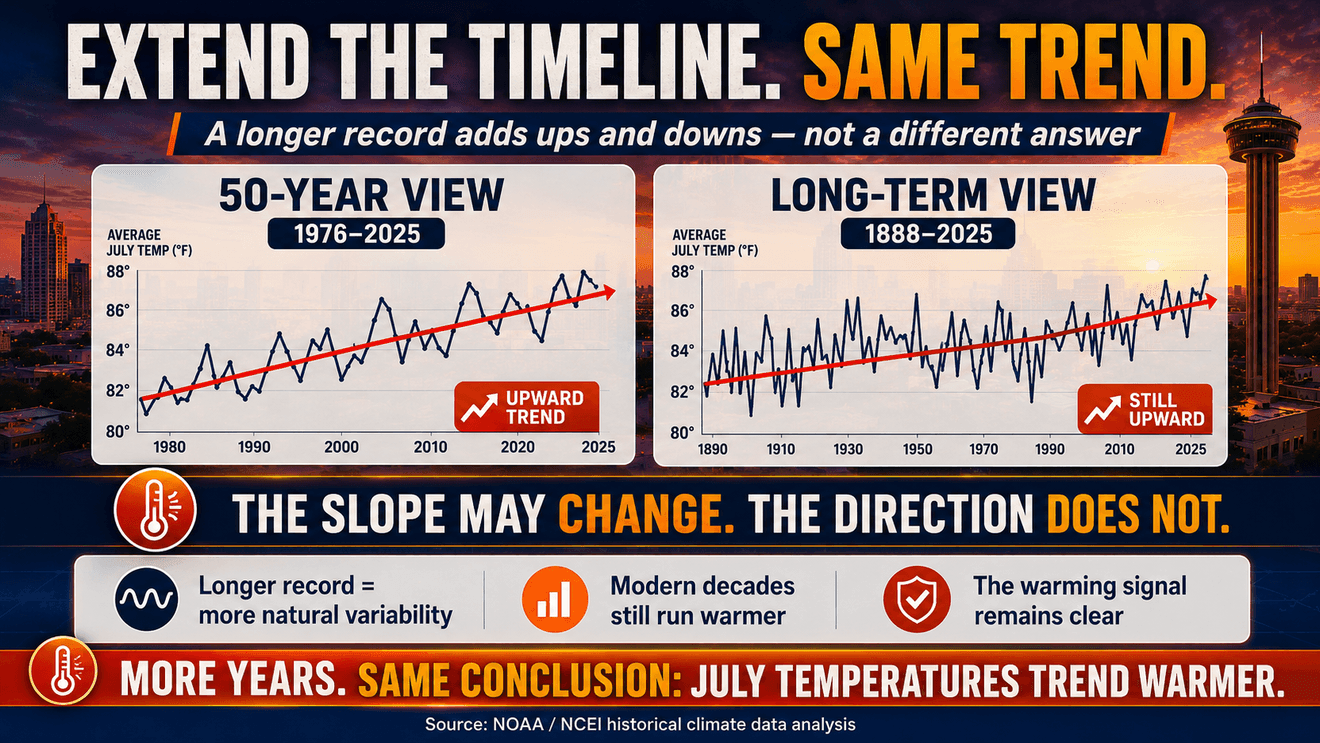
Looking back over the last 50 years, the warming signal is clear. Recent Julys have generally run hotter than Julys from the late 1970s and early 1980s, with the most noticeable change showing up in afternoon temperatures.
When the timeline is expanded deeper into San Antonio’s historical climate record, the same broader pattern remains. The longer view includes more natural variation — cooler years, hotter years, wet summers, dry summers and long stretches shaped by drought or rainfall. But those ups and downs do not erase the overall trend.
The modern era still stands out.
That matters because heat in South Central Texas is not just about a number on a thermometer. Warmer Julys can increase stress on people working outside, raise cooling demand, affect youth sports and outdoor events, and reduce overnight recovery when low temperatures stay elevated.
Rainfall also plays a major role from year to year. A wet July can hold temperatures down for a while, while dry ground and persistent high pressure can make heat build faster and last longer. That is why some years break sharply above the trend while others temporarily ease back.
But climate trends are measured across decades, not single summers.
The takeaway is simple: San Antonio still has natural year-to-year swings, but the long-term July temperature pattern is moving warmer. More years of data add context — they do not change the overall direction.
For South Central Texas, the story is not that July is hot. It always has been.
Comment with Bubbles
BE THE FIRST TO COMMENT
The story is that July heat is becoming more persistent, and the warmest modern summers are raising the baseline for what “normal” feels like.