
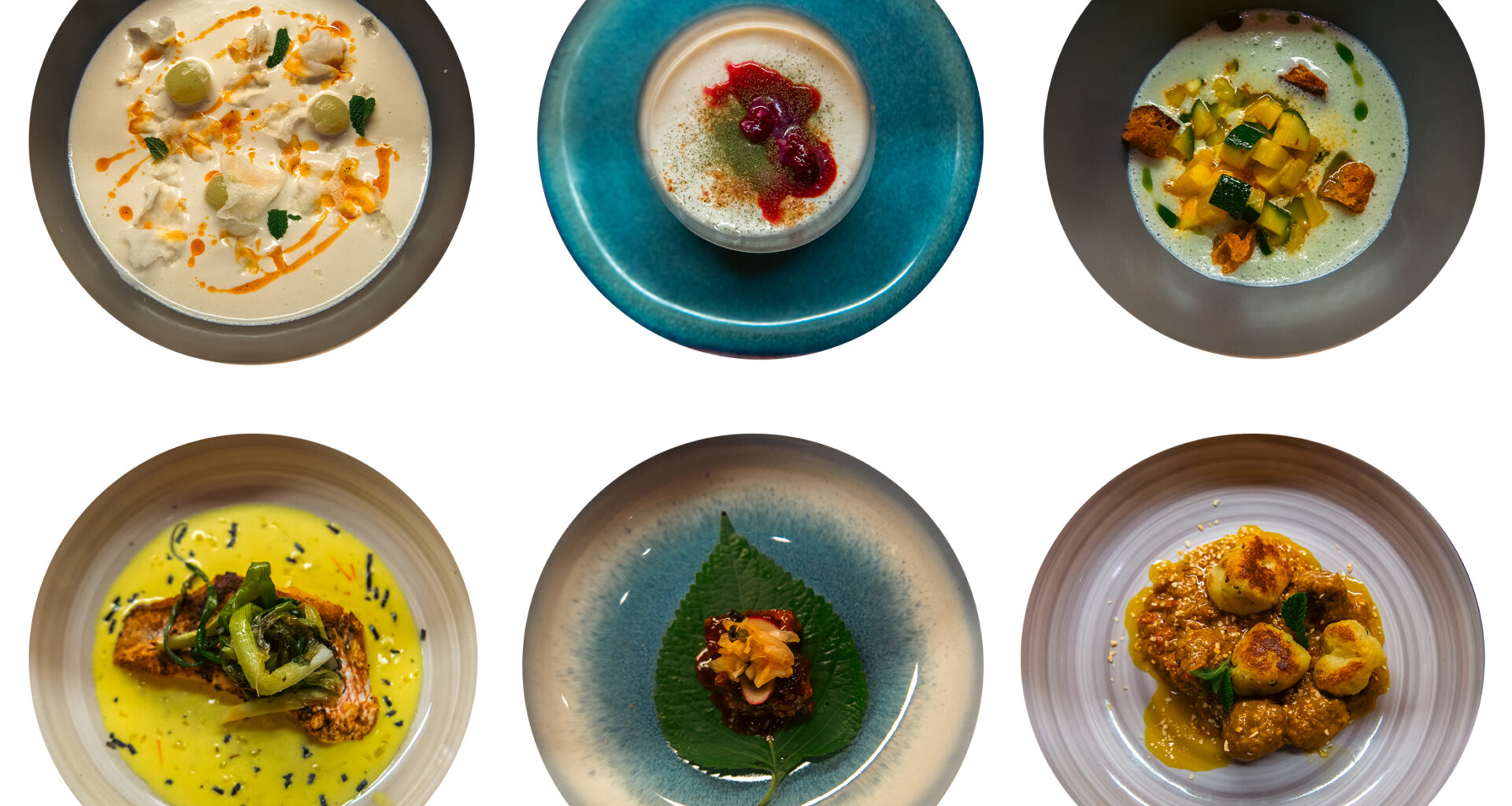
Veteran chef, Vijay Sadhu has left behind restaurants to serve 10-course meals during his Supper Club that he hosts in his own house.
On June 13 at 6:30 p.m., a diverse conglomeration of about 12 individuals meet in an East Plano kitchen.
Some have been before; others are new. Some know each other; others came alone. There are retirees and business owners, long time friends and new pals.
They have one thing in common – the desire to pay $150 to eat a one-time 10-course meal from Chef Vijay Sadhu’s Supper Club hosted in his own house.
Originally from India, Sadhu moved to the United States as a child and fell in love with the restaurant scene.
“It looked so passionate, and it still looks fun to me,” he says. “I was so interested and I could work with so many different people.”
After moving to New York City to work in restaurants, Sadhu decided it was time to get a formal culinary education, and moved to Australia to attend New South Wales Technical and Further Education Commission’s culinary program. From there, he worked briefly in San Francisco at upscale Indian restaurant Amber before heading to the Dallas area to check out its foodie scene.
But he didn’t just want to be an Indian chef.
Then he worked with Stephan Pyles at Samar, opened The Shops at Legacy’s Pepper Smash Cocktail Kitchen, then went into corporate kitchens as an executive chef for W Dallas, followed by experiences at Bonappetit and now as culinary manager for a corporate kitchen.
Along the way, he collected TV appearances on Food Network shows.
In 2013, he went on Cutthroat Kitchen. In 2016, he went on Beat Bobby Flay, which he did after challenging him to cook authentic samosas. In 2021, he went on Supermarket Stakeout. In 2024, he went on Food Network’s 24in24: Last Chef Standing, a five-episode competition where 24 contestants compete in 24 challenges over 24 hours.
Throughout each experience, he collected knowledge on French, Italian, Southwestern and American cuisines.
“I’ve been in this country for 40 years now,” he says. “I worked with so many different people, learned from so many different cultures, and that’s what I put on the plate.”
But he couldn’t continue in a traditional restaurant setting.
“I don’t want the chaos anymore,” Sadhu says. “When you cook, cook with love. Cook with compassion. When you’re focused and present, the food comes out differently.”
That philosophy has become the foundation of his supper club concept.
Each is intentionally small, serving 10-15 guests. No menu item is the same as the last.
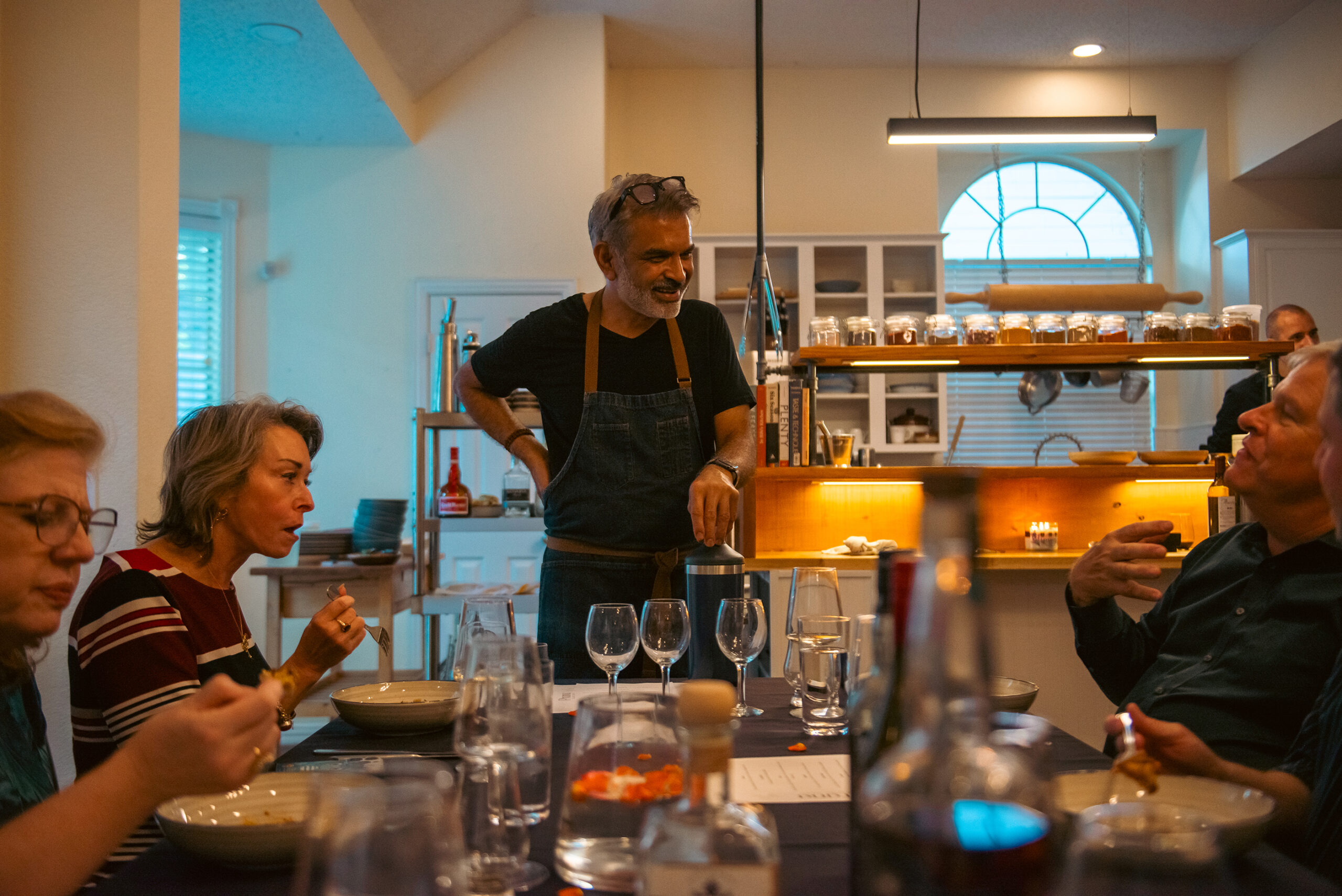 Chef Vijay Sadhu. Photography by Lauren Allen
In June’s menu, the first two courses brought some heat. First was a cold blanco soup with marcona almonds, green grapes, rice crackers and Kashmiri chili. Next, a pork belly with a gochujang sauce was topped with kimchi and radish on a bed of perilla leaf.
The third and fourth courses took a step back for something more refreshing. Beets with Malai, Turkish pistachios, pea sprouts and summer citrus vinaigrette. Snapper in an ikura beurre blanc sauce, topped with charred green onion and nori spice dust.
His Indian-cuisine upbringing came in with a masala-braised chicken with guajillo, pickled onions and spicy crispy corn. Then, heirloom squash with fresh herbs and parsley emulsion on cultured buttermilk sourdough. To end the main meal, Goan-style sausage ragu with gnudi in crème fraîche, toasted garlic crumble and mint.
A dessert course featured a cardamom and rose panna cotta with berry compote, saffron foam and rose dust.
“I don’t call it fusion,” Sadhu says. “I take ingredients from different places and cook them together. I’m blending flavors.”
After the 10 courses are up, there’s a chai service with Sandhu’s homemade spice blend and conversation among the group to close out the night. A mignardise of rose water and crushed pistachio short cookies was passed out. During the June meal, two diners even booked Sandhu to do a similar concept in their kitchens.
“You don’t get that in a restaurant,” he says. “You can stand here, ask questions, watch me cook. That’s the freedom I give my guests.”
Eventually, Sadhu hopes to open a restaurant with similarly limited seating to be able to do his weekend dinners in a more professional setting. And when he gets to that point, he’s looking to stay in Plano.
“Plano is my place,” he says. “I love Plano.”
“When people come into my house and they enjoy the food, that gives me joy,” he says. “It’s not just cooking. It’s hosting.”