
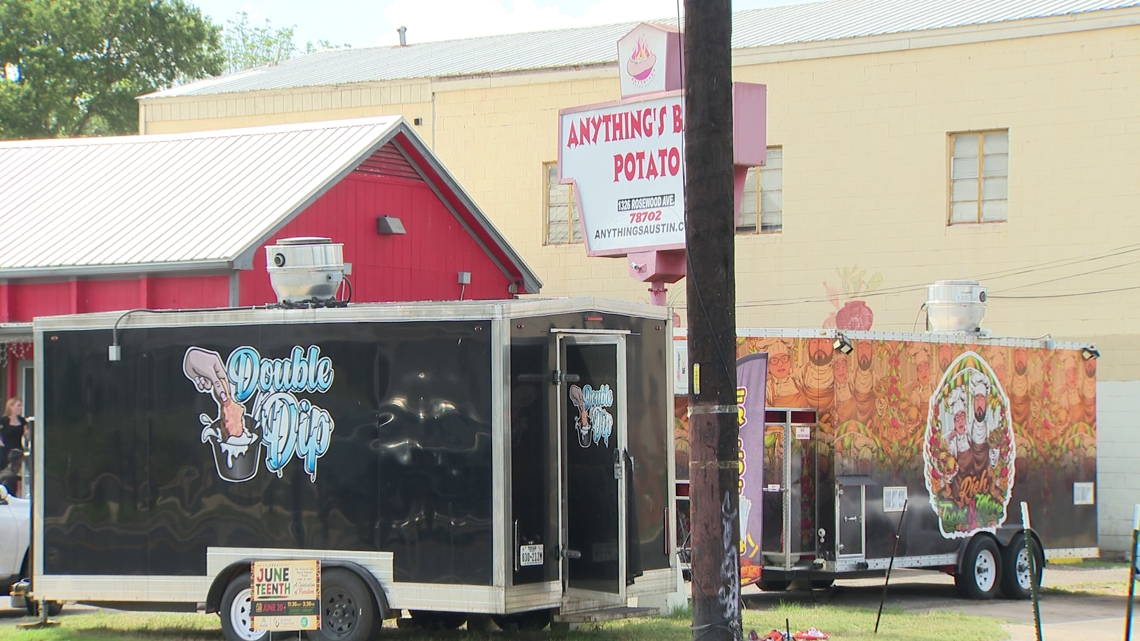
Texas food truck owners are adjusting to a new state permitting system under House Bill 2844, with some operators reporting confusion and higher costs.
AUSTIN, Texas — Food truck owners across Texas are adjusting to a major change in how their businesses are licensed and inspected after a new state law took effect on Wednesday.
House Bill 2844, known as the “Food Truck Freedom Bill,” shifts oversight of mobile food vendor licensing and inspections from local health departments to the Texas Department of State Health Services (DSHS). The change is intended to streamline the permitting process for operators who travel and do business in multiple communities.

This story continues below.
For Austin food truck owners Josh Sedwick of Hungry J’s Pizza and Daniel Thomas, co-owner of Anything Baked Potato, the transition has brought both uncertainty and added costs.
Sedwick said the transition has cost him close to $3,000 after renewing local permits just months before the new state requirements took effect.
“It’s supposed to lighten things up and make things easier on us, but from what I can see right now, it’s really not,” Sedwick said. “I got a year-long permit six months ago, and they’re telling me that’s not going to be good anymore. I’ve been updated and got this new one, and instead of being grandfathered in and my old one continuing to last, I had to update and pay money for the new one.”
Despite the challenges, Sedwick and Thomas said they believe the new system could benefit food truck operators in the long run, particularly those who travel to different cities.
“I think it will be worth it. Especially if you like to travel like us,” Thomas said. “I think it would be a better opportunity to make a little bit more money, getting your show on the road, letting other cities find out.”
DSHS said it began accepting permit applications on June 4 and had received more than 3,000 applications as of the morning of June 30.
Meanwhile, Austin Public Health said it has signed a collaborative agreement with DSHS to conduct pre-licensing and routine mobile food vending inspections on the state’s behalf under state guidance.
The department said it has communicated with local food truck operators through newsletters, website updates and a town hall meeting to help explain the transition. It also noted that DSHS has published guidance in English and Spanish for vendors navigating the new permitting process.
Austin Public Health said food truck operators will still need to obtain required fire inspections and permits from their local governments.