
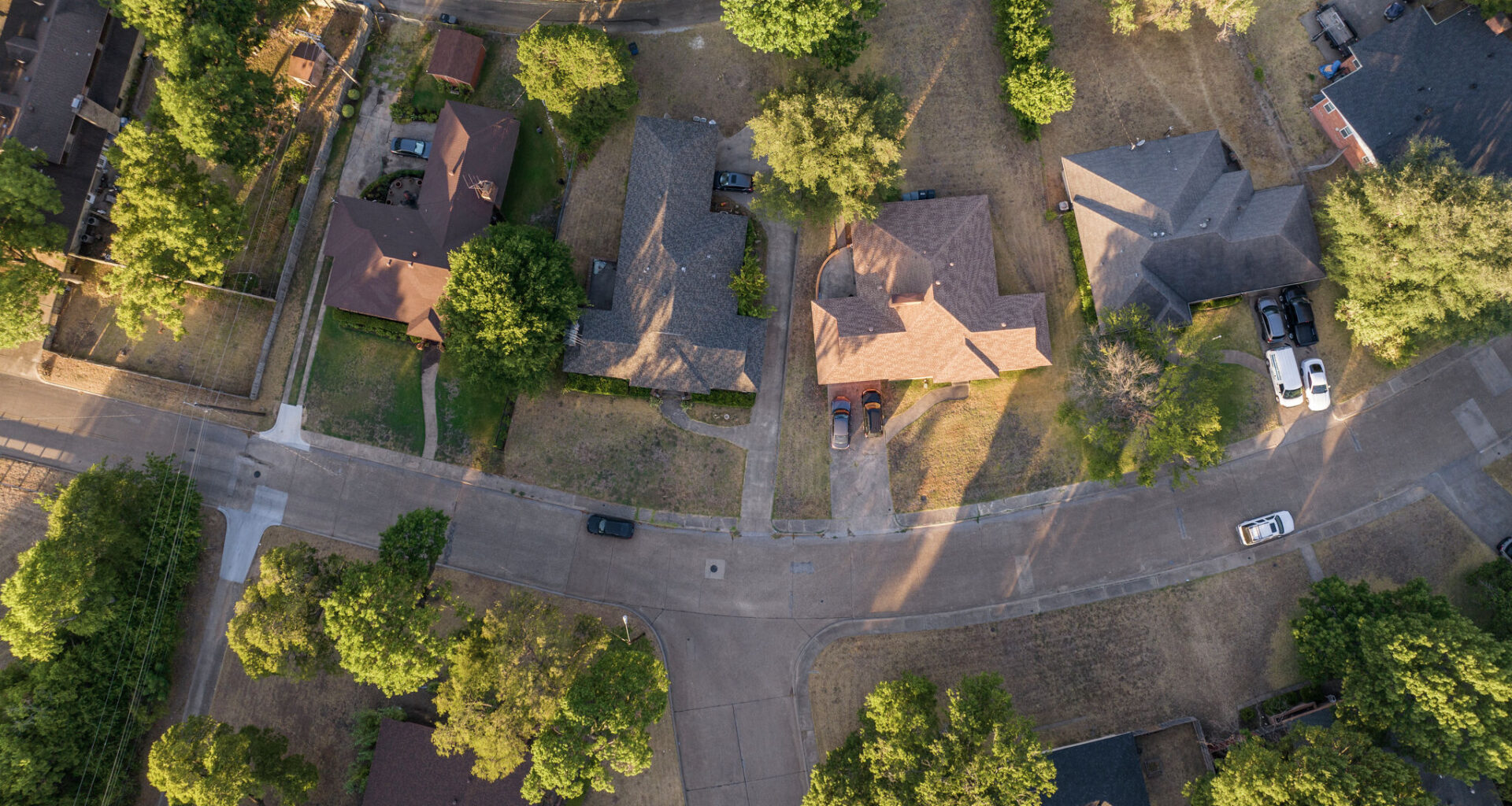
An aerial view of homes in the Wolf Creek neighborhood in South Dallas, Wednesday, July 27, 2022.
Brandon Wade/The Dallas Morning News
A property tax exemption for seniors and people with disabilities is staying the same instead of increasing with inflation following a Dallas City Council vote in late June.

The exemption review was voted on and approved as part of the consent agenda during the council’s June 24 meeting.
The tax exemption allows people aged 65 and older and people with disabilities to claim a $175,000 property tax exemption on their home. There are over 74,400 accounts that claim the exemption, according to city documents.
Article continues below this ad
During a meeting of the city’s finance committee, council members expressed concern about increasing the exemption because of the city’s budget issues. The committee voted to recommend the exemption stay the same and the City Council passed that measure, meaning that Dallas residents who use the exemption will get a lesser benefit than if the measure had increased with inflation.
Three options
During the finance committee meeting in May, the city introduced two scenarios to change the tax exemption. One option was based on increases in the consumer price index for the elderly. The second option was based on the year-over-year change in the median residential market value.
The first scenario would have increased the exemption by 3.78% to about $181,600, according to committee documents. Meanwhile, the second option would have increased the exemption by 0.72% to about $176,300.
Article continues below this ad
Both scenarios signaled that property owners covered by the exemption are seeing higher prices. An investigation by The Dallas Morning News also showed that rising costs are impacting retirees in North Texas.
Diane Shields stands in her driveway and looks down her block in Fort Worth, March 25, 2026. When Shields retired 12 years ago, she spent much of her retirement savings on fixing up her trailer home and Kia sedan hoping she would not outlive the repairs, she said.
Angela Piazza/The Dallas Morning News
Increasing the exemption in keeping with the consumer price index would have resulted in $3.4 million in foregone revenue, according to city documents. The second scenario would have resulted in $700,000 in foregone revenue.
Council members ultimately voted to keep the exemption at its 2025 level.
When the exemption is combined with the city’s 20% homestead exemption, senior and disabled residents with homes valued at $218,750 or less would pay no property taxes to the city, according to city documents.
Article continues below this ad
Property value that is not exempted would be subject to the city’s property tax rate, which is 69.88 cents per $100 of valuation. That number is likely to change as the city forms its next budget and takes into account changing home values.
Only a portion of a Dallas resident’s property taxes goes to the city. When a resident pays their tax bill, the largest portion goes to Dallas ISD, 31% goes to the city and smaller portions go to the county, Parkland Hospital and Dallas College.
During the City Council’s finance committee meeting, some council members said it was time to take stock of the city’s financial situation and balance taking care of seniors with paying for city services.
Meanwhile, Council Member Jesse Moreno said he would like to see what else the city can do to ensure the homeowners that use the exemptions aren’t falling behind.
Dallas is facing a $30 million shortfall that has caused the city to seek out cost-saving measures, including furloughing employees, a hiring freeze and stopping spending on travel. The city’s budget issues come a combination of things, including police and fire overtime costs, rising employee health expenses and lower sales tax revenue.
Article continues below this ad
Savings and taxes
Keeping the tax exemption the same won’t automatically save the city money.
As part of the budget process, the city will calculate a tax rate that will allow the city to continue its existing operations, called the no-new-revenue property tax rate, said Lynn Krebs, a research economist at Texas A&M’s Texas Real Estate Research Center.
An increase in revenue is called a voter-approval rate, and cities can increase revenue by up to 3.5% without having to seek approval from voters.
If the taxable value is lowered, by increasing the exemption, the impact of that change would be overtaken by a slightly higher tax rate, calculated to produce the same revenue, Krebs said.
Article continues below this ad
What homeowners owe is the last thing to be determined, after what is taxable — and what is exempt — and the city budget, Krebs said. Last year, the council set a tax rate of 69.88 cents per $100 of valuation and a $5.2 billion budget in September. Changes to home values will also have a significant impact on revenue and the tax rate.
If the city increased an exemption it wouldn’t mean the city would receive less revenue, he said. If nothing else changed — other than increasing the exemption for seniors and disabled homeowners — the rate setting process would still be dependent on how much revenue the city needs, Krebs said.
“If the value is artificially suppressed by an increase in the exemption, then the rate will be higher in order to generate even just the same amount as the year before,” Krebs said.