
NEED TO KNOW
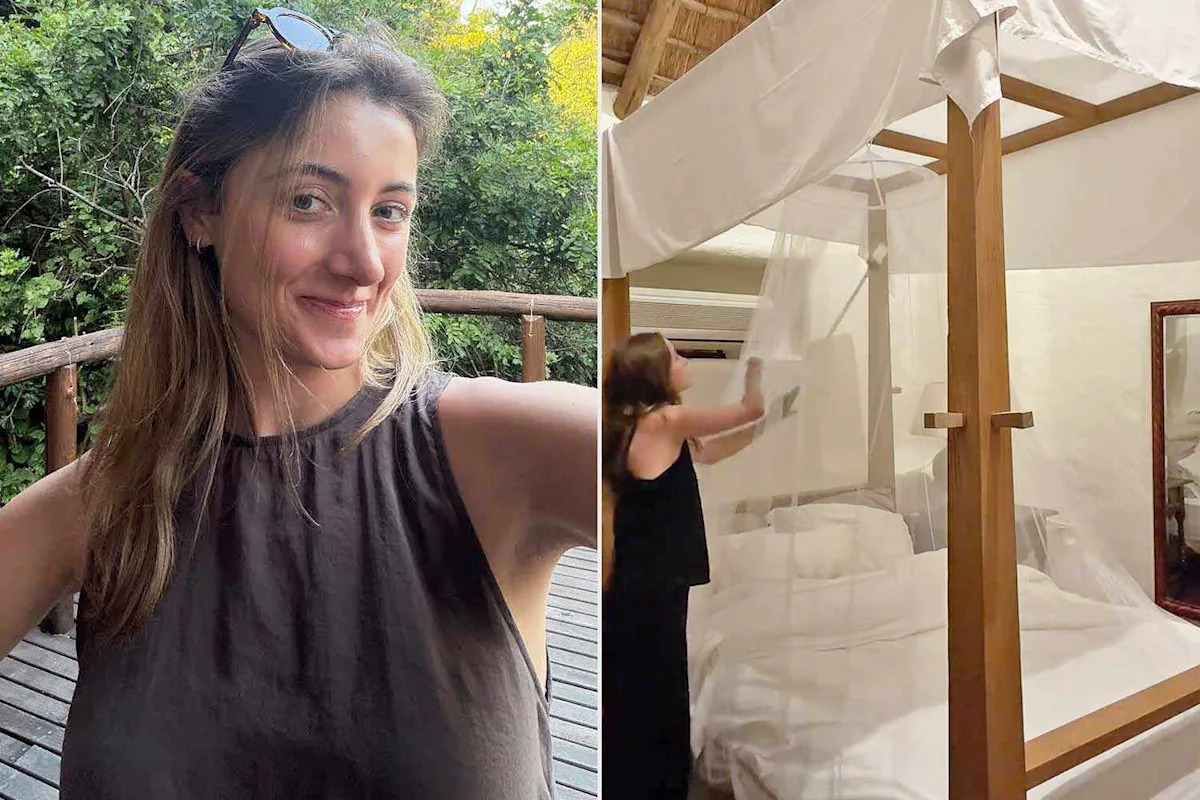
Alex Blumenfeld left her New York City finance career to live on a remote wildlife reserve in Zimbabwe
Her nightly routine includes checking for snakes and sealing a mosquito net to stay safe in her thatched-roof cottage
Blumenfeld shares her unique lifestyle on social media where her videos have gone viral, captivating millions of viewers
Every night before Alex Blumenfeld climbs into bed, she follows the same ritual. She pulls back the covers, checks beneath the sheets and inside the pillowcases, then looks under the mattress and around the bed frame.
Only after she’s certain there are no unexpected visitors hiding in her room does the 24-year-old unfurl her mosquito net, seal it beneath the mattress and switch off the lights, often falling asleep to the eerie sound of hyenas calling across the Zimbabwean bush.
It’s a nightly routine that reflects the life she’s built since leaving her finance career in New York City last year and moving thousands of miles away to a remote wildlife reserve in southeastern Zimbabwe.
“My cottage looks like something straight out of a fairy tale,” Blumenfeld tells PEOPLE exclusively. “It’s this beautiful little thatched house tucked into the bush.”
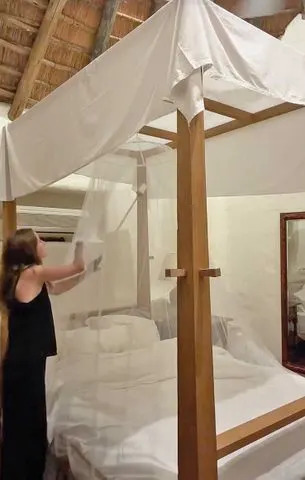
Alex-Blumenfeld during her bedtime routine
Credit: Alex Blumenfeld
The setting is every bit as picturesque as it sounds. But the cottage’s natural thatched roof also means she’s never entirely alone. Built with layers of dried grass, the roof occasionally provides an entry point for snakes, geckos, spiders and other small animals.
“Snakes can definitely get in,” she says. “That’s just part of living here.”
“I actually think it’s a really good sign,” she adds. “It means this place is still truly wild.”
When Blumenfeld first shared that reality on TikTok, she never imagined millions of people would be just as fascinated.
But a video documenting her nightly snake check quickly went viral amassing over 4.5 million views.
“The actual getting-into-bed routine, however, has gotten a lot of social media attention as it’s a bit different,” she says. “Before I get into bed, I check between the sheets, under the sheets, around the pillows, in the pillowcases, and underneath the bed for spiders/scorpions/geckos/snakes.”
“Then I unwind my mosquito net and use a tucking paddle to seal the net under the mattress on all three sides that don’t back up to the wall. It’s definitely a process… but it’s well worth the peace of mind!” she adds.
Still, she says, that routine represents only a small piece of what daily life on the reserve is actually like.
The unpredictability doesn’t end once the sun comes up. Because it’s currently winter in Zimbabwe, the sun sets around 5:30 p.m., so Blumenfeld tries to leave work before dark. Once the sun goes down, dangerous wildlife becomes much more active, making evening walks something she avoids whenever possible.
Even getting from her car to the front door requires a little preparation. Flashlight in hand, she scans the bushes surrounding her cottage before making the short walk inside, making sure no curious wildlife is lingering nearby.
Once she’s safely indoors, though, the evening settles into a routine that feels surprisingly familiar. She rolls out a yoga mat for a quick bodyweight workout before making dinner with a camping stove, air fryer, rice cooker and microwave. Most nights, she’ll spend the rest of the evening editing videos for social media, finishing work from earlier in the day or watching another movie from the “must-see” list her friends put together before she moved overseas.
“I packed a ridiculous number of products from the U.S.,” she says. “Whenever I go home, I restock, so that’s one small piece of my old routine that hasn’t really changed.”
Those small comforts help balance a life that’s anything but ordinary, making the reserve feel less like a place she’s visiting and more like home.
That sense of home extends well beyond the walls of her cottage. Over time, Blumenfeld has gotten to know many of the reserve’s regular visitors, turning what might seem like extraordinary wildlife encounters into ordinary parts of her daily routine.
One of her favorites is a resident hippo she affectionately named Herbert. “He spends a lot of time near my cottage,” she says. “Seeing him has become part of my normal routine.”
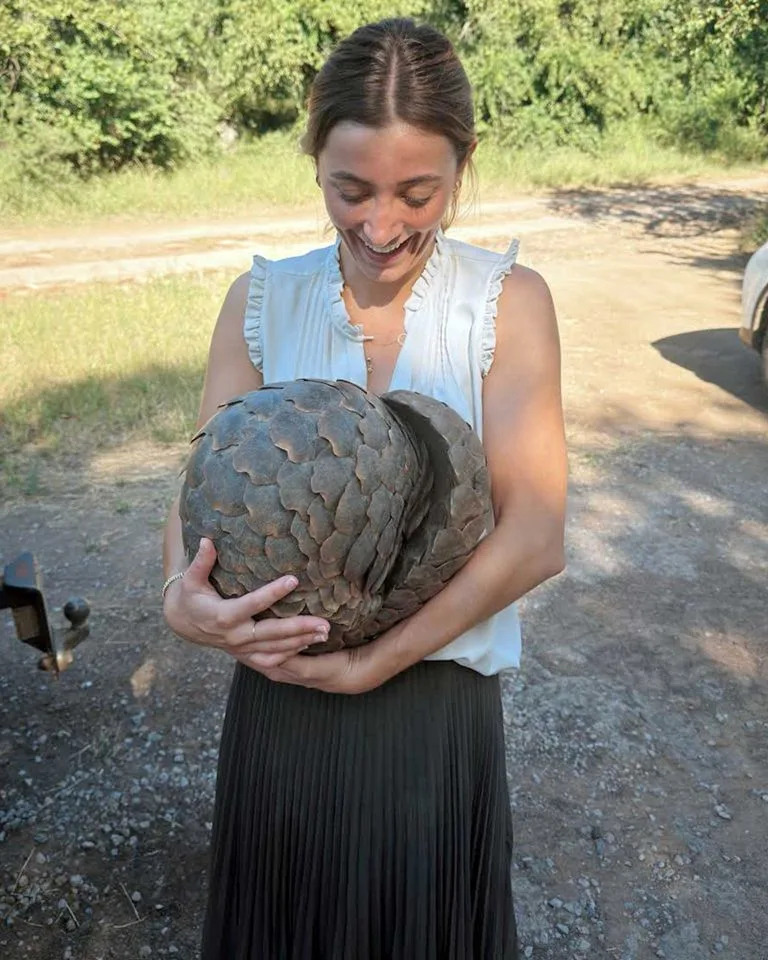
Alex Blumenfeld holding an animal
Credit: Alex Blumenfeld
Then there’s Frank, a crested francolin who has become an equally frequent visitor.
“He’ll just let himself into my cottage,” Blumenfeld says with a laugh. “The first time it happened I was completely shocked, but now it barely fazes me when I hear him chirping away in my living room.”
While the animals themselves have become familiar, adjusting to the sounds of the bush took much longer.
On her very first night at the reserve, Blumenfeld climbed into bed exhausted after a long journey, hoping for a good night’s sleep. Instead, she was jolted awake by a chorus of hyenas calling just outside her cottage.
“If you’ve never heard hyenas before, it’s honestly a pretty terrifying sound,” she says. “It’s eerie. It’s almost otherworldly.”
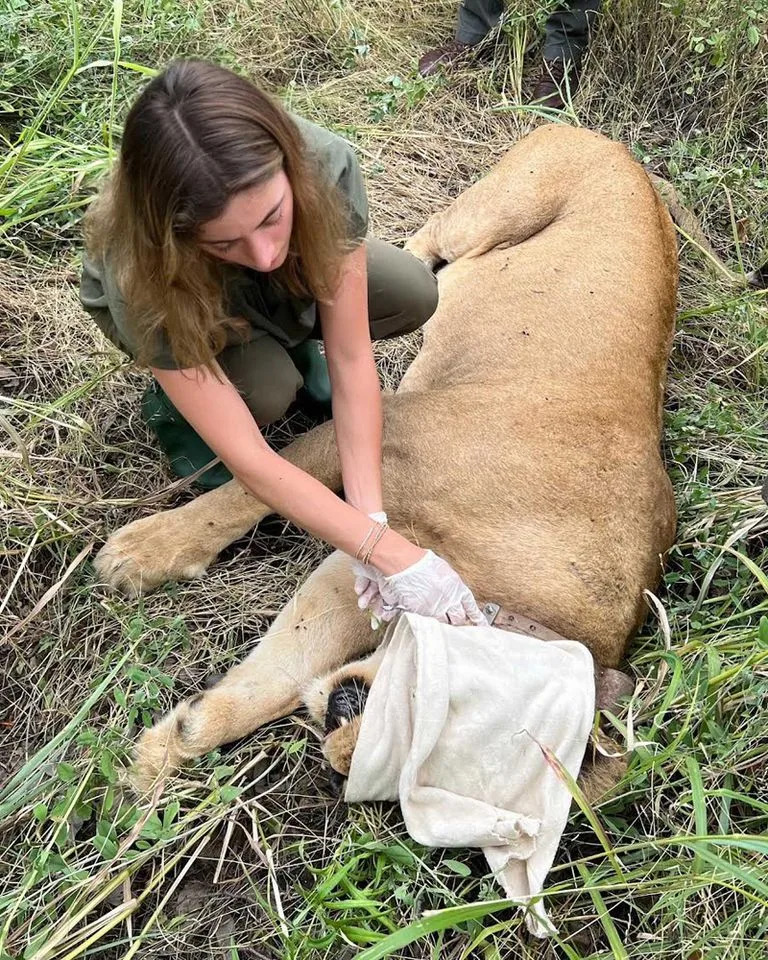
Alex Blumenfeld helping a lion
Credit: Alex Blumenfeld
Unsure whether she should be fascinated or frightened, she called through the wall to another intern staying in the neighboring cottage.
“I asked, ‘Do you hear that?’” Blumenfeld recalls.
“‘Yeah,’ she yelled back.
“So then I asked, ‘Can they get inside?’”
After a brief pause, the intern replied, “‘I’ve been here about a week…they haven’t yet, so I think we’re okay.’”
Neither of them sounded especially convinced.
Today, Blumenfeld laughs at the memory. Over time, the sounds that once kept her awake became one of the things she loves most about living in Zimbabwe.
“I actually miss them when it’s quiet,” she says. “Now, hearing the hyenas calling back and forth at night is one of my favorite sounds in the world.”
Read the original article on People