
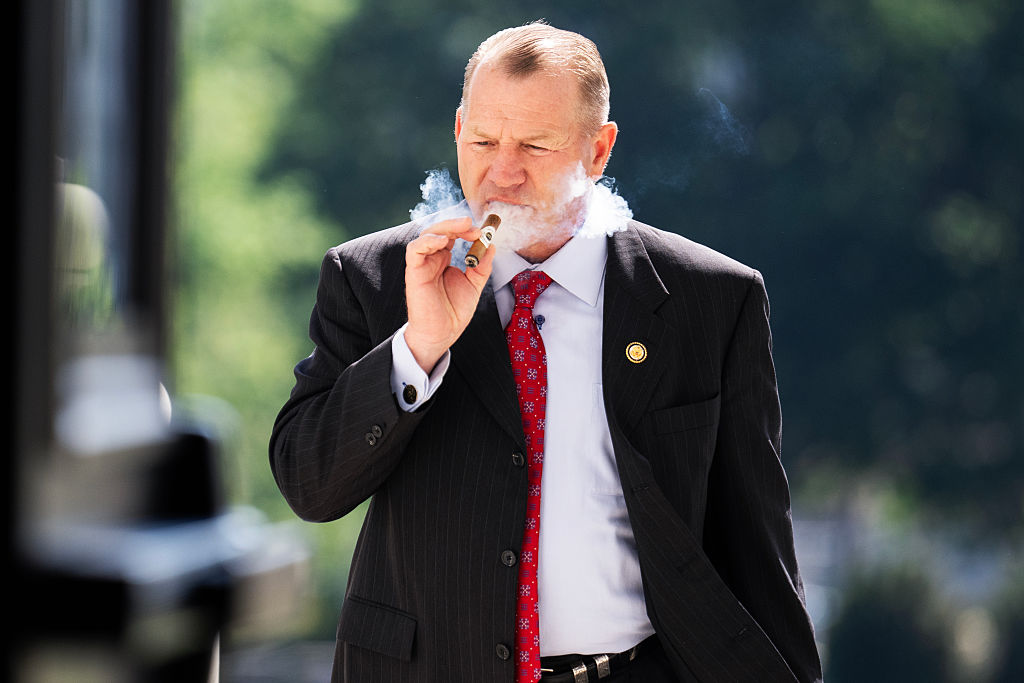
In a video shared online by MeidasTouch’s Pablo Manríquez, Texas Rep. Troy Nehls was asked about the current affordability crisis Americans are facing with increased costs from the gas station to the grocery store.. Rather than immediately answering the question, Nehls pivoted to his own Fourth of July plans.
“Affordability? What are you talking about?” Nehls asked before bragging about his upcoming Fourth of July plans in Texas.
“I’m gonna get me a couple of big lobster tails,” he continued. “I’m gonna get me some nice ribeyes, I’m gonna sit in my backyard with my family, my neighbors, and we’re going to be enjoying the fourth, celebrating 250 years, the birthday.”
“Everybody understands, you’re gonna see a little increase in energy prices because of Iran. I mean, come on, people aren’t stupid,” he said. “But I think in the end, the short-term increase in some of the costs of energy, you know, gasoline and stuff, is temporary, but President [Donald] Trump has made it very clear to these companies, don’t be gouging, no price gouging.”
When asked how his plans for lobster tails and ribeyes might resonate with Americans struggling to pay their bills, Nehls doubled down.
“Maybe the 60% of Americans don’t work as hard as I do either. I mean, I don’t know,” he concluded.
According to the 2026 State of ALICE report from the United Way, 13 percent of Texas households lived below the federal poverty level in 2024. Another 27 percent earned too much to qualify as poor but still not enough to afford basic household expenses. Combined, roughly 40 percent of Texas households fell below the ALICE threshold for financial stability.
Researchers pointed out, however, “the measure did not account for an additional 27 percent of the state’s households–more than twice as many—that were also in financial hardship.”
Researchers at Rice University’s Kinder Institute have also found that affordability remains one of the top financial concerns for many Houston-area residents, while Fort Bend County has identified rising housing costs and financial security as issues affecting local families.
Whether struggling Texans need to “work harder,” as Nehls suggested—even perhaps facetiously—is likely to be a harder sell for the millions of households still trying to make ends meet.